
Morgado: the Algarve's Hand-Sculpted Fig and Almond Secret
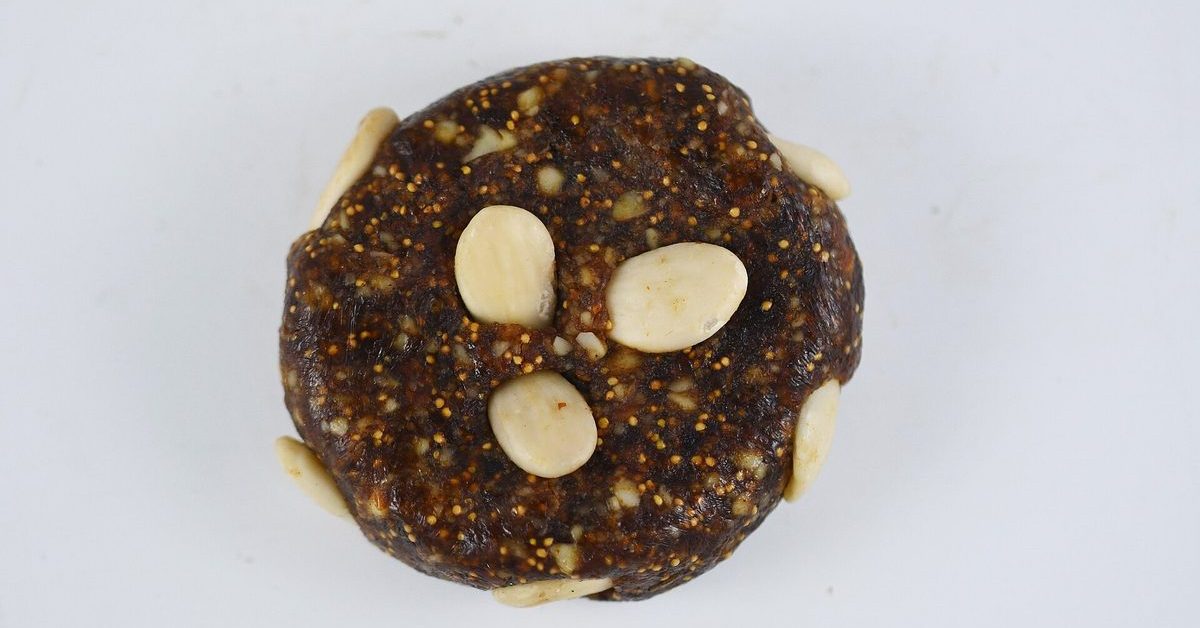
A hand presses a small ball of almond paste between thumb and forefinger, turns it, flattens it, folds it closed around a dark, fragrant filling. That's how a morgado is born, somewhere in a back kitchen in Silves or Portimão, in the middle of an Algarve summer. No mould, no oven at this particular moment, just fingers that know what they're doing, passed down from one generation to the next.
In the Algarve, August is when the fig trees bend under the weight of overripe fruit, and the almond trees, already harvested back in June, have handed their golden kernels over to local confectioners. Out of that meeting between dried or candied fig and finely ground almond come the doces finos: morgados, dom rodrigos, bolos de amêndoa, an entire regional sweet-making tradition you won't find anywhere else in the country. These recipes are said to carry traces of over a thousand years of Arab presence in southern Portugal, from a time when almond orchards already covered the hills around Silves and sugar, still rare elsewhere in Europe, was already part of daily life here.
What sets a morgado apart is its shape: it's often moulded into a miniature fruit (a fig, an orange, an apple) then hand-painted in natural colours, or simply finished with sugar petals. Its humbler cousin, the morgadinho, gets a scattering of silver beads instead. Beneath that slightly tacky almond shell you'll often find a heart of fios de ovos, those sweet spun-egg threads, or a chila cream, the famous "confectioner's squash" that also turns up in the travesseiro de Sintra, further north. Every family workshop keeps its own ratios and its own technique, and rarely gives the full recipe away.
What strikes you on the first bite isn't the sweetness (you expect that, and it's there) but the texture: dense without being heavy, a fine almond grain that melts slowly, with an almost floral lift from the dried fig that wakes the whole thing up. Nothing like the crackling puff pastry of a pastel de nata or a travesseiro: this is marzipan territory, sweets worked like small pieces of jewellery rather than baked in an oven.
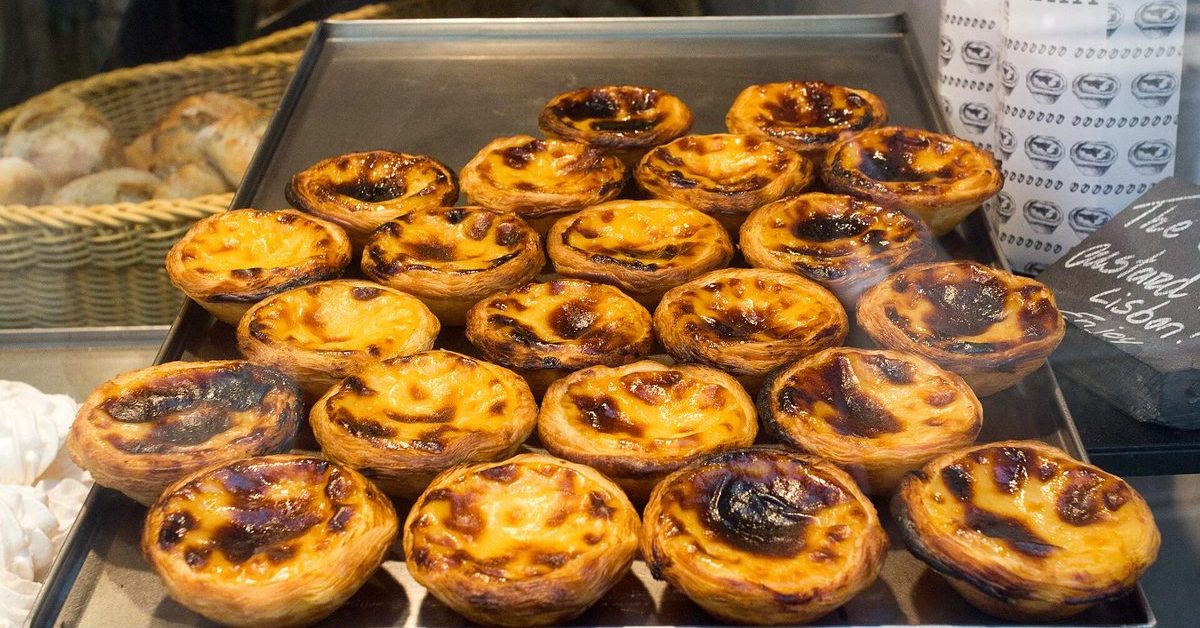
At Wooly, we're not pretending to recreate this deeply Algarve-specific doçaria stroke for stroke: it deserves a counter entirely of its own. But it's the same spirit that runs through our shops in Stockel, Etterbeek (Rue des Tongres), Uccle and Waterloo: artisanal know-how where every pastel de nata is still shaped by hand, where the puff pastry and custard are treated as a craft, not a production line. Fig and almond do show up, in fact, in some of our seasonal sweet creations: our own small nod, here in Brussels, to the southern Portugal so many of our customers know and love.
If this story of fig and almond trees has put you in the mood for something sweet, the next step is easy: push open the door of one of our four shops, or let yourself be tempted by our online menu. Portugal isn't just a story to be told: it's meant to be tasted, and at Wooly, we try to hand you a small piece of it every day.
Sources: Direção-Geral de Agricultura e Desenvolvimento Rural, “Morgado de Amêndoa”; Direção-Geral de Agricultura e Desenvolvimento Rural, “Morgado de Figo”; Direção-Geral de Agricultura e Desenvolvimento Rural, “Doçaria Fina do Algarve”.
Photo : Michel Chauvet, CC BY-SA 4.0, via Wikimedia Commons
Read next
Farturas: The Fairground Pastry That Lights Up Portugal's August Nights
The oil hisses, a long ribbon of batter spirals down into the fryer, curls back on itself, browns unevenly, and cracks…
Ovos Moles: The Convent Sweet Aveiro Never Stopped Making
A wafer shell so thin it's barely thicker than a sheet of paper, cracking under your teeth before a deep golden cream…
The Sardinhada: Lisbon's Summer Ritual of Grilled Sardines
A grill set right on the cobblestones. A cloud of oily smoke curling up between two façades strung with paper garlands.…
Bolo de Arroz: The Little Cake Standing Between Lisbon and the Loss of Its Cafés
Standing at the counter, an espresso gone in three sips, a small golden cake in hand: that's the most ordinary, most…
Ginjinha: The Tiny Cup That Sums Up Lisbon
The first time, someone hands you a plastic cup barely bigger than a thimble. You knock it back in one go, standing on…
Arroz Doce: The Portuguese Rice Pudding That Ends Every Family Table
I still remember the first time someone handed me a bowl still faintly warm, with a fan of cinnamon traced across the…
The Queijada de Sintra: the little cake people once used to pay their taxes
A crust that snaps the moment you bite into it, a warm filling of fresh cheese and cinnamon, the queijada de Sintra was…
Pastel de Belém Just Won World's Best Pastry: Here's What That Means for Us
The first time someone told me a custard tart from a Lisbon monastery bakery was the best pastry on earth, I thought it…
Find our artisan pastries in our Brussels stores or order online.
Order now Our foodtruck for your events Our stores