
Azulejos in Portuguese pastelarias: the painted tiles that keep Lisbon's cafés
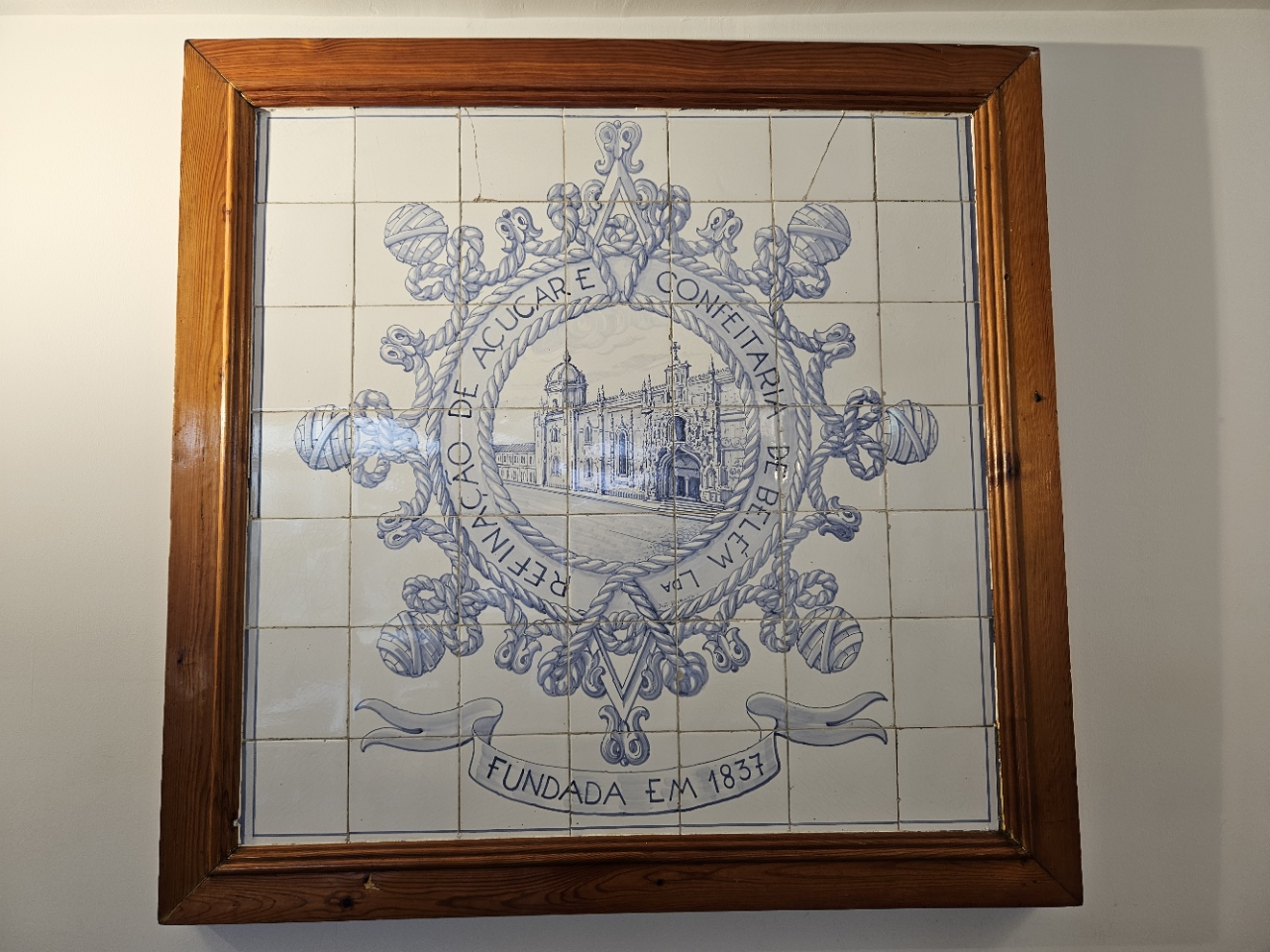
You order a coffee, wait for your pastel de nata and look at the walls. In many pastelarias in Lisbon they are covered in painted tiles, the azulejos. They are not there just to look pretty: they hold a story that goes back centuries.
A word from Arabic
Azulejo comes from the Arabic al-zillīj, meaning polished stone. The original idea was to imitate Byzantine and Roman mosaics, with small pieces of glazed clay set together on a wall. The Portuguese kept the word, the technique and, above all, the taste for covering every surface.
From King Manuel to the blue tile
The earliest known azulejos, in 13th-century Spain, were made of single-colour tiles cut into geometric shapes and assembled like a mosaic. Seville became the great centre of this production. In 1503, King Manuel I, back from a visit to Seville, brought the same techniques to Portugal. Until the mid-16th century, however, the country imported most of its tiles, mainly from Spain.
The oldest dated Portuguese azulejo composition is the Miracle of Saint Roch, made by Francisco de Matos in 1584. From then on, the Portuguese took up the Moorish tradition of horror vacui, the fear of empty space, and covered their walls completely.
The 17th century: blue from Delft
In the 17th century, plain white tiles gave way to multicoloured tiles, then to carpet-style compositions, produced in great numbers. The Spanish artist Gabriel del Barco introduced blue-and-white tiles in the style of Delft, in the Netherlands, to Portugal. Between 1687 and 1698, King Peter II stopped azulejo imports, and the last major deliveries from Holland arrived in 1715.
1755: the tile becomes sober
The 1755 earthquake destroyed a large part of Lisbon. During the rebuilding, azulejos took on a more practical role. The decoration became bare and functional, a style known as Pombaline, after the Marquis of Pombal, who oversaw the reconstruction. Small devotional panels also began to appear on some facades, meant to protect the house from future disasters.
In the street, the facades tell the eras
Walking through Lisbon, you can read the eras on the walls. On Rua da Boavista, the Casa dos Parafusos shows Art Deco tiles dating from the 1920s; the city has restored the facade since. On Avenida Almirante Reis, at number 74, a building completed in 1908 has an Art Nouveau tile facade designed by Alfredo Pinto in 1911. In the Lapa district, many facades on Rua de São Domingos are tiled.
In the cafés: the Mexicana and the Trindade
The Pastelaria Mexicana, on Avenida Guerra Junqueiro, was founded in 1946 and renovated in 1961-1962. Its wall carries a relief tile mural by Querubim Lapa, dating from 1961. It is not a museum, it is a neighbourhood café, and that is what makes the decoration moving: you see it while you wait for your coffee.
At the Cervejaria Trindade, on Rua Nova da Trindade, the restaurant opened in 1836, in a building bought the year before. In 1863, tile allegories of the elements and the seasons were commissioned for it. It shows that in the 19th century, tile was an ordinary room decoration.
What the tile keeps of the café
An azulejo is looked at while you wait. It holds the life of a café: it has watched the regulars come in, the orders at the counter and the conversations that never end. That is why a pastel de nata tastes so good in front of a painted wall.
At Wooly, in Brussels, you can order pastéis de nata on the pastel de nata page. Collect them in our shops in Stockel, Etterbeek, Uccle and Waterloo, and home delivery exists in Brussels under our delivery terms. All addresses and opening hours are on the stores page.
Sources: Wikipedia, “Azulejo” ; Turismo de Lisboa, “Rota do Azulejo”.
Photo: GualdimG, Wikimedia Commons, CC BY-SA 4.0.
Read next
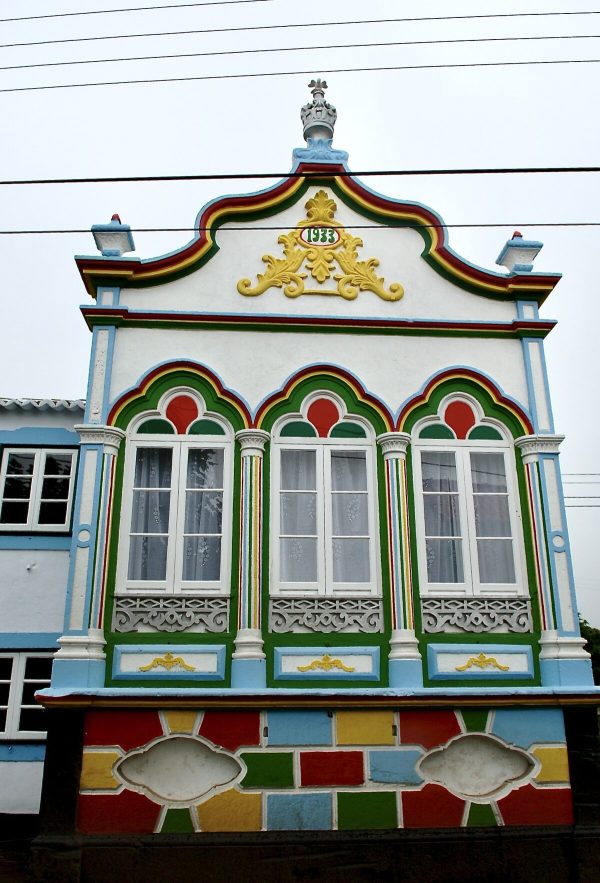
Impérios in the Azores: the house where sweets go to auction
On the island of Terceira, the Holy Spirit feast has its own houses, the impérios. An offering waits there until it is…
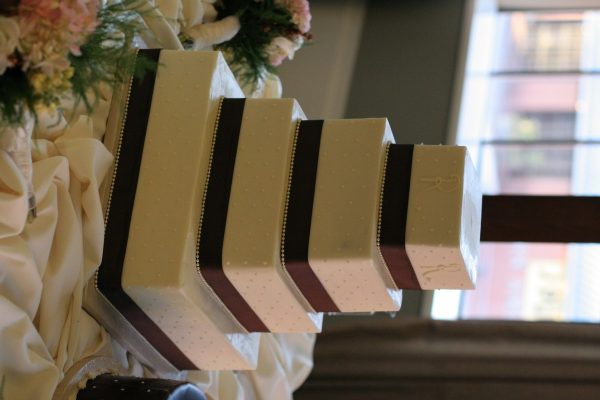
Bolo de noiva: the Portuguese wedding cake kept for a year
In Portugal the wedding cake has one more job than the others: a slice is kept for the first anniversary. A tradition…
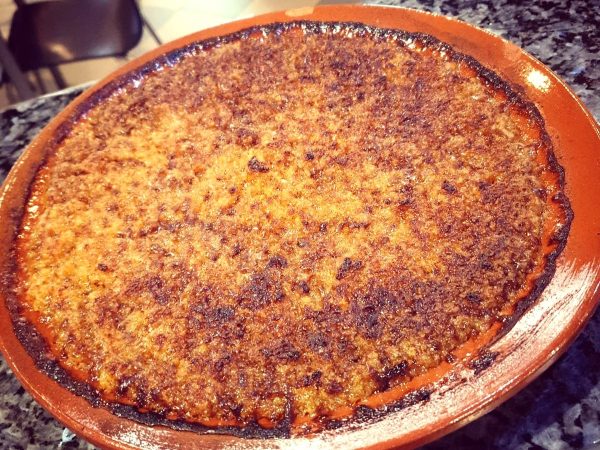
Encharcada: the Évora sweet whose convent origin may be a legend
Egg yolks cooked in syrup, then browned, served in earthenware. Encharcada from Évora takes its name from the word for…
Figos cheios de Olhão: the stuffed fig fishermen took to sea
At the start of November, dried figs change face in the villages of the Algarve. Split open, filled with almond,…
Serradura: the dessert named after sawdust, from Macau or Portugal
A spoon slides through the cream, and the biscuits soften without quite giving up their shape: serradura is eaten…
Rosquilha d'Argozelo: the Easter ring that keeps a village alive
It is shaped by hand into a ring and baked in a wood oven. In Argozelo, a small village in Trás-os-Montes, the…
Olive oil in Portuguese sweets: Abrantes fair 2026 puts it centre stage
In a Portuguese home, olive oil lives on the table first: a drizzle on bread, a drop in the soup. Yet when we talk…
Azevias: the chickpea Christmas pastry that carries the name of a fish
A fried half-moon, rolled in sugar and cinnamon, filled with chickpeas. The azevia, a Portuguese Christmas pastry,…
Find our artisan pastries in our Brussels stores or order online.
Order now Our foodtruck for your events Our stores