Encharcada: the Évora sweet whose convent origin may be a legend
Encharcada: the Évora sweet whose convent origin may be a legend
The Wooly Pâtisserie team
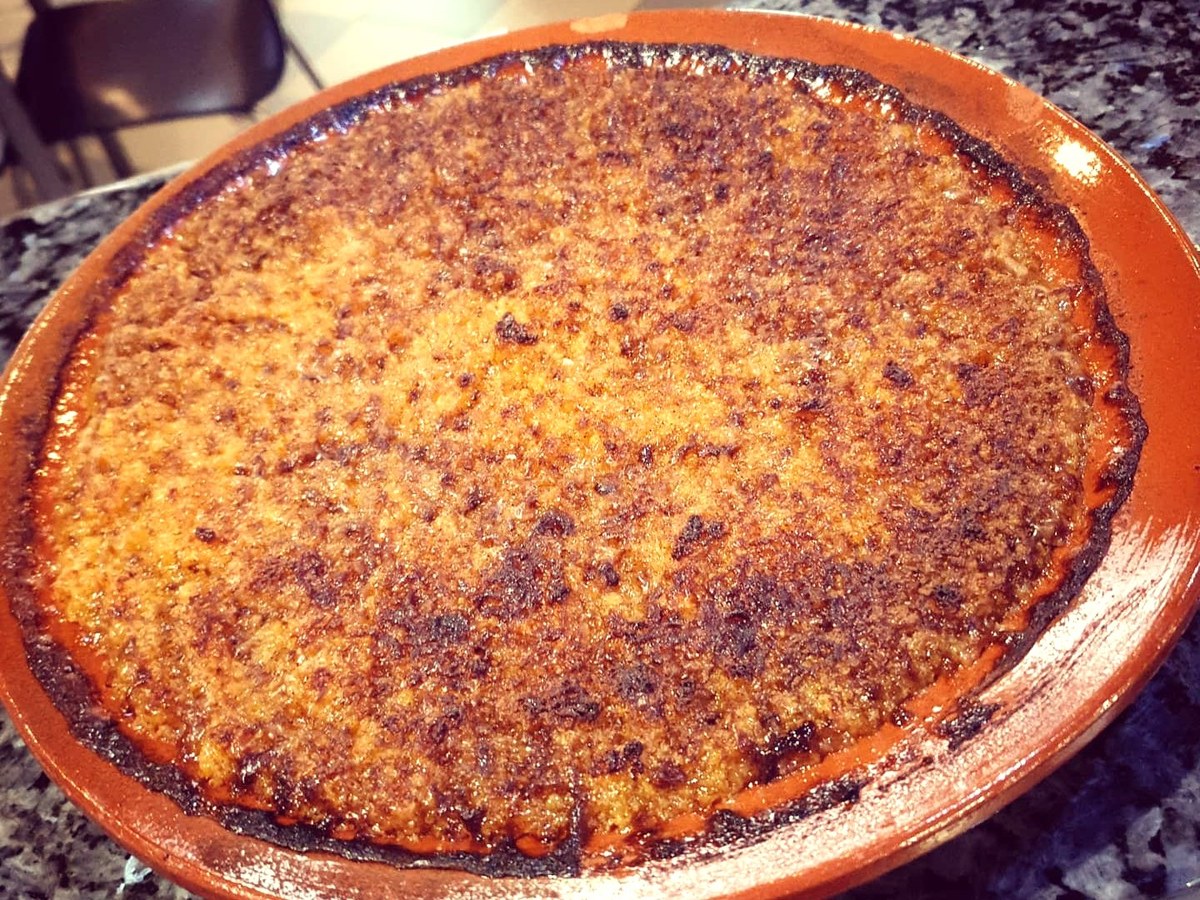
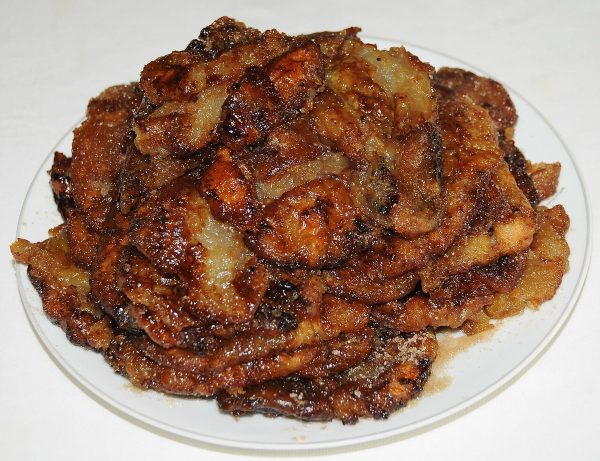
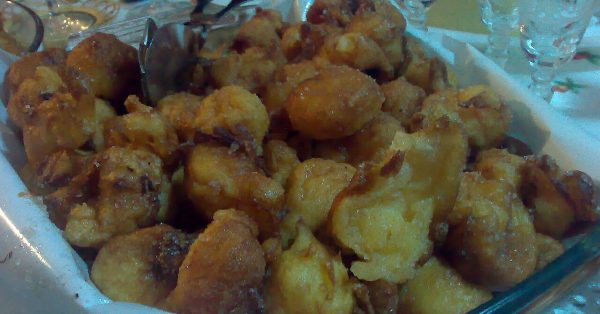
Egg yolks cooked in syrup, then browned, served in earthenware. Encharcada from Évora takes its name from the word for “soaked”. It is said to have been born in a convent, but the manuscript meant to prove it is now disputed.
Out of the oven, it has a golden crust speckled with brown, and it comes to the table in a glazed earthenware dish. This is encharcada, an egg-yolk sweet linked to Évora, in the Alentejo. Its name describes the method: it means “soaked”.
On paper, the recipe is simple. According to the recipe described on Wikipedia, you beat nine egg yolks and two whole eggs, then pour the mixture in a thin stream into boiling sugar syrup. The eggs cook in the syrup, which drenches them. Cinnamon and lemon peel go in, and the surface is then browned.
The name comes first
Encharcar means to soak, to drench in a liquid. Here it refers to the syrup: the eggs are encharcados, drenched in hot sugar. The method gave the dessert its name, and not the other way round.
A convent in Évora
On paper, encharcada is presented as born in the convent of Santa Clara in Évora. Wikipedia says it is believed to have originated there, with no date and no document. The story rests on a manuscript from 1729 kept at the National Library of Portugal, the Livro das receitas de doces e cosinhados vários d'este convento de Santa Clara d'Évora. For a long time, this book served as evidence for the idea of a convent sweet tradition in the Alentejo.
A disputed manuscript
The manuscript is now in question. Forbes Portugal reports preliminary findings presented by two academics, Isabel Drumond Braga and João Pedro Gomes. They point to anachronistic vocabulary: “cacau em pó”, “ralador de batata”, “açúcar pilé”, “chávena”, “colher de sopa”. A palaeographer, Susana Tavares Pedro, dates the handwriting to the second half of the 19th century. Some recipes in the book also appear in printed works from 1780 and 1788. As early as 2023, João Pedro Gomes was calling the convent sweet tradition a “constructed myth”.
What holds, and what does not
What is solid: encharcada exists, it is made from egg yolks, sugar and cinnamon, and it is associated with Évora and the Alentejo. The Forbes article does not mention the dessert, so the link to the convent rests on the legend, not on evidence specific to this sweet. What is not solid: the date, and the convent as birthplace. None of the sources consulted gives a birth date for the dessert, and Wikipedia itself speaks only of a belief.
The criticism of the manuscript therefore says nothing about the dessert itself. It mainly targets the idea of a convent sweet tradition as a whole. The sources consulted describe encharcada as it is made today, not as it was made in the eighteenth century. For this sweet, its origin therefore remains a question that needs evidence, not a settled fact.
A legend with staying power
Portugal has credited many sweets to convents, and the story persists because it makes recipes more beautiful. Egg yolks, sugar and nuns form a tale that is easy to tell. It deserves the same checking as any other fact, recipe by recipe.
At Wooly, in Etterbeek, Stockel, Uccle and Waterloo, we tell the story of Portuguese pastry while keeping what is established, and saying when a story remains a legend. To taste pastel de nata, the pastel de nata category brings together our pastries, and we deliver to your door in Brussels (home delivery).
Sources: Forbes Portugal, “Manuscrito que contribuiu para mito da doçaria conventual pode ser uma falsificação” ; Wikipedia, “Encharcada”.
Photo: Chedlund808, Wikimedia Commons, CC BY-SA 4.0.
We use cookies that the shop needs to work. With your consent, we also use analytics cookies (Google Analytics) and advertising cookies (Google Ads, Meta, LinkedIn). You can change your choice at any time with the "Cookie settings" link at the bottom of every page. Learn more
A question?
Hello! Tell me what you fancy and I'll take care of the rest.
Your messages are kept for 30 days to check the quality of the answers, then deleted.