
Figos cheios de Olhão: the stuffed fig fishermen took to sea
At the start of November, dried figs change face in the villages of the Algarve. They are split open, filled with almond and sugar, toasted in the oven, then wrapped in white fringed paper that makes them look like a string of garlic. Each one weighs about forty grams. These are the figos cheios of Olhão.
Under the tooth you feel pieces of almond, because the almonds are ground coarsely. Then come the sugar and the canela, and the erva-doce, fennel from the Portuguese kitchen, which leaves a soft, slightly aniseed note. Nothing here is smooth: it is a home sweet, made to keep.
The recipe uses few ingredients. According to the official record of Portuguese traditional products, the filling is made of almond, sugar, chocolate, canela and erva-doce. Some families add a little aguardente de figo and lemon zest. The figs are chosen plump and round, the colour of honey.
Fishermen first, pastry chefs later
According to the oral tradition recorded by the DGADR, sailors carried these figs when they set out for distant or coastal fishing. A dried fig keeps well and fits easily in a bag: it is an energy source you can take along without much preparation. The figos cheios began as a snack for the sea.
The pastry shops did not carry this sweet for long. The same record notes that, in the past, pastelarias mostly acted as go-betweens between the households that made these sweets and the customer. The figos cheios were therefore made first in family kitchens, not behind the counter.
All Saints, the children and the figs
It is around All Saints that the tradition is easiest to read. The Algarve Imaterial project describes how, as Todos os Santos approached at the start of November, figos cheios, bombons de figo and estrelas de figo were made across the region, sometimes called "Santos". The fig and the almond, once the harvest was in, were the main ingredients.
They were given to family and friends. People ate them on All Saints' Day and on the Day of the Dead, with a cálice of aguardente. And on 1 November, children went from door to door, a cloth bag or a small basket in hand, asking for "pelos Santos" or "pelas alminhas". We told this custom in our article on Pão por Deus.
The gesture, step by step
- The almonds are blanched, peeled and coarsely ground.
- They are mixed with sugar, canela, erva-doce and lemon zest until a paste forms.
- Each fig is opened: the stem is pulled upwards, then a lengthwise cut is made.
- The inside is filled with the paste, the opening is closed, and the figs are toasted in the oven at a low temperature.
- Finally, they are wrapped in tissue or white fringed cellophane and arranged in a plait that imitates a réstia de alhos, the string of garlic found in Portuguese kitchens.
Fig stars and fig paste
The figos cheios have a close cousin, the estrelas de figo. The fig is cut in a cross and opened into a star, whole almonds are placed around it, and a second fig prepared the same way is pressed on top. They too go into a low oven.
The DGADR record draws a useful line: on one side, the sweets that keep the whole fig, such as the figos cheios; on the other, those that use crushed fig paste, such as the queijo de figo. Both come from the same fruit, but they are worked in different ways.
The Algarve has yet another way of shaping fig and almond by hand: our article on morgado describes that gesture.
And in Brussels?
The figos cheios are a sweet of villages, families and November. In Brussels, Portuguese doçaria is first tasted in our shops in Etterbeek, Stockel, Uccle and Waterloo, where our Portuguese pastry chefs work from family recipes. For all our addresses, see the stores page.
The pastel de nata remains the simplest way into this tradition. You can discover it in our pastel de nata category, and order it with home delivery in Brussels.
Sources: DGADR, "Produtos Tradicionais Portugueses: Figos Cheios de Olhão"; Algarve Imaterial, "Figos Cheios e Estrelas de Figo".
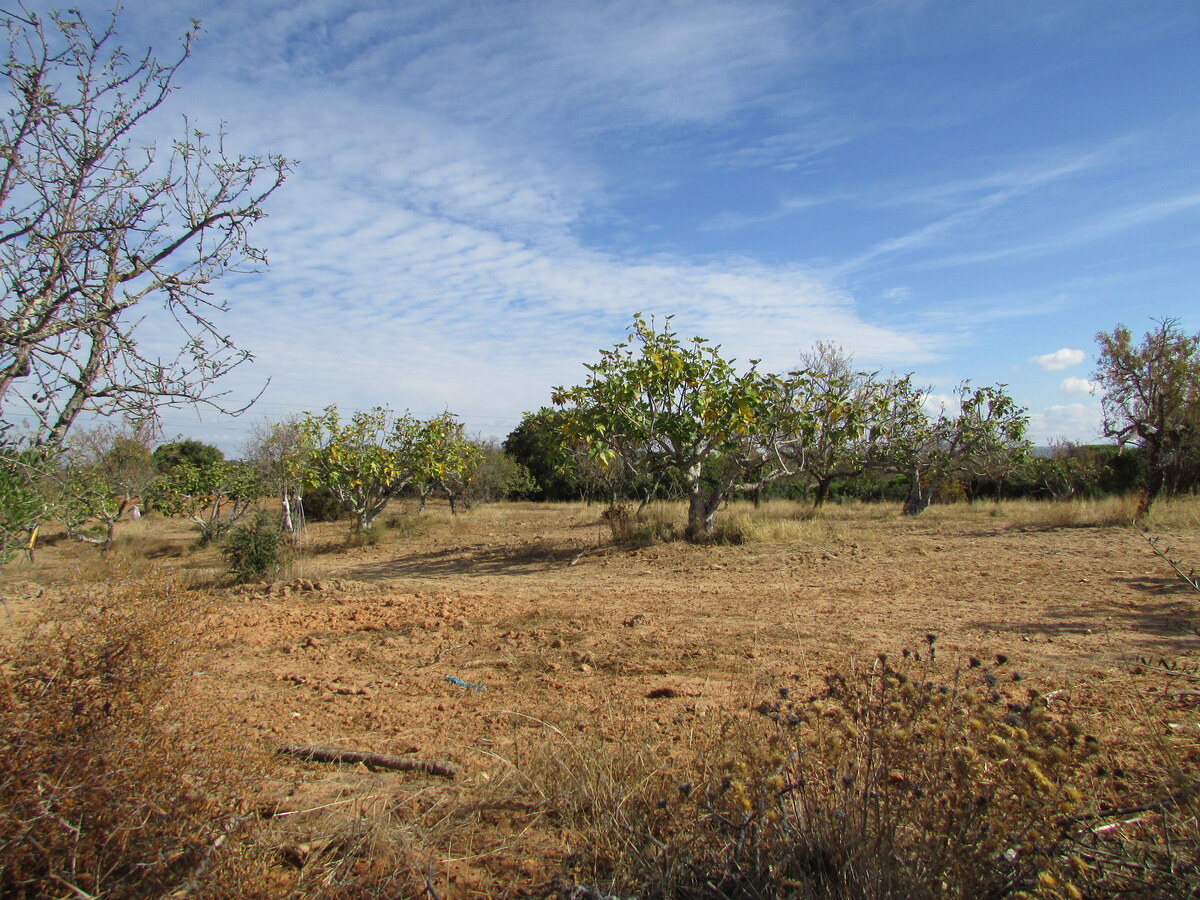
Photo: Kolforn, Wikimedia Commons, CC BY-SA 4.0 (fig orchard near Albufeira, Algarve).
Read next
Serradura: the dessert named after sawdust, from Macau or Portugal
A spoon slides through the cream, and the biscuits soften without quite giving up their shape: serradura is eaten…
Rosquilha d'Argozelo: the Easter ring that keeps a village alive
It is shaped by hand into a ring and baked in a wood oven. In Argozelo, a small village in Trás-os-Montes, the…
Olive oil in Portuguese sweets: Abrantes fair 2026 puts it centre stage
In a Portuguese home, olive oil lives on the table first: a drizzle on bread, a drop in the soup. Yet when we talk…
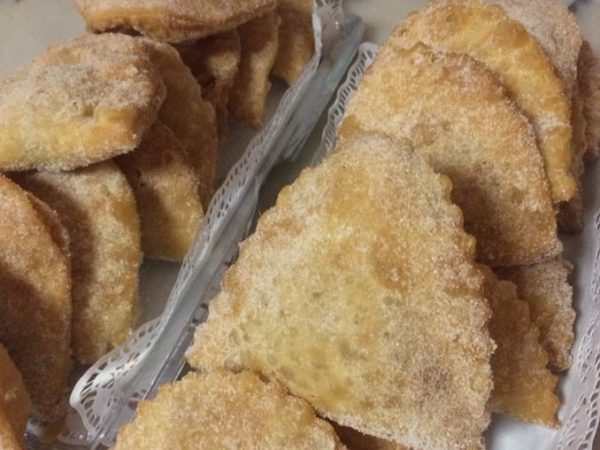
Azevias: the chickpea Christmas pastry that carries the name of a fish
A fried half-moon, rolled in sugar and cinnamon, filled with chickpeas. The azevia, a Portuguese Christmas pastry,…
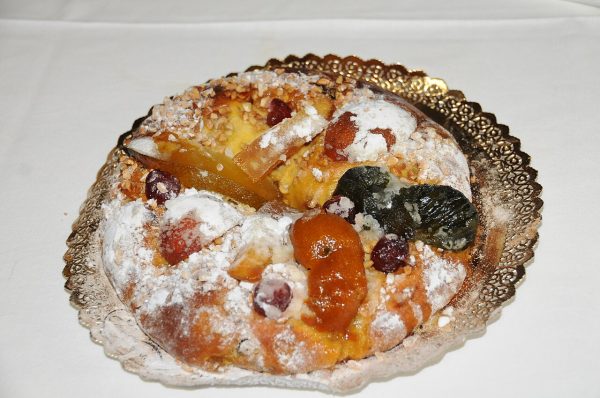
Bolo-rei: the Kings' cake where whoever finds the bean pays
A golden crown of dough, candied fruit, and deep inside one slice, a dried bean. In Portugal, whoever finds it pays for…
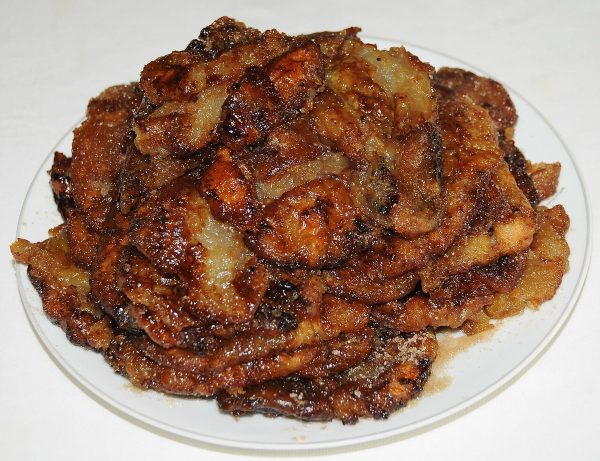
Rabanadas: the slice of bread Portugal served to new mothers
Day-old bread, milk, an egg, a pan. In Portugal the Christmas rabanada is also called fatia de parida: the slice for…
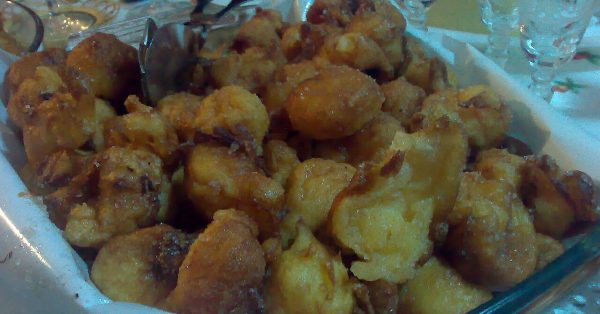
Filhós and sonhos: two fried balls, two doughs, one Portuguese Christmas
A golden ball dusted with cinnamon, picked up with your fingertips from the Christmas table. In Portugal it is a filhó…
Pudim Molotof: the egg-white dessert named after a fortress
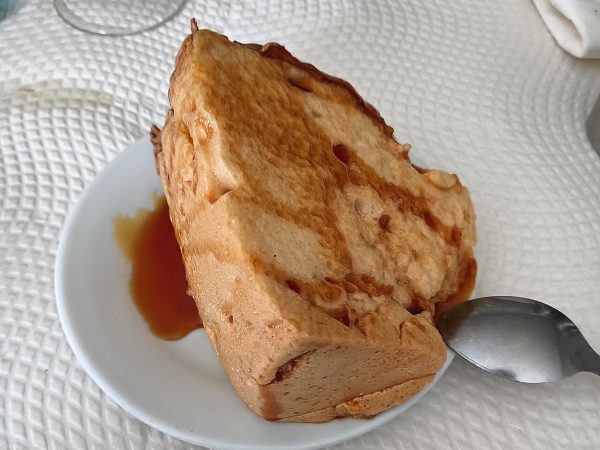
A cloud in a mould, caramel running down the sides, almost nothing under the spoon. Pudim Molotof has two stories: the…
Find our artisan pastries in our Brussels stores or order online.
Order now Our foodtruck for your events Our stores