
Azevias: the chickpea Christmas pastry that carries the name of a fish
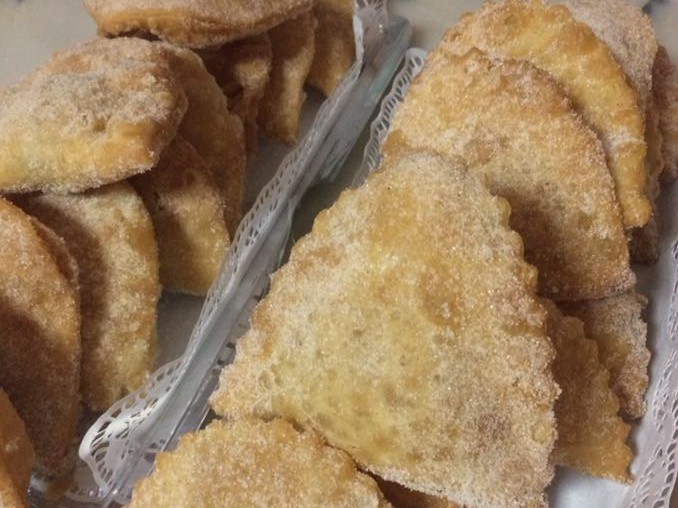
It comes out of the oil as a half-moon, the dough blistered and golden, and goes straight into sugar and cinnamon. You bite, the crust crackles, and inside waits a thick filling that has almost nothing of a custard about it: chickpeas. The azevia is a fried Christmas pastry, and its name has nothing to do with baking.
A name borrowed from a fish
In Portugal an azevia is first of all a flatfish, in the sole family. The sources we consulted explain that the pastry took its name from the thin, flat shape, compared with other fried pastéis of the same kind. Nothing more precise is documented, and we will not invent it. The picture still holds: a flat half-moon sliding into the oil.
In the notebooks of the Poor Clares of Évora
The azevia is a doce conventual, a convent sweet, from the Alentejo. According to the Wikipedia article on it, the first written recipes appear in the refectory notebooks and cookbooks of the Poor Clare nuns of the Santa Clara convent in Évora. Another version circulates: the pastry was born in the monasteries of Coimbra, under another name, and became “azevia” in the pots of the Alentejo. That second story is oral tradition, with no known document to back it. We keep the first and flag the second.
The dough, the filling, the frying
The dough is close to a hot-water pastry: pork lard, the banha, and warm water, sometimes orange juice in place of the water. It is rolled thin, cut, filled, then folded into a half-moon or a triangle, depending on the hands.
For the chickpea version, the traditional recipe described on Portuguese cooking sites has the chickpeas cooked and peeled, then returned to the heat with water, cinnamon and lemon. Egg yolks and almonds go in. The pastry then goes into very hot oil and comes out to receive its sugar and cinnamon. It is eaten with the fingers, while the sugar still clings to the crust.
Chickpeas usually belong to savoury dishes, so finding them in a dessert surprises a Belgian palate. Cooked with yolks, almonds and cinnamon, though, they become a dense, sweet paste with a taste that recalls convent sweets.
Chickpea or sweet potato
Chickpea is the best-known filling, not the only one. In the Algarve the azevia is also filled with sweet potato, and a guide to the region's Christmas dishes lists it among the sweets of the table, with bolo de mel, broas de milho (small cornbreads), rabanadas and filhós de canudo. In the Alentejo, according to another source, the season brings filhós, azevias, sonhos, borrachos and nogados. We have already written about filhós and sonhos, two fried rounds that share the same table.
Recipes change from village to village, and none of the sources we consulted dates the arrival of sweet potato in the pastry. We will not offer a year.
What we do not know
We do not know who filled the first azevia, or in which year. Nor do we know why the chickpea won its place in dessert, or when sweet potato joined it. What the Évora notebooks allow us to say is that, on a date we cannot name, Poor Clare nuns wrote this recipe down in black and white, and that families still make it today, when the Christmas tablecloths come out.
In Brussels, at Wooly
At the Portuguese Christmas table, the Kings' cake “Bolo Rei” in our catalogue can be ordered online, with candied fruit and nuts. In Brussels, our shops in Etterbeek, Stockel, Uccle and Waterloo serve the pastel de nata, and the four addresses are gathered on a single page.
Our pastéis de nata, in seven flavours, can also be ordered online, with home delivery in Brussels and to neighbouring countries. For a birthday or a family celebration, we make birthday cakes to order in Brussels.
Sources: Wikipedia (en), “Azevia”; Wikipédia (pt), “Azevia (doce)”.
Photo: Chedlund808, Wikimedia Commons, licence CC BY-SA 4.0.
Read next
Bolo-rei: the Kings' cake where whoever finds the bean pays
A golden crown of dough, candied fruit, and deep inside one slice, a dried bean. In Portugal, whoever finds it pays for…
Rabanadas: the slice of bread Portugal served to new mothers
Day-old bread, milk, an egg, a pan. In Portugal the Christmas rabanada is also called fatia de parida: the slice for…
Filhós and sonhos: two fried balls, two doughs, one Portuguese Christmas
A golden ball dusted with cinnamon, picked up with your fingertips from the Christmas table. In Portugal it is a filhó…
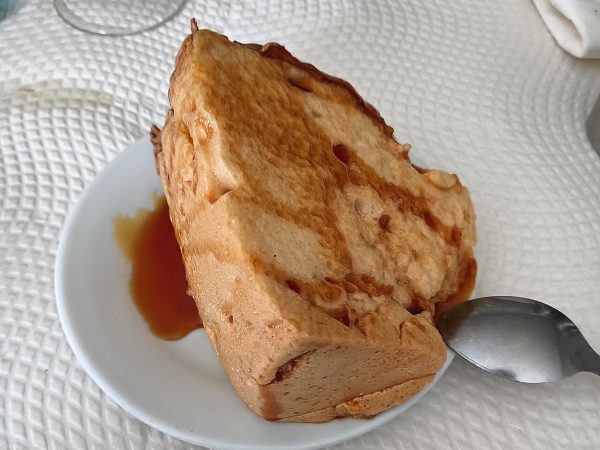
Pudim Molotof: the egg-white dessert named after a fortress
A cloud in a mould, caramel running down the sides, almost nothing under the spoon. Pudim Molotof has two stories: the…
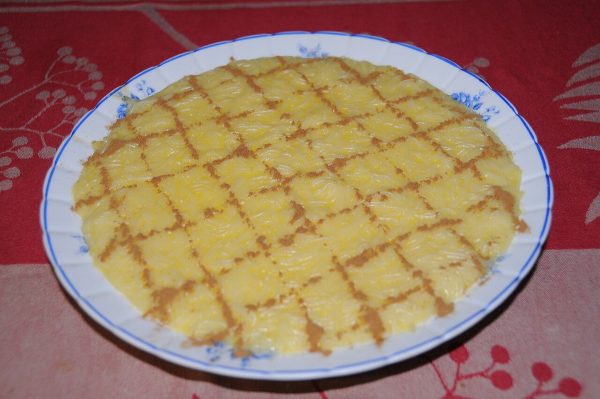
Aletria: the dough threads the Moors left on the Christmas table
First you look: cinnamon draws diamonds across a tender yellow. Aletria is made of dough threads that came from…
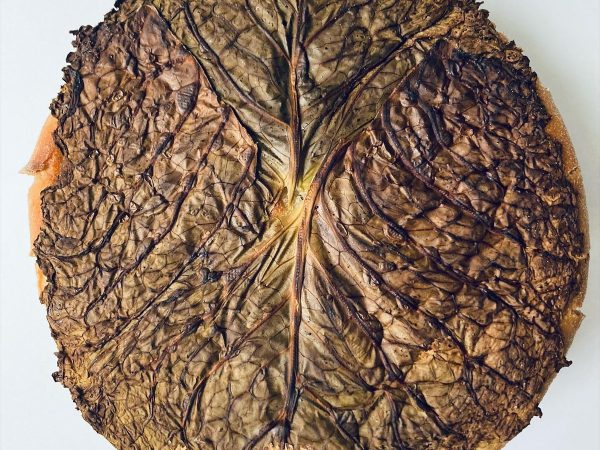
Broa de Avintes: the bread women rowed across the Douro to sell
It comes out of the oven dark, damp and almost crustless. Broa de Avintes, made of white corn and rye, once crossed the…
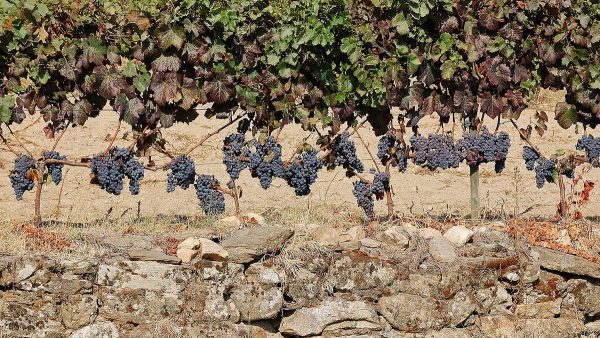
Água-pé: the water poured on the grape skins, served on St Martin's Day
It is poured into a plain glass, a hot chestnut in the other hand. Água-pé is the water poured on the grape skins after…

Pão por Deus: the Portuguese children who knock on doors on 1 November
A small cloth bag and a phrase called out at every door: on 1 November, Portuguese children ask for “Pão por Deus”.…
Find our artisan pastries in our Brussels stores or order online.
Order now Our foodtruck for your events Our stores