
Impérios in the Azores: the house where sweets go to auction
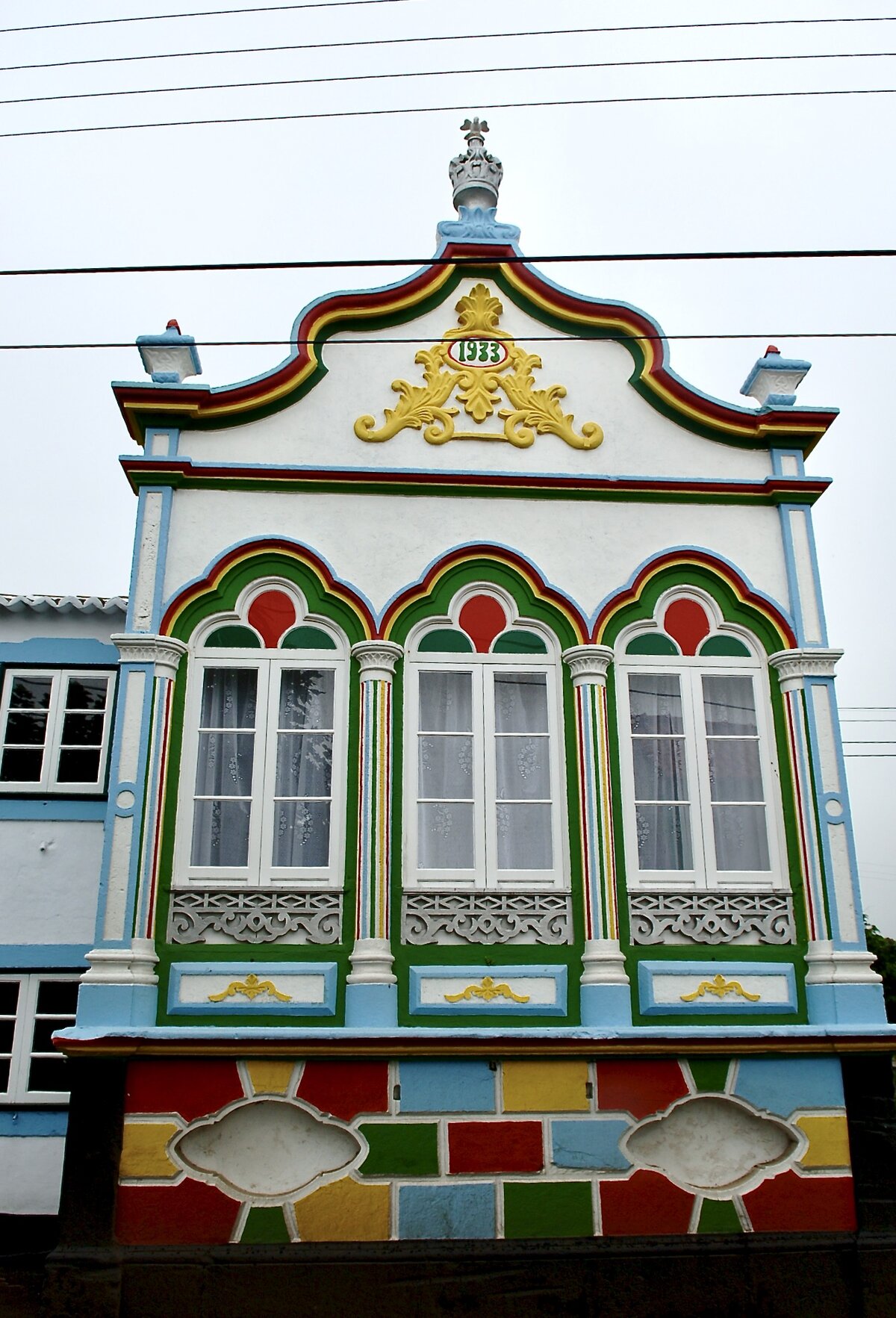
In the Azores, the feasts of the Divino Espírito Santo, the Holy Spirit, have their own houses. They are called impérios. On the island of Terceira, this is where the faithful's offerings are kept until they find a buyer. Today the moment is announced over the microphone, and the piece goes to whoever can raise the most money.
Among these offerings is the alfenim. It is a white sugar, opaque and pliable, pulled by hand into the shape of an animal, a flower, a heart or a small human figure. It has no equal in Portuguese confectionery, and it exists only through the gesture of the hands.
A medieval origin, brought by the Arabs
The reference sheet on Portuguese traditional products, kept by the DGADR, classes alfenim among the medieval sweets of Arab origin. It has survived mainly on the island of Terceira, and it reached the Azores with the mouriscos, the converted Moors who settled there. The region's large sugar cane production did the rest: the sugar was available, and the gesture was passed on.
The sweet later found its place in convent confectionery. It was offered as a luxury gift to distinguished people, and it decorated wedding tables. A gift and a decoration, then, far more than a simple festive sweet.
The gesture: pulling the sugar until it turns white
The recipe needs few ingredients: a kilo of sugar, four decilitres of water, a tablespoon of white wine vinegar and a little butter for the tin. The sugar is boiled to the point the Portuguese call ponto de bola mole, the soft ball stage. The syrup is poured into a buttered metal container, which itself stands in a second container of cold water.
The sugar cools first at the edges. It must then be pushed back towards the centre with a knife, and worked by hand: stretched, folded, stretched again, until it is elastic, opaque and white. The mass is then cut into pieces with scissors, and each piece is shaped while it is still warm. If the sugar cools too much, the figure no longer holds. The pieces are therefore kept near the mouth of the oven, or under an intermittent electric heat source.
This window of a few minutes is what makes the sweet difficult. A craftsman can shape a leg, an arm, a dove or a small cow, then take up the mass again before it hardens. Everything depends on the warmth of the sugar, and on the hand that holds it.
Figures offered as a promise
During the Espírito Santo feasts, alfenim often takes the form of parts of the human body. These pieces are ex-votos: they are offered to thank for a miracle received or to fulfil a vow. The source describes a precise tradition in which each saint corresponds to an ailment. Saint Blaise protects the throat. Saint Amaro watches over the legs and arms. Santo Antão, in the sheet, intervenes for the illness of a household animal.
These offerings were presented at the Sunday mass, to the saint invoked. The white sugar then became a visible testimony of the request or of the grace received. It is this mix of art and devotion that sets alfenim apart from the other sweets of the archipelago.
The microphone of the impérios: the auction of the Holy Spirit
When alfenim is an offering to the Divino Espírito Santo, it stays in the império until someone able to raise funds for the brotherhood buys it. Today a microphone is used: the piece is called out loud, until someone offers the best quinhão, the best share.
The principle has nothing of an ordinary sale. The money does not pay for a dessert: it feeds the brotherhood that organises the feast. The sweet passes from hand to hand, and everyone goes home with a piece of the tradition.
From Portugal to Brazil, and back to the Azores
The sweet followed the routes of the Portuguese. It reached Brazil, where it is still made by doceiras in the town of Goiás Velho. In the Azores, the tradition survives mainly on Terceira and Graciosa, and the sheet also notes its presence in the pastelarias of Angra do Heroísmo, the main town of Terceira.
It can be eaten like a sweet, but it serves above all as decoration: shaped figures adorn other cakes, like a sculpture set on a table. A pastry that is as much looked at as tasted.
And in Brussels?
In Brussels, Portuguese pastry is shared between the morning coffee and the big celebrations. The pastel de nata is the gesture easiest to understand: flaky pastry, a custard filling, and a bake that must brown the top. For home delivery in Brussels, the home delivery page explains how it works. For alfenim, it is best to go back to the source, on the islands, and to listen to what the feasts say about it.
At Wooly, we tell the story of Portuguese pastry through its places and its recipes. Our shops in Etterbeek, Stockel, Uccle and Waterloo welcome you to taste these flavours.
Sources: DGADR, “Produtos Tradicionais Portugueses: Alfenim”.
Photo: Pedro Ribeiro Simões, Wikimedia Commons, CC BY 2.0.
Read next
Bolo de noiva: the Portuguese wedding cake kept for a year
In Portugal the wedding cake has one more job than the others: a slice is kept for the first anniversary. A tradition…
Encharcada: the Évora sweet whose convent origin may be a legend
Egg yolks cooked in syrup, then browned, served in earthenware. Encharcada from Évora takes its name from the word for…
Figos cheios de Olhão: the stuffed fig fishermen took to sea
At the start of November, dried figs change face in the villages of the Algarve. Split open, filled with almond,…
Serradura: the dessert named after sawdust, from Macau or Portugal
A spoon slides through the cream, and the biscuits soften without quite giving up their shape: serradura is eaten…
Rosquilha d'Argozelo: the Easter ring that keeps a village alive
It is shaped by hand into a ring and baked in a wood oven. In Argozelo, a small village in Trás-os-Montes, the…
Olive oil in Portuguese sweets: Abrantes fair 2026 puts it centre stage
In a Portuguese home, olive oil lives on the table first: a drizzle on bread, a drop in the soup. Yet when we talk…
Azevias: the chickpea Christmas pastry that carries the name of a fish
A fried half-moon, rolled in sugar and cinnamon, filled with chickpeas. The azevia, a Portuguese Christmas pastry,…
Bolo-rei: the Kings' cake where whoever finds the bean pays
A golden crown of dough, candied fruit, and deep inside one slice, a dried bean. In Portugal, whoever finds it pays for…
Find our artisan pastries in our Brussels stores or order online.
Order now Our foodtruck for your events Our stores