
Melindres d'Arouca: the little cake that likes to be coaxed
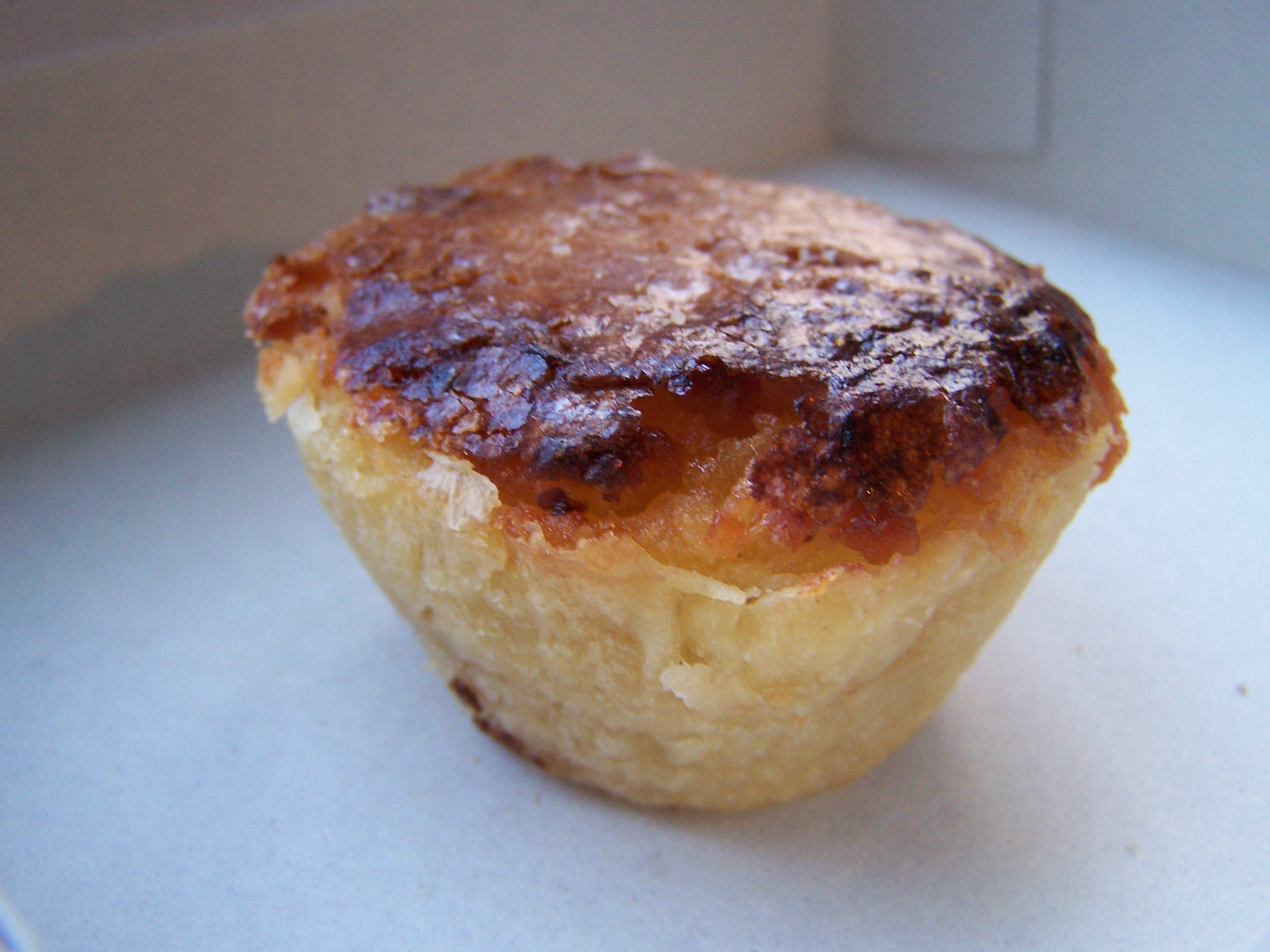
The first thing you learn about melindres is their name. In Portuguese, a melindre is a delicate, slightly affected way of doing things. A sweet bearing that name could hardly stay ordinary.
A cake the size of a palm
Melindres d'Arouca are small round cakes, about five centimetres across and one centimetre thick. The crumb is golden and soft, and the top is covered with white icing. They are sold in packs of 250 or 500 grams. The official sheet for traditional Portuguese products places them in the Norte region and notes that they are also called melindres de Arouca.
At first glance, it looks like an everyday cake. At the first bite, you understand why it carries a ceremonial name: the crumb is fine, the icing holds the surface, and the whole stays discreet, with nothing showy about it.
A family recipe, passed on by word of mouth
What stands out in the story of melindres is that they lived for a long time without being written down. The official sheet says it plainly: the Arouca recipe passes from family to family through oral tradition. Each household keeps its own gestures, and the way of making them counts as much as the list of ingredients.
Feast days first, then all year round
Originally, melindres were tied to the religious calendar. The sheet mentions Christmas and Easter, as well as the feast of Queen Saint Mafalda, abbess of the former convent of Arouca, which no longer exists. Around those dates, the mould came out, and the sweet took its place on the table for great occasions.
Then its reputation broke the rule. Today, melindres are eaten all year round, at any hour of the day. For a festive sweet, that is almost a revolution: what was once reserved for important days has become an everyday taste.
Vila do Conde and the century of convents
Arouca is not the only place to lay claim to melindres. In Vila do Conde, the sweet is documented in the 17th century, and perhaps earlier. The Brazilian sociologist Gilberto Freyre, in his book Açúcar, takes up this age. The context is well known: from the 16th century onwards, the mosteiros and convents of Portugal cultivated doçaria with great refinement, and their sweets travelled well beyond the walls.
What links these stories is the convent and the feast. A convent sweet was not made to be sold on the street corner. It was offered, to patrons, to visitors, on a saint's day or at a baptism. The melindre has kept that way of giving itself.
A recipe from 1836, with a warning
The blog Lume & Ar found a melindres recipe published in 1836 in the periodical Annona, ou mixto-curioso, printed in Lisbon. It calls for one arratel of sugar, roughly 459 grams, twenty eggs of which only three whites, cinnamon, and an amount of flour equal to the sugar. The batter is beaten for a long time, then goes into moulds in the oven.
The 1836 text already distrusts the result: « Este doce é melindroso », this sweet is delicate. The blog also notes that this recipe does not necessarily match that of the melindres of Vila do Conde. Proof that a single name can cover several ways of making it, and that the sweet has always had its variants.
What the word says about Portuguese pastry
Portuguese pastry often keeps names that describe a character: the sweet that makes you wait, the cake you break by hand, the bread that refuses to grow old. The melindre belongs to that family. It is more than something behind a display window; it tells of a way of welcoming, of sharing, of taking one's time.
Here in Brussels, the same relationship with time lives on in the pastelarias. A sweet is something you earn a little: you look at the display, ask what is ready, and accept that not everything is available at every moment.
And in Brussels?
At Wooly, Portuguese pastry has its place in our three shops: Etterbeek, rue des Tongres 16, Uccle and Waterloo. The displays change with the seasons and the festivals, and the doces that tell the story of Portugal sit alongside the counter classics. If a sweet intrigues you, the simplest thing is to ask the team what is ready that day.
To keep reading, browse all the articles on our blog, then drop by our shops in Brussels.
Sources: Produtos Tradicionais Portugueses, « Melindres » ; Lume & Ar, « Melindres : Receita Com História e Poesia ».
Photo: pastel de feijão, Lusitana, Wikimedia Commons, CC BY 2.5.
Read next
Esquecidos: the Covilhã biscuit whose batter makes you forget everything
Three ingredients, one spoon, and a batter you have to beat for so long that you forget what you were doing. That is…
Consoada: the 24 December dinner that began as a broken fast
It starts with the smell of garlic and warm olive oil in the kitchen, and it ends late at night, when nobody remembers…
Pampilhos: the cake born around 1970 in a Santarém pastelaria
You have probably seen it in a café display case, next to the pastéis de nata, without asking where it comes from. The…
Leite-creme: the festive dessert with a disputed origin
A warm custard, a veil of burnt sugar and a question nobody has settled: where does leite-creme come from? Portugal has…
Galo de Barcelos: the rooster that crowed to save a pilgrim
A pilgrim from Galicia, a judge dining with friends and a roast rooster on the plate. In Portugal people still tell of…
Store pastel de nata: never in the fridge, three minutes in the oven
How long do pastel de nata last? Three to four days, uncovered and never in the fridge. Do pastel de nata need to be…
Broa: the Portuguese bread that was rye before maize arrived
Before it became a maize bread, broa was a rye bread. Its name is older than the American grain, and its history shows…
Doçaria de feira de Vouzela: the doceiras who sold their sweets at fairs
The caladinho breaks under your teeth: dry crust, soft centre, a taste of lemon. In Vouzela, these doces de feira have…
Find our artisan pastries in our Brussels stores or order online.
Order now Our foodtruck for your events Our stores