
Galo de Barcelos: the rooster that crowed to save a pilgrim
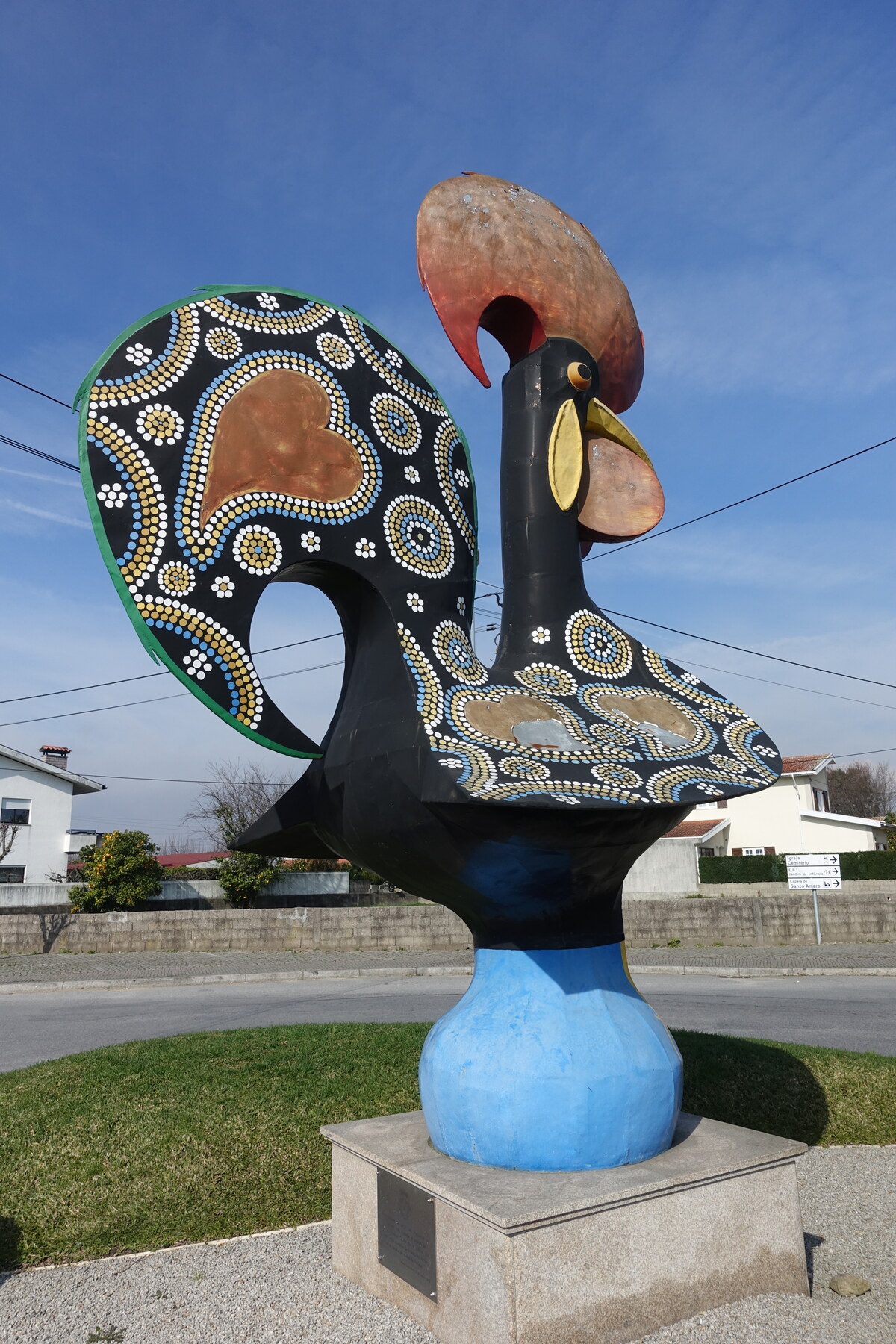
In many shops in Portugal you will find a small clay rooster, brightly painted, standing on a shelf or hanging from a string. The galo de Barcelos is everywhere, yet few visitors know where it comes from. Its story begins with a crime that has no culprit, an arrest that seems unfair and a dinner that goes badly for the man presiding over it.
A crime without a culprit, and a stranger on the road
The tale unfolds in Barcelos, a small town in northern Portugal on the Caminho Português de Santiago, one of the routes to Santiago de Compostela. The townspeople are uneasy: a crime has been committed, and nobody has yet discovered who did it.
One day a man from Galicia appears in the town and becomes a suspect. The authorities have him arrested, despite his solemn declarations of innocence. He explains that he is only a pilgrim passing through, on his way to Compostela. Nobody believes him, and the sentence falls: he will be hanged.
A roast rooster that crows
The condemned man then asks to be taken before the judge who sentenced him. He is brought to the magistrate's residence, where the judge is feasting with friends. The man repeats that he is innocent. Faced with the disbelief of the guests, he points to the roast rooster on the table and speaks the line the legend has kept: “This rooster will crow when they hang me!”
At that moment, the roast rooster rises on the table and crows.
The judge realizes his mistake and runs to the gallows. There he finds that the condemned man has been saved by a badly tied knot. The man is set free and sent on his way in peace. The miracle hung on very little: a rope that was not tightened properly.
The monument, the date, and what we do not know
The legend is linked to a 17th-century monument: a calvary where a rooster is carved at the foot of the crucified Christ. It stands near the ruins of the Paço dos Condes de Barcelos and is now part of the collections of the town's Archaeological Museum.
Sources do not agree on the date of the legend. Some place it in the Middle Ages, in the 15th century, while others do not commit to a date. There are variants too: one places the crime in a neighbouring village, Barcelinhos, and tells that it went unpunished.
The most widespread version says that, some time after the outcome, the galo de Barcelos was made and the matter was closed. The rooster then became a symbol of the town.
A symbol that travels
The galo de Barcelos is shaped from clay and painted by hand. It has become one of the most recognizable symbols of Portugal, and it is often brought home as a travel souvenir.
But a souvenir does not tell the whole story. Behind the little figure lies a tale of justice, a badly tied knot and a rooster that crows at the wrong moment for a judge.
And in Brussels?
At Wooly there is no clay rooster on the counter. There are pastéis de nata, doces and other Portuguese pastries, made in our three shops: rue des Tongres in Etterbeek, in Uccle and in Waterloo. For pastel de nata lovers, the pastel de nata category presents our recipes, and home delivery in Brussels lets you receive the pastries at home.
What links the legend to our trade is the table. A gathering that eats, a conversation that gathers pace and a story that gets retold around it. If you would like to read more about Portuguese pastelarias, our blog is the place to start, and our stores page shows you where to find us.
Sources: Wikipedia, “Lenda do Galo de Barcelos”.
Photo: Joseolgon, Wikimedia Commons, CC BY-SA 4.0.
Read next
Store pastel de nata: never in the fridge, three minutes in the oven
How long do pastel de nata last? Three to four days, uncovered and never in the fridge. Do pastel de nata need to be…
Broa: the Portuguese bread that was rye before maize arrived
Before it became a maize bread, broa was a rye bread. Its name is older than the American grain, and its history shows…
Doçaria de feira de Vouzela: the doceiras who sold their sweets at fairs
The caladinho breaks under your teeth: dry crust, soft centre, a taste of lemon. In Vouzela, these doces de feira have…
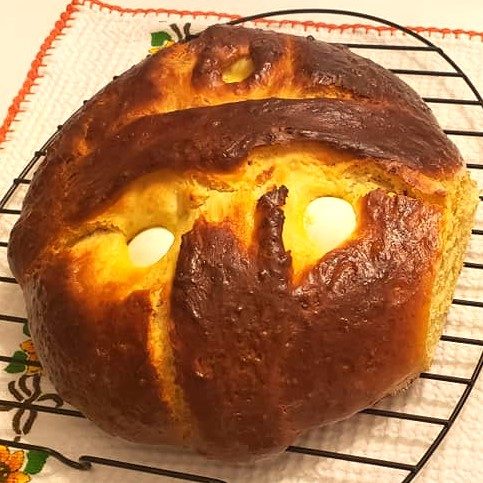
Folar: the Portuguese Easter cake a godparent gives their godchild
On Easter Sunday in Portugal, a cake arrives at the table with a whole egg set on top, cooked in its shell and set in…
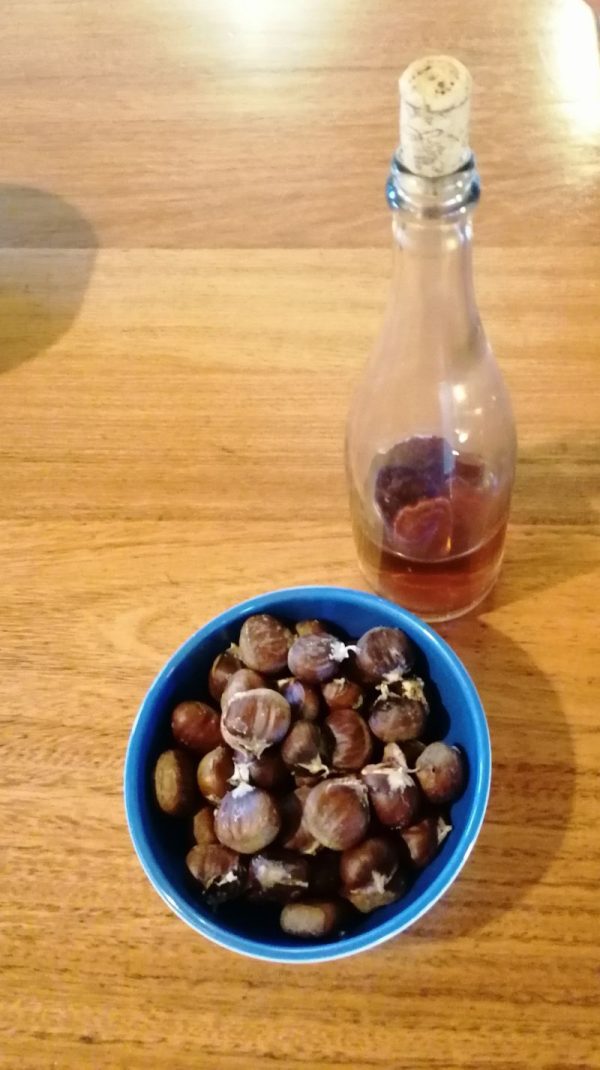
Jeropiga: the sweet wine you stop with brandy, poured at the magusto
Some wines you let ferment and some you stop. Jeropiga belongs to the second group. In Trás-os-Montes it is made in a…
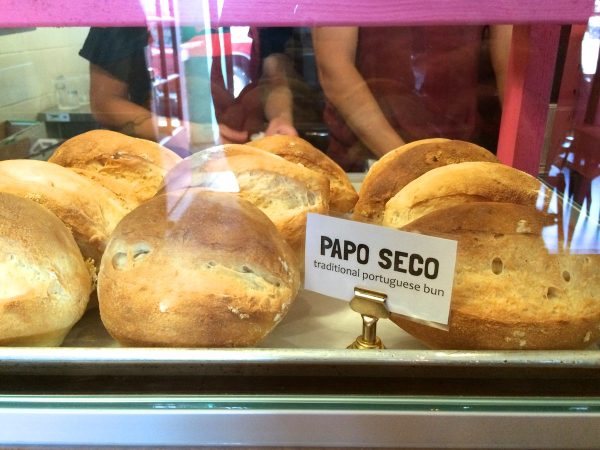
Papo-seco: the Portuguese breakfast roll, minus its maminhas
It crackles under your thumb and is almost always eaten in the morning. The papo-seco, called carcaça or molete…
The doces were not born in convents: the myth that won't die
Cloistered nuns, egg yolks beaten by the dozen: the convent legend clings to Portuguese pastry. Historian João Pedro…
Palha de Abrantes: the golden straw the Tagus carried to Lisbon
On the Tagus, at Abrantes, a sweet took its name from the straw barges carried to Lisbon. Golden egg threads, an almond…
Find our artisan pastries in our Brussels stores or order online.
Order now Our foodtruck for your events Our stores