
Broa: the Portuguese bread that was rye before maize arrived
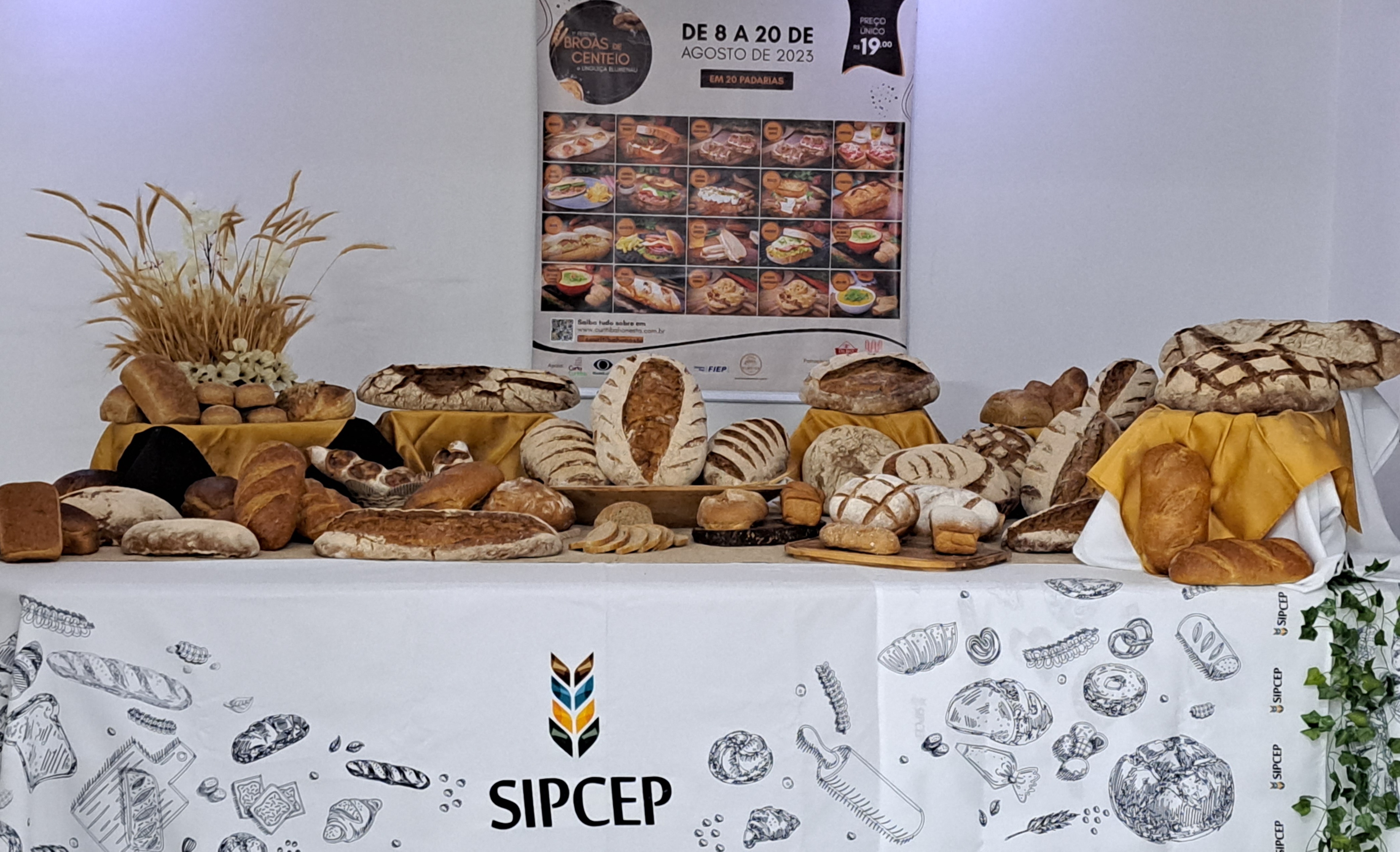
The bread the Portuguese call broa was not always made with maize. Before ships brought that grain back from the New World, it was a rye bread. Its story starts there, with a word older than maize itself.
A rye bread first
Portuguese Wikipedia puts it plainly: before maize was discovered in the Americas, broa was originally made with rye flour. Maize flour came later, as an addition, and eventually became the best-known version.
Portuguese broa usually has a dense crumb and a thick crust that cracks under the knife. It is also made in Galicia, Brazil, Angola, Mozambique and Cape Verde, and each country keeps its own way of kneading it.
Today broa is a mix of maize and wheat flour or, less often, maize and rye. Broa de Avintes, from the Douro valley, is a case in point: it combines maize with rye. We wrote an article about it: the broa de Avintes and the padeiras (female bakers) who crossed the Douro.
The word broa, older than maize
The word comes, according to the etymology usually accepted, from a pre-Roman Celtic term, boruna. It survives in Spanish as borona, which also means a bread made from coarse grains. The word therefore crossed the centuries before maize reached the peninsula.
It is also thought that broa was brought in by the Visigoths or the Suevi, who called bread brauþ. This is a lead, not a certainty: no precise date settles the question. What is certain is that bread was there long before the American grain.
Maize arrives, the names change
Maize comes from Mesoamerica. Its cultivation spread beyond the American continent with the great voyages of the 15th century. The word “maize” that we use comes from the Taïno language, spoken on Hispaniola, and it is attested in Portugal by António Galvão in his Tratado dos descobrimentos, published in 1563.
Today maize is grown on every continent, and only wheat and rice are produced in greater quantities. A grain that went around the world in a few centuries, without ever having been, at the start, a food of Europe.
For historians, the old word milho is a problem. Until the 16th century, it referred indiscriminately to several Old World cereals, such as millet and sorghum. A medieval milho is therefore not necessarily maize: old texts must be read with care.
In the 18th century, the American grain still carried a long list of regional names in Portugal: milho-grosso, milho-grande, milho-zaburro, milhão, milho-de-maçaroca. A 1798 dictionary, the Elucidario, lists them. Each name shows a different way of saying the same plant.
Minho and the Azores, where maize took root
Today maize growing is concentrated mainly in Minho, in the north of the country, and in the Azores. In Minho, the landscape still bears the trace of this crop, with the espigueiros, small granaries where the cobs are kept. Sowing takes place between March and June, and the harvest in September.
What broa says about the Portuguese table
A broa is not just a recipe. It shows which cereals a region had within reach, and when it was able to change them. A rye broa and a maize broa carry the same name, but they do not tell the same story.
At Wooly, we tell the story of Portuguese pastry through its gestures and its origins, and the pastel de nata remains the thread running through our shops in Etterbeek, Uccle and Waterloo. If this article makes you want to extend the meal, our pastel de nata category is waiting for you. In Brussels, our home delivery saves you the trip, and our shops will show you the closest one.
Sources: Wikipedia (pt), “Broa” ; Wikipedia (pt), “Milho”.
Photo: Oscar Luzardo, Wikimedia Commons, CC BY-SA 4.0.
Read next
Doçaria de feira de Vouzela: the doceiras who sold their sweets at fairs
The caladinho breaks under your teeth: dry crust, soft centre, a taste of lemon. In Vouzela, these doces de feira have…
Folar: the Portuguese Easter cake a godparent gives their godchild
On Easter Sunday in Portugal, a cake arrives at the table with a whole egg set on top, cooked in its shell and set in…
Jeropiga: the sweet wine you stop with brandy, poured at the magusto
Some wines you let ferment and some you stop. Jeropiga belongs to the second group. In Trás-os-Montes it is made in a…
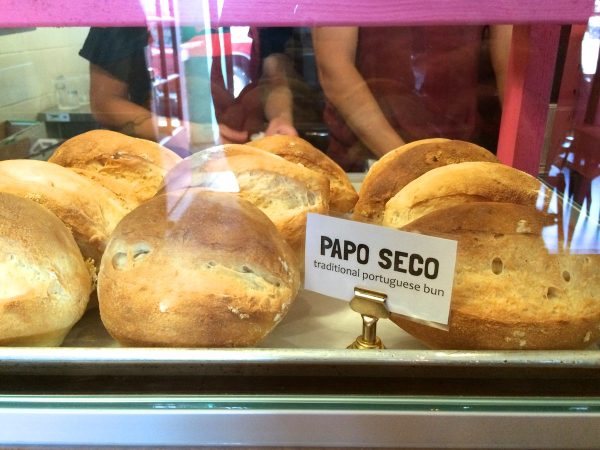
Papo-seco: the Portuguese breakfast roll, minus its maminhas
It crackles under your thumb and is almost always eaten in the morning. The papo-seco, called carcaça or molete…
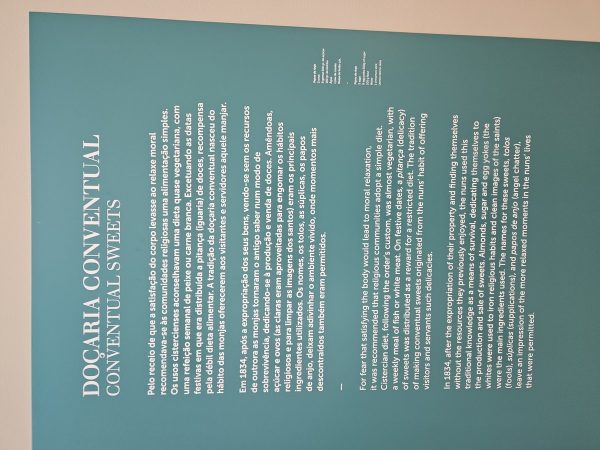
The doces were not born in convents: the myth that won't die
Cloistered nuns, egg yolks beaten by the dozen: the convent legend clings to Portuguese pastry. Historian João Pedro…
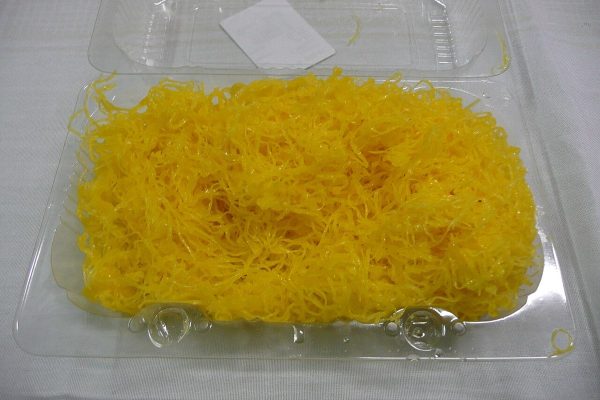
Palha de Abrantes: the golden straw the Tagus carried to Lisbon
On the Tagus, at Abrantes, a sweet took its name from the straw barges carried to Lisbon. Golden egg threads, an almond…
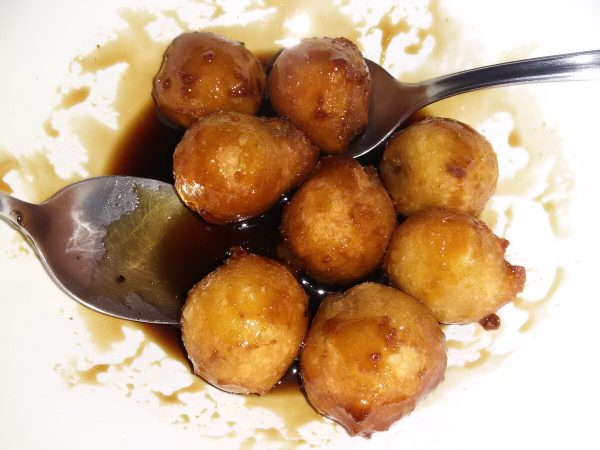
Bilharacos: the pumpkin Christmas sweet from Lousada to Aveiro
A kitchen in Lousada, a Christmas evening, a woman listing her ingredients from memory. Bilharacos are a pumpkin sweet,…
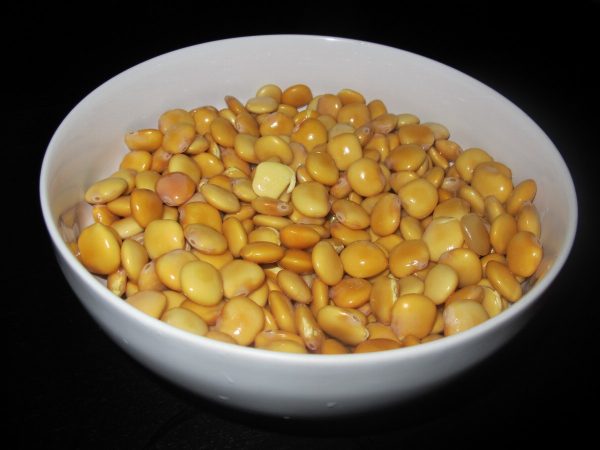
Tremoços: the poor man's seafood that goes with beer
On the table of a tasca, before the beer even arrives, there is often a small bowl of yellow seeds. Raw, tremoços are…
Find our artisan pastries in our Brussels stores or order online.
Order now Our foodtruck for your events Our stores