
The Pastel de Tentúgal, Portugal's Most Delicate Pastry
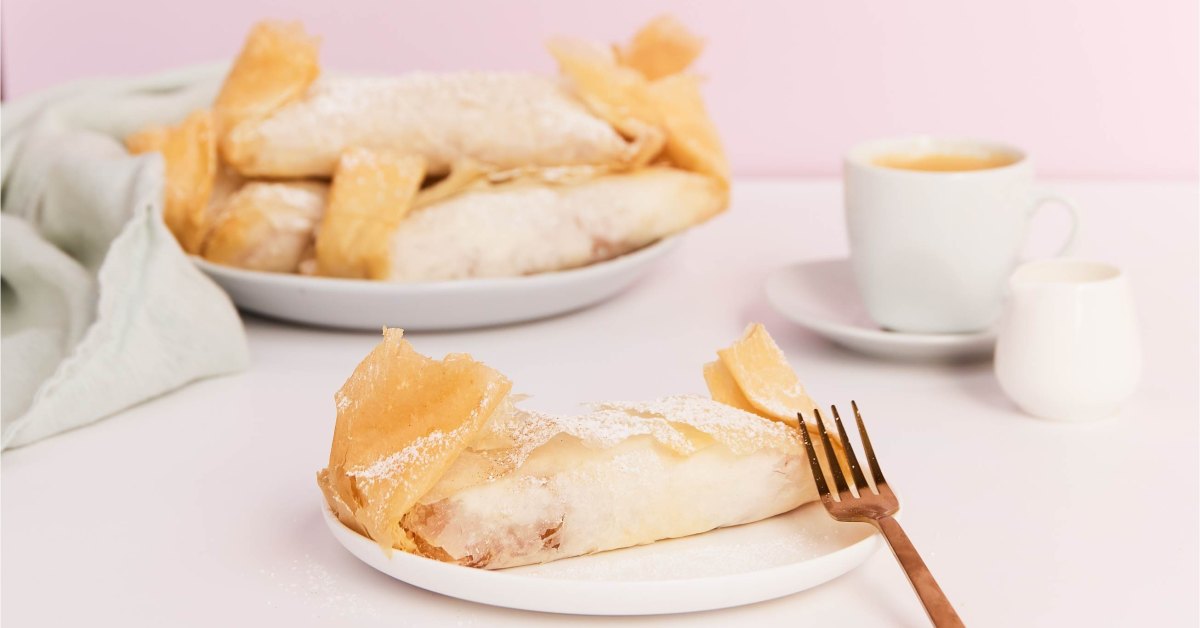
In short: The pastel de Tentúgal is a 16th-century convent pastry created by the Carmelite nuns of the Convento de Nossa Senhora da Natividade in Tentúgal, near Coimbra. Its very thin dough is stretched by hand until translucent, then rolled around a cream of egg yolks and sugar. Wooly Pâtisserie sells it at €7.90 each.
It cracks before you've even touched it. A sheet of pastry so thin it's almost see-through, baked golden and crumpled like tissue paper, shattering into shards the moment a fork presses down. Inside: a warm, dense filling of egg yolks and sugar, nearly runny. This is the pastel de Tentúgal, and odds are you've never even heard of it.
The story starts in the 16th century, in a small convent in Tentúgal, near Coimbra, in central Portugal. The Carmelite nuns of the Convento de Nossa Senhora da Natividade used egg whites to starch linen and clarify communion wine. That left dozens of egg yolks a day going to waste. Instead of throwing them out, the nuns invented a pastry: dough stretched by hand until it was almost invisible, wrapped around a vanilla-scented egg cream. The recipe stayed secret for more than three centuries, whispered from one sister to the next, until the convent's last nun died in 1898. Only then did women from the village step in to save the technique from disappearing with her.
What strikes you when you hold a pastel de Tentúgal is how deliberately fragile it is. Unlike the pastel de nata, protected by its crisp shell, this one has almost no defences: the pastry tears, the cream spills a little, and that's exactly the point. Today the recipe is protected under a Protected Geographical Indication, meaning it can't legally be made anywhere else and called by that name. It's a pastry that refuses to be standardised, born in a convent and still loyal to that patient gesture: stretching the dough by hand, sheet after sheet, until it lets the light through.
At Wooly, that same idea of a technique passed down drives everything we do: the doces conventuais recipes, the hand-worked pastry, the egg cream cooked slowly rather than mass-produced. Our pastéis de nata follow that same artisanal discipline, layer by layer, as a small nod to the nuns of Tentúgal who turned leftover egg yolks into a national treasure.
Next time you walk past one of our shops in Brussels, let yourself be tempted by a pastry still warm from the oven, and spare a thought for that convent dough that took four centuries to reach your plate.
What is a pastel de Tentúgal?
A roll or rectangle of extremely thin pastry, baked golden, filled with a cream of egg yolks and sugar, the same doce de ovos found throughout Portuguese convent baking. It is dusted with icing sugar and eaten by hand.
What sets it apart from everything else is the pastry. It is stretched by hand until it is translucent: you should be able to read text through it. There is no butter or fat in the dough itself, only flour, water and salt.
The pastry you cannot make at home
The massa tentugalense is worked on a large table covered with a cloth. The ball of dough is pulled by hand, from the centre outwards, until it covers the whole table in a sheet of a thinness no rolling pin can achieve. It is then left to dry slightly before being cut.
It is a gesture, not a recipe. It needs a table several metres long, a stretched cloth, stable humidity and years in the hands. That is why we publish no recipe here: it would cost you an afternoon for a result with nothing in common. Shop-bought filo gives a distant idea, but it is fatty and behaves differently in the oven.
Why it is so fragile
A dough with no fat and no developed gluten does not bend: it breaks. A pastel de Tentúgal cracks at the slightest knock, and that is normal: it is in fact the sign that it is properly made. One that bends without breaking has pastry that is too thick.
It is also what makes it difficult to transport, and why it is rarely found far from its region of origin.
Tentúgal, the convent and the protected name
Tentúgal is a village in the Coimbra region. The recipe comes from the convent of Nossa Senhora da Natividade, where the Carmelite nuns who lived there from 1565 to 1898 prepared it. As everywhere in the doçaria conventual, the abundance of egg yolks comes from using the whites to clarify wine and starch habits.
Since 2013, the Pastel de Tentúgal has held a European protected geographical indication. The name is reserved for production from the defined area, under a specification that describes the pastry and the filling precisely. Along with ovos moles from Aveiro, it is one of the few Portuguese sweets with that protection.
Pastel de Tentúgal, pastel de nata, travesseiro: the differences
| Pastry | Filling | Shape | |
|---|---|---|---|
| Pastel de Tentúgal | Hand-stretched, fat-free, translucent | Yolk cream | Roll or rectangle |
| Pastel de nata | Butter puff pastry, rolled | Yolk custard | Tartlet |
| Travesseiro de Sintra | Puff pastry | Egg and almond cream | Long cushion |
All three share the same convent origin and the same base cream. It is the pastries that separate them, and Tentúgal's is by far the most technical.
How it is eaten
At room temperature, by hand, with a coffee. Never from the fridge: moisture softens the pastry and destroys exactly what makes the thing worth eating. It is eaten within two or three days, and does not keep any longer.
The icing sugar goes on at the last moment: dusted too early, it melts on contact with the cream and disappears.
Sources: Direção-Geral de Agricultura e Desenvolvimento Rural, “Pastel de Tentúgal PGI”; Wikipédia (pt), “Pastel de Tentúgal”.
Read next
Morgado: the Algarve's Hand-Sculpted Fig and Almond Secret
A hand presses a small ball of almond paste, folds it closed around a dark, fragrant filling. That's how a morgado is…
Farturas: The Fairground Pastry That Lights Up Portugal's August Nights
The oil hisses, a long ribbon of batter spirals down into the fryer, curls back on itself, browns unevenly, and cracks…
Ovos Moles: The Convent Sweet Aveiro Never Stopped Making
A wafer shell so thin it's barely thicker than a sheet of paper, cracking under your teeth before a deep golden cream…
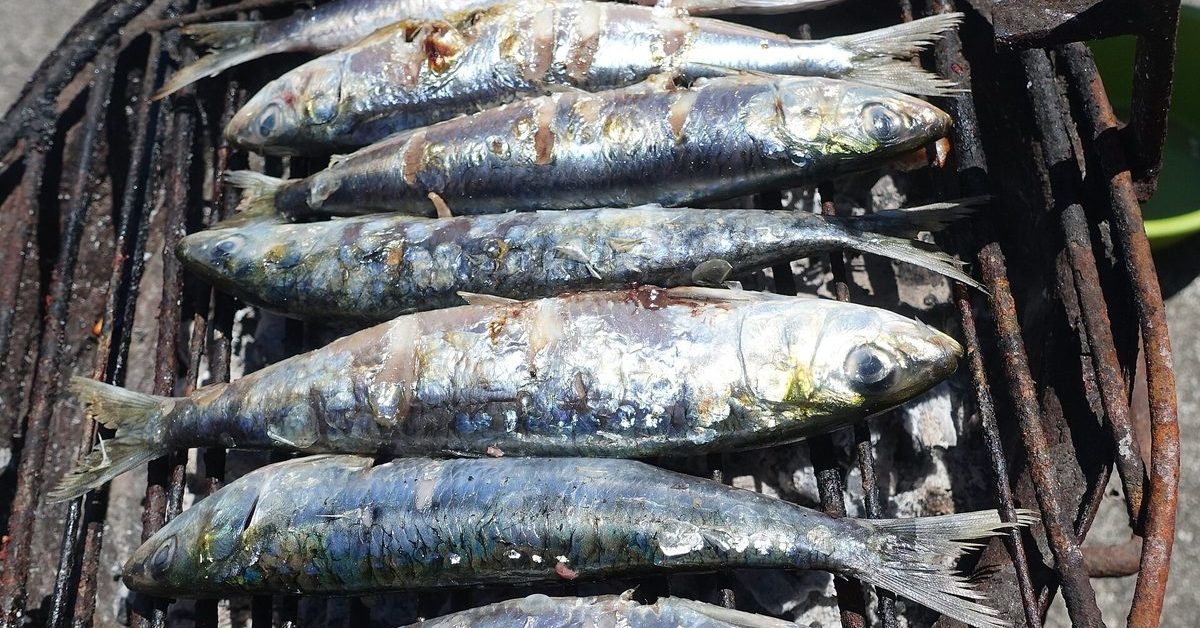
The Sardinhada: Lisbon's Summer Ritual of Grilled Sardines
A grill set right on the cobblestones. A cloud of oily smoke curling up between two façades strung with paper garlands.…
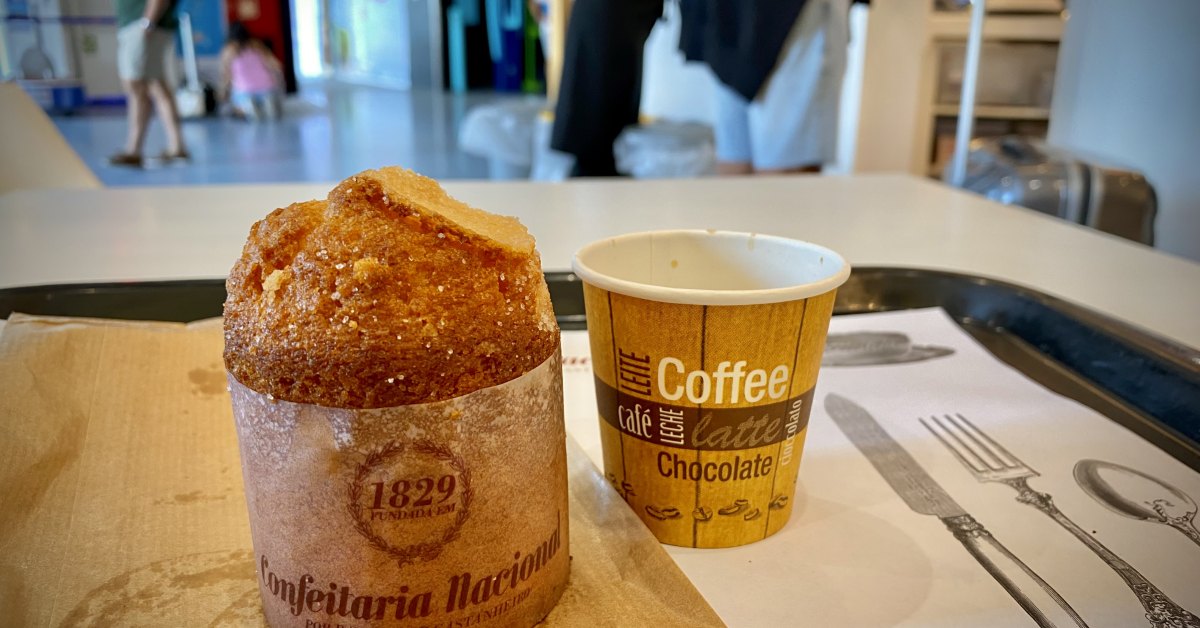
Bolo de Arroz: The Little Cake Standing Between Lisbon and the Loss of Its Cafés
Standing at the counter, an espresso gone in three sips, a small golden cake in hand: that's the most ordinary, most…
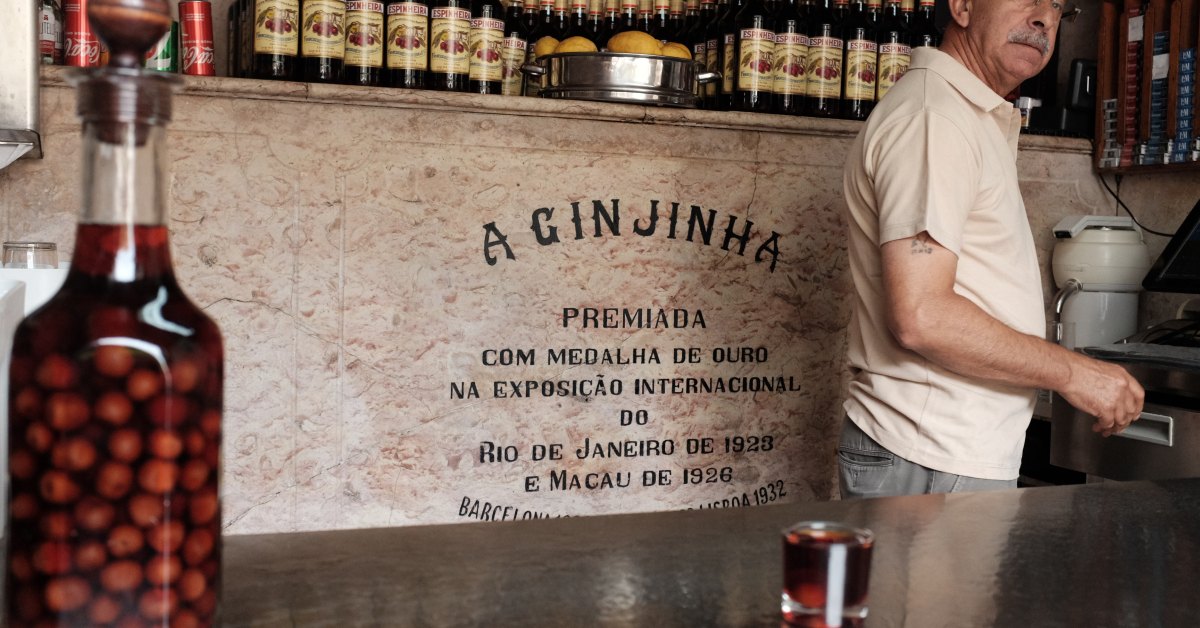
Ginjinha: The Tiny Cup That Sums Up Lisbon
The first time, someone hands you a plastic cup barely bigger than a thimble. You knock it back in one go, standing on…
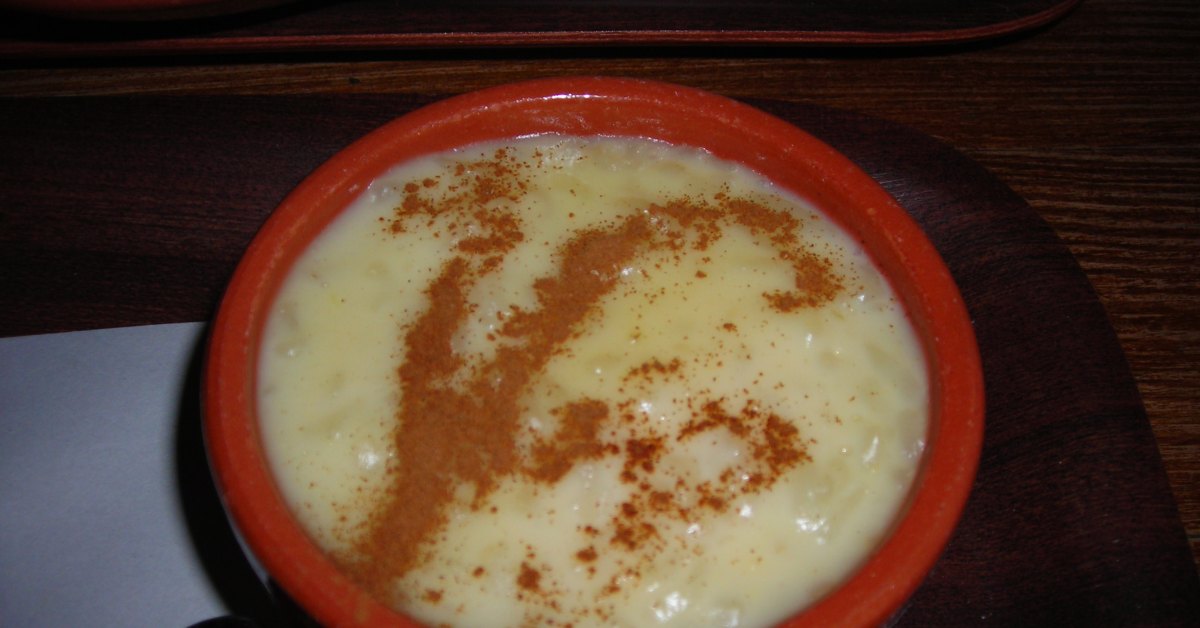
Arroz Doce: The Portuguese Rice Pudding That Ends Every Family Table
I still remember the first time someone handed me a bowl still faintly warm, with a fan of cinnamon traced across the…
The Queijada de Sintra: the little cake people once used to pay their taxes
A crust that snaps the moment you bite into it, a warm filling of fresh cheese and cinnamon, the queijada de Sintra was…
Find our artisan pastries in our Brussels stores or order online.
Order now Our foodtruck for your events Our stores