
The ponto de açúcar: the fingertip test that decides everything
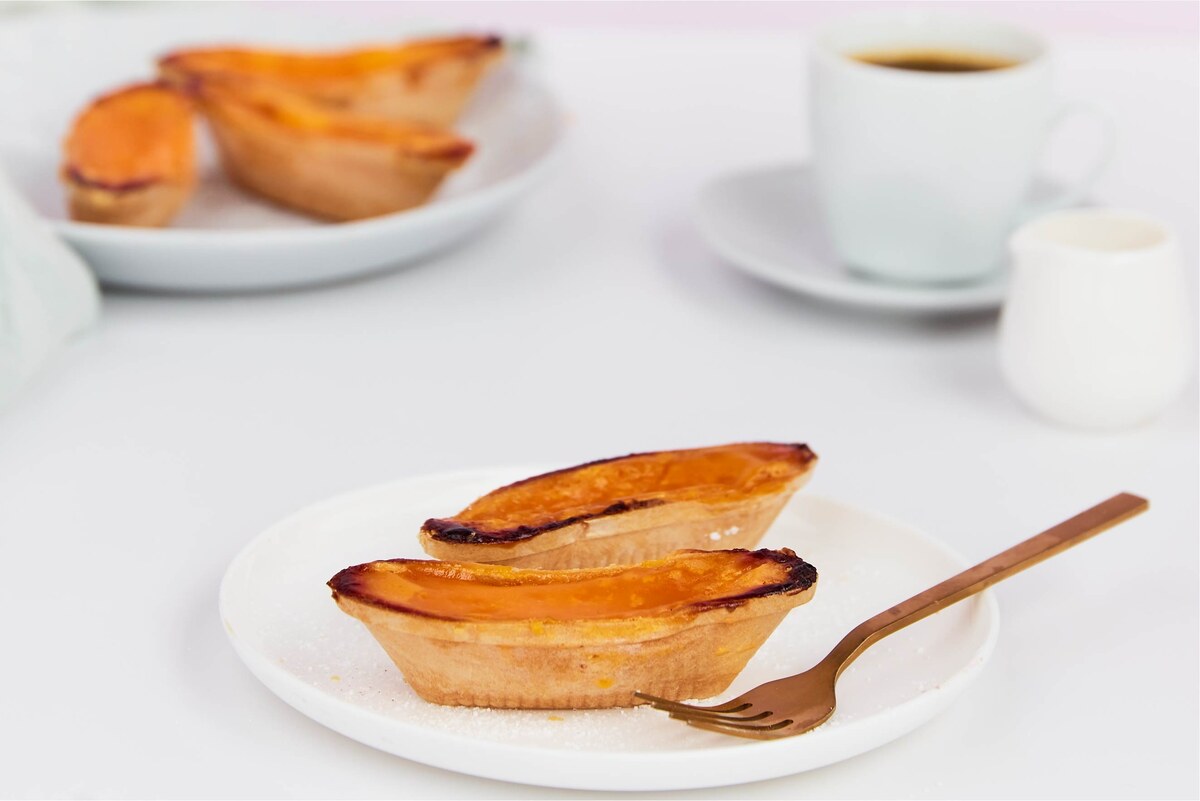
There is a moment in a Portuguese pastelaria when nobody speaks. Sugar and water have been boiling for a quarter of an hour, steam has swallowed the windows, and the pasteleiro dips two fingers into a bowl of iced water before passing them through the boiling syrup for half a second. He opens his thumb and forefinger. A thread stretches between them, or it does not. The whole dessert is decided right there, in that one second.
The gesture has a name: the ponto de açúcar, literally the "sugar point". It is no small detail. In doçaria conventual, the pastry born in Portuguese convents, there is hardly a recipe that does not begin with it.
A vocabulary, not a thermometer
Convent recipe books crossed the centuries without a single temperature. They give no degrees: they say "bring the calda to the ponto de fio". Sugar is described there the way you would describe the sea: by what it does, not by what it measures.
It helps to remember where this pastry comes from. Sugar reached Portugal in quantity through its overseas territories, and convents received a great deal of it. Egg yolks, meanwhile, piled up: tradition has it that the whites went elsewhere, to starch habits and clarify wine. What was left were mountains of yolks and mountains of sugar. Out of that arithmetic came ovos moles, fios de ovos, doce de gila, toucinhos do céu. And all of them turn on the same question: how far did you cook your syrup?
Nine states, from thread to sand
Portuguese names every stage of a boiling syrup, and each name describes a test made with the hands, a skimmer or a spatula:
- Ponto de xarope — the very beginning: you skim off the impurities rising to the surface.
- Ponto de fio — wet forefinger and thumb, pinch them together: a thread stretches between the two.
- Ponto de espadana — the falling syrup forms flat blades, like little ribbons.
- Ponto de pérola — poured slowly, it makes a firm thread ending in a small bead: the pearl.
- Ponto assoprado — you blow through the skimmer and tiny soap-like bubbles come out.
- Ponto de estrada — the spatula drawn across the bottom of the tacho leaves a road that does not close again.
- Ponto de rebuçado, or bola mole — a drop in cold water can be rolled into a ball between the fingers.
- Ponto de bola rija — that same drop no longer yields: it snaps.
- Ponto de areia — the sugar clings to the pan and turns back into grains. Too late.
Nine states for two ingredients, water and sugar. Nothing else. And between the seventh and the ninth there is sometimes barely a minute.
Why the point decides the dessert
This is not vocabulary for its own sake, it is the difference between a dessert that works and one that does not. A syrup pulled too early will not set: the cream stays loose, the doce will not hold, it goes back on the heat and it tastes of the rescue. A syrup pushed too far crystallises: the texture turns gritty on the tongue, and there nothing can be rescued at all.
Fios de ovos, those golden egg threads that travelled as far as Siam, are the textbook case: the yolk is poured in a thin stream into the boiling syrup, and it is the exact state of that syrup that decides whether the thread forms, breaks or drowns. Doce de gila plays the long game instead: the squash strands must turn translucent without the calda catching. In both cases the recipe fits in four lines. The craft sits in the fingers.
The gesture cannot be written down
That is probably why these recipes are so sparing with detail. A nun writing "até ao ponto de pérola" was not writing for a stranger: she was writing for the sister beside her, who had seen the calda a thousand times and needed only the right word. The rest was learned next to the tacho, with the odd small burn.
The kitchen thermometer has made all of this safer, and nobody in a Portuguese kitchen complains about that. But it has not replaced the vocabulary. Ask a Portuguese pasteleiro where his syrup stands: he will not give you a number, he will give you a word. Fio. Pérola. And his fingers will be wet.
At Wooly, that vocabulary is not archaeology. The convent sweets on our counter — the barquinhos de Aveiro, the pastel de Tentúgal — all descend in a straight line from that gesture, made in a Portuguese convent in front of a copper tacho. We serve them in Brussels from our counters in Etterbeek, on Rue des Tongres, and in Stockel, Uccle and Waterloo: addresses and opening hours are on our shops page.
Next time you bite into a Portuguese doce and the texture feels exactly right, not slack, not sandy, precisely where it should be, remember that somewhere, someone wet two fingers and counted to one.
Read next
Bolo de bolacha: the Portuguese cake that never sees an oven
It never goes into the oven. Three things are enough — Maria biscuits, strong coffee, buttercream — plus one night in…
Confeitaria Nacional: the Lisbon pastry shop open since 1829
At dusk, on the corner of Praça da Figueira, the red sign lights up before the street lamps do. Below it, a row of…
Dom Rodrigo: the Algarve sweet you unwrap like a candy
A rustle first. You pull at two corners of metallic paper, the golden ball appears, sticky, dusted with cinnamon. Dom…
Uvada: the harvest sweet they boiled at night, without sugar
There is no sugar in uvada. Not a gram. This Portuguese harvest sweet draws all of its sweetness from the grape itself,…
Tigelada: the dessert baked in the village bread oven, after the bread
The oven has just given up its bread. The vault is still glowing, the embers pushed to the back: that exact moment is…
Brisas do Lis: the Leiria cake that had to change its name
They were called the little kisses of the Lis, until the jokes at the counter forced Leiria to find another name. The…
Ceylon cinnamon: the bark the Portuguese found by accident
On a pastel de nata that is still warm, it comes last, in a gesture lasting one second. Yet this brown powder has…
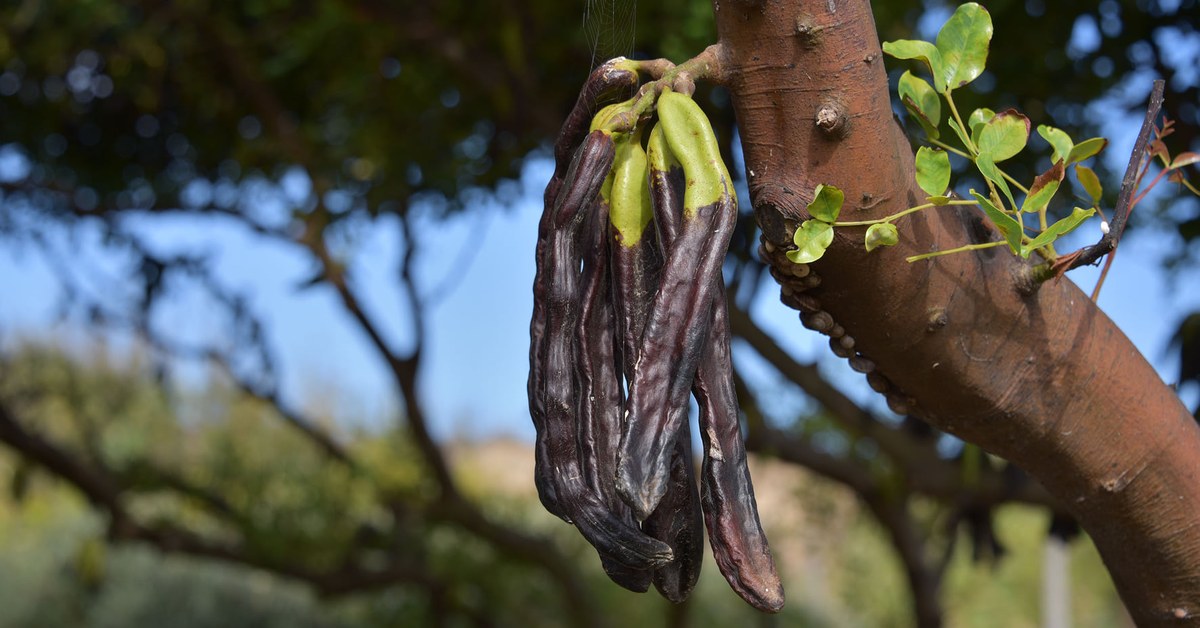
Alfarroba: the Algarve's black gold, harvested with a long pole
In late August, in the hills behind the Algarve coast, you hear it long before you see anything: a dry, repeated…
Find our artisan pastries in our Brussels stores or order online.
Order now Our foodtruck for your events Our stores