
Ceylon cinnamon: the bark the Portuguese found by accident
On a pastel de nata that is still warm, it comes last. Thumb on the edge of the box, a pinch, half a turn of the wrist, done. The gesture takes a second and nobody watches it. Yet it is the closing move of one of the longest trading stories Portugal ever wrote.
Because this brown powder is not a spice like the others. It is a bark.
What actually goes on the pastéis
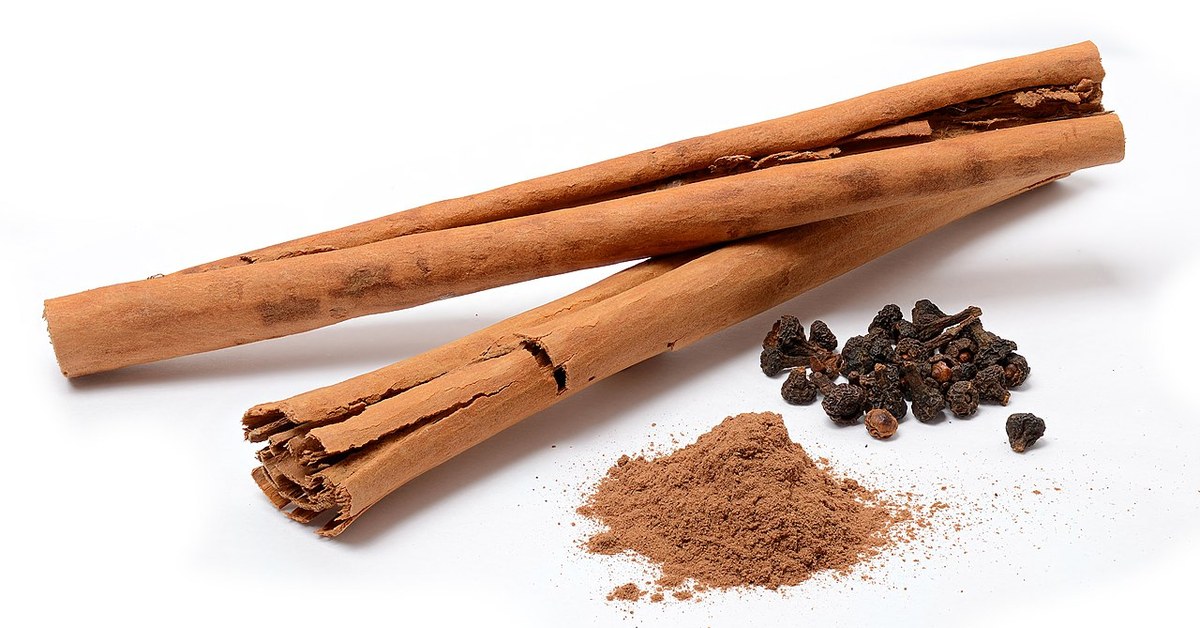
Cinnamon does not grow as a seed, a pod or a berry. It comes from a tree, the cinnamon tree, whose inner bark layer is stripped away: pale and soft. It is peeled off by hand in long strips and left to dry. As it dries, the strip curls up entirely on its own into the tube we call a stick: the English word for it, quill, is the same as for a writing feather.
A cinnamon stick, then, is not carved or shaped. It is the result of drying. That is also why a Ceylon cinnamon quill is so fragile and layered, almost crumbling between the fingers: it is made of many very thin sheets rolled inside one another, like the turns of a puff pastry.
1505: a storm off Galle
The Portuguese history of this bark begins with a navigation error. In 1505, ships of a Portuguese fleet under Lourenço de Almeida are blown by bad weather into the port of Galle, in the south of the island then called Ceylon, today Sri Lanka. The Portuguese were not heading there. They arrive anyway.
What they find along the island's south-western coastal belt interests them immediately: the cinnamon tree grows there wild and in abundance, and the quality of its bark has no equal anywhere else. An agreement is struck with the king of Kotte, and a trading post is set up to process the cinnamon on the spot.
What follows is methodical settlement. In 1518, the viceroy Lopo Soares de Albergaria lands at Colombo with a fleet and has a small triangular fort built. Portugal is no longer merely buying cinnamon: it holds the shore where cinnamon grows.
That presence lasts about a century and a half. It ends on 12 May 1656, when Colombo surrenders to the Dutch after a long siege. The cinnamon changes hands, but by then it has entered Portuguese kitchens for good.
Ceylon or cassia: two barks, two flavours
Not all cinnamon is the same, and the confusion is an old one. The Ceylon kind, Cinnamomum verum, is known in English as true cinnamon. Another bark, cassia, comes from related species grown elsewhere in Asia. That is the one most often found on supermarket shelves, because it is easier to produce.
The difference can be seen and tasted:
- The stick. Ceylon cinnamon forms a pale tube of many thin layers that crumbles easily. Cassia forms a thick, dark, hard roll, often folded inwards from both sides.
- The nose. Ceylon is floral, almost citrusy, gentler. Cassia is blunter, hotter, redder in tone.
- Its place in pastry. The first accompanies a custard without flattening it. The second quickly takes over the whole thing.
On a Portuguese dessert, where most of the flavour comes from egg yolk, sugar and milk, that detail is not cosmetic. Cinnamon that dominates turns a custard into a sweet.
Why the Portuguese put it everywhere
Open any book on Portuguese doçaria: cinnamon is there, on nearly every page. On arroz doce, drawn through a stencil in diamond shapes across the cooled rice. In the doces conventuais, the convent sweets, where it tempers preparations built almost entirely on egg yolks. On pastéis de nata, where it lands at the very last moment.
That omnipresence is no culinary accident. It is the domestic residue of a trading position: for generations, cinnamon was in Portugal a spice you had to hand, while it stayed scarce elsewhere in Europe. A cooking habit took root where other countries kept a luxury product for special occasions.
The last-moment gesture
One rule remains, and it explains why cinnamon is almost never mixed into the custard of a pastel de nata.
Once ground, cinnamon loses its scent quickly. The compounds that carry its aroma are volatile: heat and air drive them off. Cinnamon that goes into the oven with the custard gives a flat, slightly bitter note; the same cinnamon dusted on top, once the pastel is out and still hot, opens up all at once instead, carried by the steam.
That is why, in the pastelarias of Lisbon, the cinnamon shaker and the icing sugar sit on the counter, beside the customers, and not in the kitchen. The last gesture does not belong to the pastry chef. It belongs to whoever is eating.
At Wooly, it stays on the counter
In our shops in Brussels and Waterloo we have kept that Portuguese habit: the cinnamon is not baked into the custard, it waits alongside. Whether you come by rue des Tongres in Etterbeek, Stockel, Uccle or Waterloo, your pastel de nata is handed over bare and the choice is yours. Plenty of people use none at all. That is perfectly fine too, but try it at least once with, on a pastel still warm, to understand why a storm in 1505 ended up changing the taste of a dessert.
A bark stripped from a tree in south-western Ceylon, dried until it rolled itself up, ground, then laid in one second onto a custard scorched by the oven. Between the two: five centuries and an ocean. All of it fits into a single bite, and that may be the most Portuguese thing about a pastel de nata.
Our pastéis de nata, in seven flavours, can also be ordered online, with home delivery in Brussels and to neighbouring countries.
Photo: Ceylon cinnamon quills, ground cinnamon and dried flowers, Simon A. Eugster, CC BY-SA 3.0, via Wikimedia Commons.
Sources: Wikipédia, “Lourenço de Almeida (capitão-mor)”; Wikipédia, “Fortaleza de Colombo”.
Read next
Alfarroba: the Algarve's black gold, harvested with a long pole
In late August, in the hills behind the Algarve coast, you hear it long before you see anything: a dry, repeated…
Papos de anjo: the egg-yolk cake that is cooked twice
It leaves the oven baked, golden and domed, and yet the work is not finished. The papo de anjo goes straight into a pan…
Jesuíta: the crackling triangle Santo Tirso guards so fiercely
Some pastries announce themselves by sound. The jesuíta of Santo Tirso starts with a thin crust of sugar that gives way…
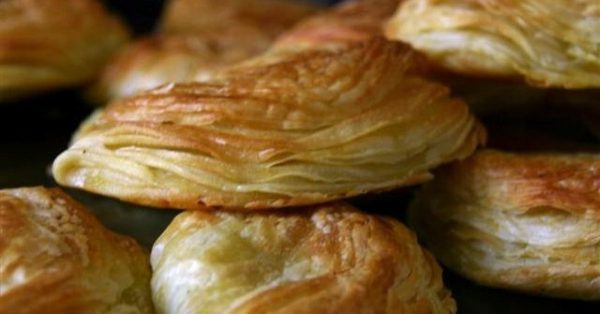
Pastel de Chaves: the recipe bought from a stranger in 1862
A half-moon of puff pastry, a veal filling, and a recipe bought for one pound from a street seller whose name nobody…
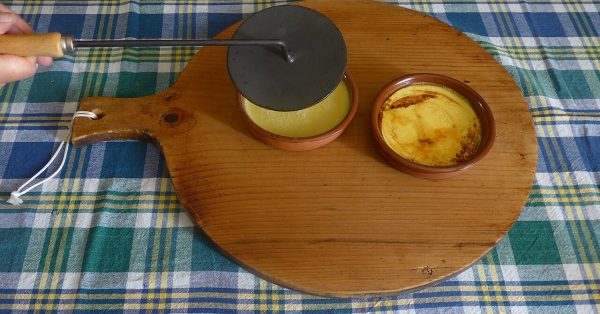
Leite-creme: the red-hot iron that cracks Portuguese custard
You hear it before you taste it: the spoon presses, the sugar crust gives way with a dry crack, and underneath there is…
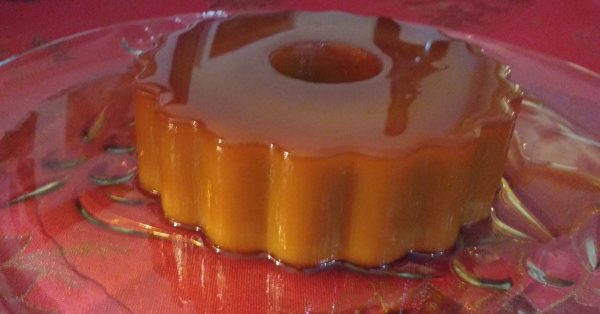
Pudim Abade de Priscos: the Portuguese pudding with no milk
A dark, dense Portuguese pudding born in a presbytery near Braga, whose original recipe contains not a drop of milk.…
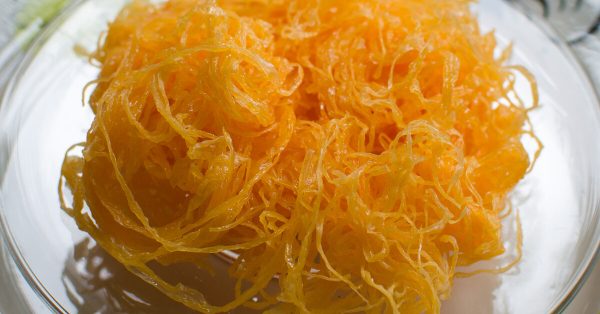
Fios de Ovos: The Portuguese Egg Thread That Conquered Siam
Egg yolk falling in a thin stream into boiling syrup, and coming out as golden thread. Fios de ovos may be the most…

Cavacas: The Hollow Cake the Cavaqueiras Sold From Wicker Baskets
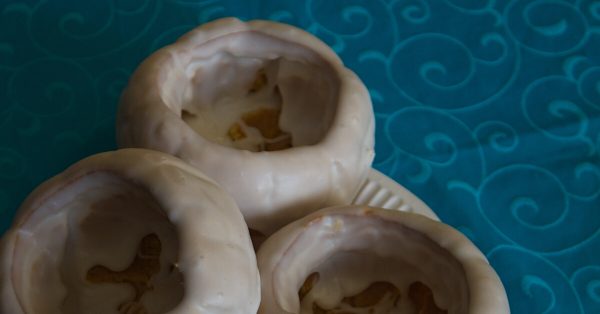
A matt white glaze that shatters under your teeth, and almost nothing underneath. The cavaca is a Portuguese cake built…
Find our artisan pastries in our Brussels stores or order online.
Order now Our foodtruck for your events Our stores