
Doce de gila: the squash you smash on the ground to make a dessert
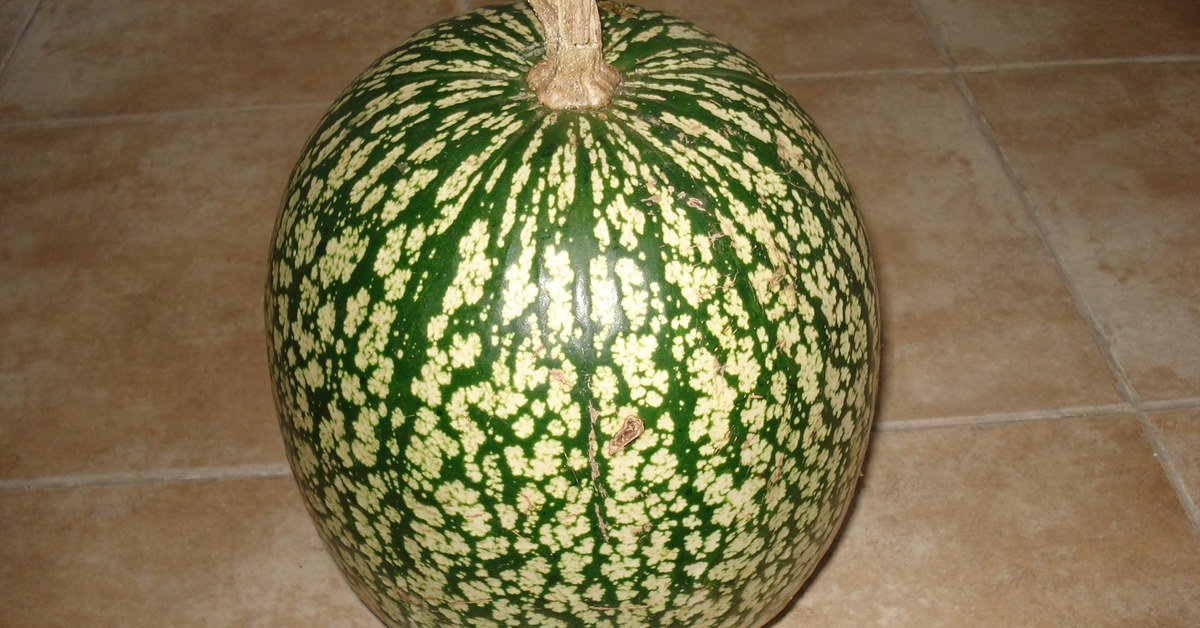
In the courtyards of the Alentejo, at the end of summer, there is a kitchen sound you will hear nowhere else: a squash being thrown against the ground. Not cut, not split with a knife. Thrown. It bursts into three or four pieces, and what appears inside looks nothing like vegetable flesh: it is a skein of white, dry, tangled fibres, closer to twine than to anything sweet.
This is the abóbora-chila, also called gila. And those fibres, once taken through sugar, become doce de gila: the invisible filling of a large part of Portuguese pastry.
An Andean squash that crossed an ocean
Its botanical name is Cucurbita ficifolia, the fig-leaf gourd. There is nothing Mediterranean about it: it comes from Central America and the Andean regions of South America, and the oldest archaeological traces of it were unearthed in Peru, dating back three to four thousand years before our era.
In Portugal it found a job nobody had given it anywhere else. It does not go into soup, it is not roasted, it never joins a stew. It is grown almost exclusively to be turned into something sweet. Its dark green skin flecked with white, its pale stringy flesh, its flavour so restrained it reads as neutral: everything that would make it a disappointment in a savoury dish makes it ideal material for sugar.
Why it is broken rather than cut
The gesture surprises everyone who sees it for the first time. Tradition holds that a gila is not opened with a knife, but thrown to the ground to break it.
This is not folklore. The rind of a ripe gila is hard and thick, and a blade slides off it; more to the point, breaking it makes the flesh split along its own fibre lines instead of cutting them straight through. The threads stay long. And that is exactly what is wanted: doce de gila is not a purée, it is a tangle of filaments you should see on the spoon and feel between your teeth.
In several regions it is called cabelo de anjo, angel hair. The Spanish say cabello de ángel, the Catalans cabell d'àngel. Three languages, the same image.
From fibre to preserve
The passage into sugar is slow, and always follows the same order.
- The squash is rinsed, then parboiled until the flesh comes away from the skin.
- The fibres are teased apart by hand, squeezed out, often left to drain.
- A syrup of water and sugar is made, almost always with a cinnamon stick, frequently with lemon or orange peel.
- The threads cook in it until the mixture reaches roughly 116 °C, or the consistency of a thick marmalade.
What comes out of the pan is translucent, amber, filamentous, and no longer suggests a squash at all. The gila brings no flavour: it brings texture and a carrier. It is the sugar, the cinnamon and the citrus that speak.
What the convents did with it
To understand its place you have to go back to the doces conventuais, the convent sweets of Portugal. From the fifteenth century sugar entered the monasteries, and a very concrete piece of arithmetic set in: the nuns used enormous quantities of egg whites, for communion wafers, to clarify wine, to starch habits. What was left were the yolks, by the hundred.
Out of that surplus came the cakes the country is known for today: plenty of yolk, plenty of sugar, almonds. But yolks and almonds are expensive, and a whole cake needs filling. The gila, by contrast, grows in the kitchen garden and is harvested from May to October. It gave the convents what no other ingredient offered: volume, body and threads, for almost nothing.
Where you still find it
Doce de gila is listed among the traditional products of the Alentejo, the great plain south of Lisbon. That is where it fills the most:
- pão de rala, the almond and egg yolk cake of Évora;
- azevias, fried turnovers you break open to find the golden threads;
- bolo folhado, porquinho doce, tiborna.
Always the same principle: the gila does not show itself. It is inside. You discover it when you break the crust, never before.
The same family, in Brussels
We do not make doce de gila at Wooly: it is Alentejo workshop work, tied to a squash that does not travel. But the logic it comes from, that of the convents, is exactly the logic of our counters in Brussels: egg yolks, sugar, almond, cinnamon, and time. Our ovos de coco with almond and the pastel de Tentúgal descend from that same convent tradition, as does the toucinho do céu, whose story we told here.
To taste that family of cakes there are our four addresses: the Etterbeek shop on rue des Tongres, the Stockel shop in Woluwe-Saint-Pierre, and those in Uccle and Waterloo. Ask for whatever contains almond and egg yolk: you will be, without knowing it, one squash away from a convent in the Alentejo.
Sources: Direção-Geral de Agricultura e Desenvolvimento Rural (Produtos Tradicionais Portugueses), “Doce de Gila”; Wikipedia, “Doce de gila”.
Read next
Pastel de feijão: the Portuguese pastry that hides beans
You bite into it looking for almond, and you find almond. What you never find is the white bean that makes up half the…
Toucinho do céu: the cake named after an ingredient it no longer contains
Its name means "bacon from heaven". The lard disappeared from the recipe long ago, but the name stayed, and so did the…
Sericaia: the Portuguese dessert that has to crack to be right
In the Alentejo, this dessert is never turned out of its dish, never smoothed over, never rescued. It comes out of the…
Pão de Ló: The Portuguese Cake Pulled From the Oven Too Soon
You push a spoon in and the middle runs. In any other European bakery this cake would be a failure. In Portugal it is…
Bica: What the Portuguese Actually Order at the Counter
Thirty seconds at the counter, one word, a small cup. Portuguese coffee is not a break: it is a punctuation mark in the…
Empada, chamuça, rissol: which is which?
Empada, chamuça, rissol, empanada: four parcels that look alike and have almost nothing in common. How to tell them…
Salame de chocolate: the Portuguese chocolate salami
It looks like a salami, is sliced like a salami, and contains not a gram of meat. What it is, where it comes from, and…
Rissóis: the Portuguese fried turnover, and its recipe
Rissol, rissóis, rissoles: the most misspelled breaded snack in Portugal. What it actually is, the two classic…
Find our artisan pastries in our Brussels stores or order online.
Order now Our foodtruck for your events Our stores