
Alfarroba: the Algarve's black gold, harvested with a long pole
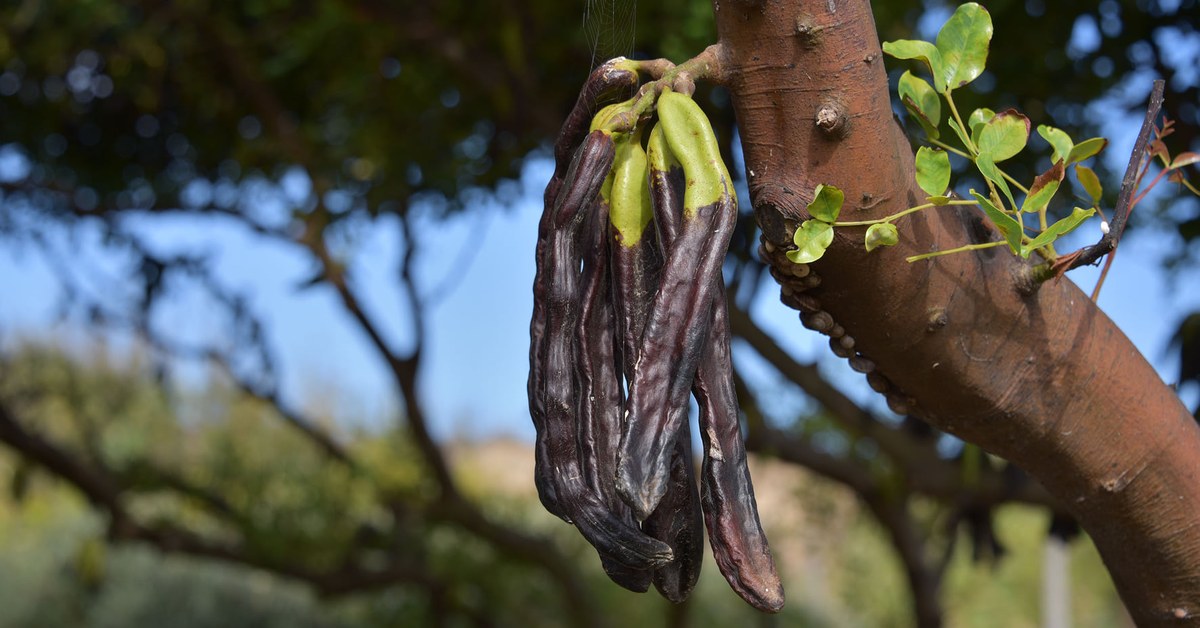
In late August, in the hills behind the Algarve coast, you hear it long before you see anything: a dry, repeated clatter, steady as hail on a stretched tarpaulin. Those are alfarroba pods falling. They roll across the nets spread under the trees, pile up, and somewhere above, a person keeps striking the branches with a long pole.
The pod is brown, flat, slightly twisted, hard as dried leather. Snap it in half and it smells of cocoa and gingerbread. It may well be the most underrated thing southern Portugal produces.
A tree that asks for almost nothing
The alfarrobeira (the carob tree, Ceratonia siliqua) is Mediterranean. The Phoenicians are credited with spreading it along the coasts; it was the Arabs who settled it for good in Portugal and neighbouring Spain. The word still carries the proof: alfarroba opens with the Arabic al-, like alface for lettuce or açúcar for sugar.
It grows where almost nothing else holds on: stony ground, a summer without a single drop, salt wind. You see it standing alone in a dry field, wide and low, that round dark shape throwing shade over an entire flock. In a region short of water nine months out of twelve, a tree that yields without irrigation is not a detail. It is insurance.
The varejo: a harvest done with a stick
Harvest starts in August and runs to the end of September; some head out in the last days of July already, pole over the shoulder. The gesture has a name: the varejo, from vara, the pole. Nets go down under the tree, someone sometimes climbs into the branches, and the striking begins. The pods come down by the handful.
Little about it has changed. It is a harvest done in the heat, early in the morning, with family or neighbours, and it leaves your hands sticky. Once dried and milled, the pod splits into two parts: the pulp, which carries by far the most weight, and the seeds, a small minority: hard, glossy, almost all alike.
The seed that weighed gold
Those seeds ended up somewhere no Algarve pod could have predicted. They were believed to weigh exactly the same, every one of them. So for centuries they served as counterweights on the scales of goldsmiths and gem dealers: metal on one side, small dark seeds on the other.
The word stayed. The carat, of gold and of diamonds alike, comes from this seed, by way of the Greek kerátion and the Arabic qīrāṭ. Which means that when a Brussels jeweller talks about 18-carat gold, they are using, without knowing it, a unit invented under a carob tree.
From the feeding trough to dessert
The paradox of alfarroba is that it was called the Algarve's black gold for generations while being fed to livestock. It fed mules, goats and pigs. It was a subsistence crop, nearly invisible, and nobody thought of putting it on the table.
Almost nobody. When sugar ran short, above all during wartime, families drew a thick dark molasses from the pod to sweeten whatever they had. They also made carob liqueurs at home, the kind brought out only for visitors. The pod was not a dessert, but it already knew how to stand in for one.
The reversal is recent. Mill the dried pulp and you get a brown flour that tastes of cocoa, with no cocoa, no caffeine, and a natural sweetness of its own. What used to go to the stable started going into cakes: first across the Algarve, then everywhere else.
Bolo de alfarroba, and the rest of the Algarve
The best-known cake pairs carob flour with the region's other treasure: the almond. One brings depth, close to bitter; the other brings softness and fat. That is exactly the logic of Algarve confectionery, built on what grew nearby rather than on what had to be shipped in: fig, almond, alfarroba, medronho, with the double imprint of Arab and convent traditions layered on top.
You find the same reflex in the morgado, where fig and almond are sculpted by hand: nothing exotic, everything from the orchard next door. And at the other end of the country, the same ingenuity works on a vegetable, in the doce de gila, the squash smashed on the ground before it becomes a dessert.
At Wooly, in Brussels
Let us be honest: you will not find alfarroba pods in our windows. It is not our region and not our story. Ours sits closer to Lisbon and the north. But the idea alfarroba carries is one we share completely: deep flavour does not necessarily come from the most expensive ingredient, it comes from the one you know best. That is what we are after in our salame de chocolate, where the chocolate has nowhere to hide. If you feel like talking it over with a coffee, come by our shop in Uccle, rue Xavier De Bue, or one of the other three, in Etterbeek, Stockel or Waterloo.
In the meantime, if you are walking through the Algarve at the end of summer and you hear that dry clatter across a field, stop for a moment. That is not hail. That is a harvest whose method has not changed in a very long time, and which gave the carat its name.
Photo: Virgílio Gomes, Alfarroba do Porto Santo (2022), Wikimedia Commons, CC BY-SA 4.0 licence.
Sources: Wikipédia, “Alfarrobeira”; Florestas.pt, “O valor da alfarroba: produção nacional é referência mundial”.
Read next
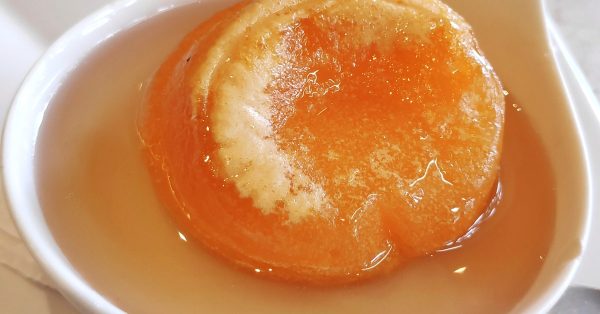
Papos de anjo: the egg-yolk cake that is cooked twice
It leaves the oven baked, golden and domed, and yet the work is not finished. The papo de anjo goes straight into a pan…
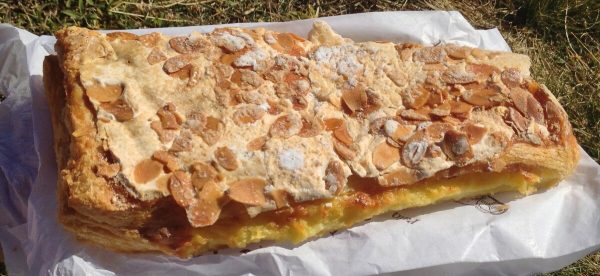
Jesuíta: the crackling triangle Santo Tirso guards so fiercely
Some pastries announce themselves by sound. The jesuíta of Santo Tirso starts with a thin crust of sugar that gives way…
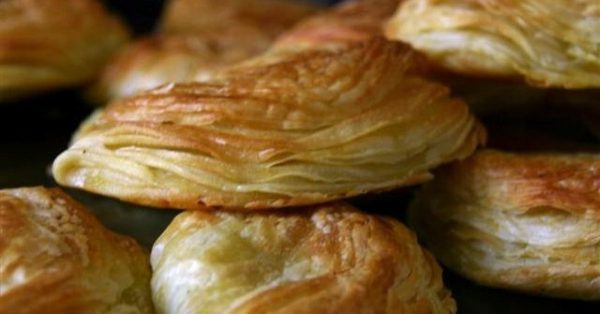
Pastel de Chaves: the recipe bought from a stranger in 1862
A half-moon of puff pastry, a veal filling, and a recipe bought for one pound from a street seller whose name nobody…
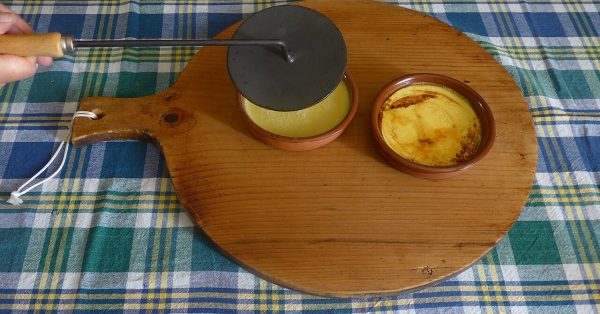
Leite-creme: the red-hot iron that cracks Portuguese custard
You hear it before you taste it: the spoon presses, the sugar crust gives way with a dry crack, and underneath there is…
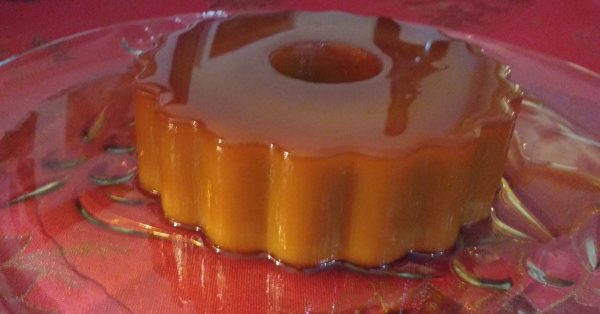
Pudim Abade de Priscos: the Portuguese pudding with no milk
A dark, dense Portuguese pudding born in a presbytery near Braga, whose original recipe contains not a drop of milk.…
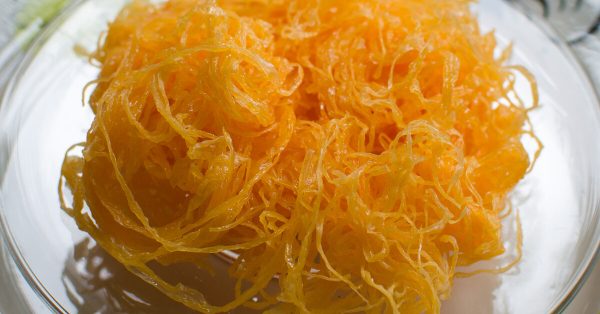
Fios de Ovos: The Portuguese Egg Thread That Conquered Siam
Egg yolk falling in a thin stream into boiling syrup, and coming out as golden thread. Fios de ovos may be the most…
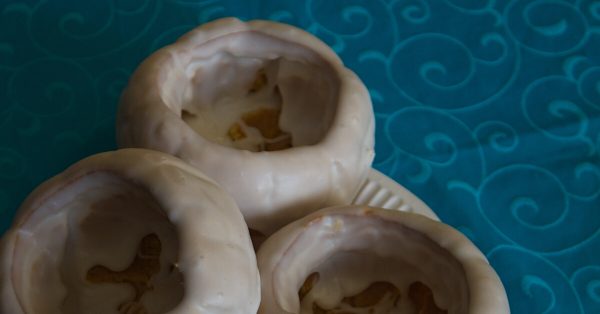
Cavacas: The Hollow Cake the Cavaqueiras Sold From Wicker Baskets
A matt white glaze that shatters under your teeth, and almost nothing underneath. The cavaca is a Portuguese cake built…

Torta de Azeitão: the golden roll that came from the Alentejo
The fork meets no resistance, the thin sheet of sponge gives way, and the egg cream appears. A torta de Azeitão hides…
Find our artisan pastries in our Brussels stores or order online.
Order now Our foodtruck for your events Our stores