
Pão por Deus: the Portuguese children who knock on doors on 1 November
A cloth bag swinging against a leg, a door you do not always know, and a phrase shouted at the top of a small voice: "Pão por Deus!". In Portugal, on 1 November, All Saints' Day (Dia de Todos os Santos), groups of children walk around the neighbourhood asking for something to nibble. The custom is called Pão por Deus, literally "bread for God's sake".
A phrase that says it all
The phrase is an old plea for alms. Originally, nobody asked for sweets but for bread: the bread given to the poorest, and also offered at the start of winter in memory of the dead. The word pão stayed in the phrase, while what goes into the bag changed a great deal.
Today, the houses that play along tend to hand out small cakes, dried fruit, nuts, pomegranates or sweets. The principle is the same: you knock, you say the phrase, you receive a little something, you say thank you and move on to the next door.
What the origins tell us
Sources do not agree, which is exactly what makes the custom interesting. The version most often put forward ties it to offerings made to the dead in autumn, long before Christianity, later covered over by the Christian feast of All Saints and All Souls. Another, very popular version links it to Lisbon: on 1 November 1755, All Saints' Day, a violent earthquake struck the capital, and the story goes that destitute residents then got into the habit of knocking on the doors of the better-off to get something to eat.
The earthquake of 1 November 1755 is a historical fact; that the custom began there is an oral tradition that nothing proves. What we can keep is simple: the custom is old, it is tied to the memory of the dead and to charity, and each region has lived it in its own way.
Not quite Halloween
Pão por Deus is often compared to Halloween, because children ring the neighbours' doorbells around the same days. The differences are real, though. No scary costumes or threatening pranks: the children are nicely dressed, carry a pretty bag prepared for the occasion and behave themselves. There is no "trick or treat" here, only a polite request, almost a small curtsy.
In big cities the practice has faded a lot over the decades. It has been better preserved in villages and small towns, where everyone knows the neighbours, and some schools, associations or councils bring it back to the fore at All Saints. The gesture has lost none of its strength: it teaches children to ask and adults to give.
What goes into the bag
There is no official list, and you should be wary of anyone who claims to have one. What comes up most often in the accounts: bread or small rolls, homemade cakes, walnuts, dried figs, almonds, pomegranates and a few sweets. In other words, what a Portuguese kitchen cupboard holds in early November, once the autumn harvest is in.
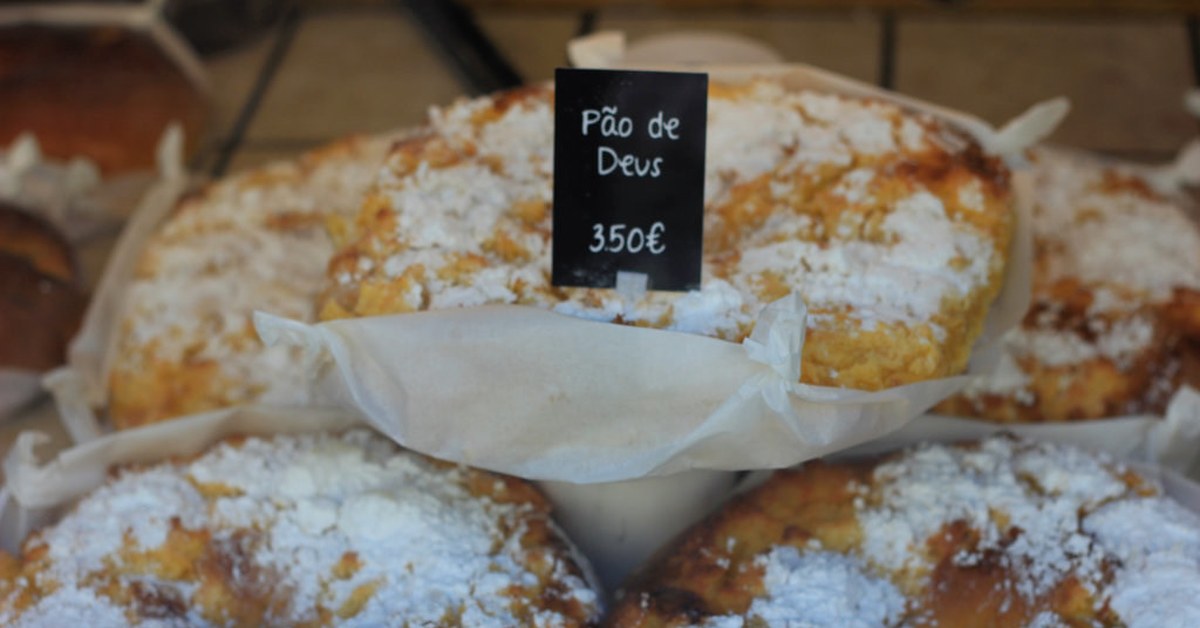
The name Pão de Deus also brings to mind another very Portuguese bun, soft and covered in coconut, which we told in our article on Pão de Deus. The two do not share the same history: one is a custom, the other a pastry. But they share the same name, and probably the same idea, that of a bread that is given away.
The Portuguese autumn, from door to door
In early November, Portugal smells of embers and chestnuts. A few weeks ago we were walking into the smoke of Lisbon's chestnut sellers: Pão por Deus belongs to the same season, the one when people draw closer to their own and share what the land has given.
It is also the season when Portuguese families settled far from home think about what is done there. A shared snack, a bag of small sweet things, a story told to the children: you do not need to knock on three hundred doors to keep hold of the thread.
At Wooly, in Brussels
In Brussels we do not claim that children ring doorbells on 1 November. But if you feel like sharing a little Portugal that day, our shops in Etterbeek, rue des Tongres, and in Stockel are waiting for you, with all the typical Portuguese pastry to discover. Putting together a small bag of treats for the children is already a way of saying "Pão por Deus".
Sources: Wikipédia (pt), “Pão-por-Deus”.
Read next
Medronho: the rough little fruit of the Algarve that ripens as autumn begins
At the end of September, in the hills of the Algarve, a small rough fruit turns from yellow to orange, then red. The…
Bolo do caco: the Madeiran bread named after its stone
Cooked on a slab of volcanic basalt, kneaded with sweet potato for want of wheat, spread with garlic butter: Madeira's…
Castanhas assadas: the white smoke that brings autumn to Lisbon
A column of white smoke on a street corner, a smell of embers and salt, a cry: "Quentes e boas!". In Lisbon, autumn…
Arrufada de Coimbra: the sweet bread carried to engagements
Sold from baskets under a white cloth at Coimbra station, left to rise for twenty-four hours under a blanket, the…
Bolo lêvedo: the Furnas bread whose age nobody knows
It cooks on a floured griddle, never in an oven, in a volcanic valley of the Azores. Lenten flatbread, 19th-century…
Cristas de galo: the Vila Real turnover that lost its convent
Little teeth cut into the edge of an almond turnover: that is all that remains of the convent of Santa Clara in Vila…
Trouxas de ovos: the little egg bundle you bring home from Caldas da Rainha
A thin sheet of egg poached in boiling syrup, rolled around its own trimmings, glossy as a jewel. Nobody ever leaves…
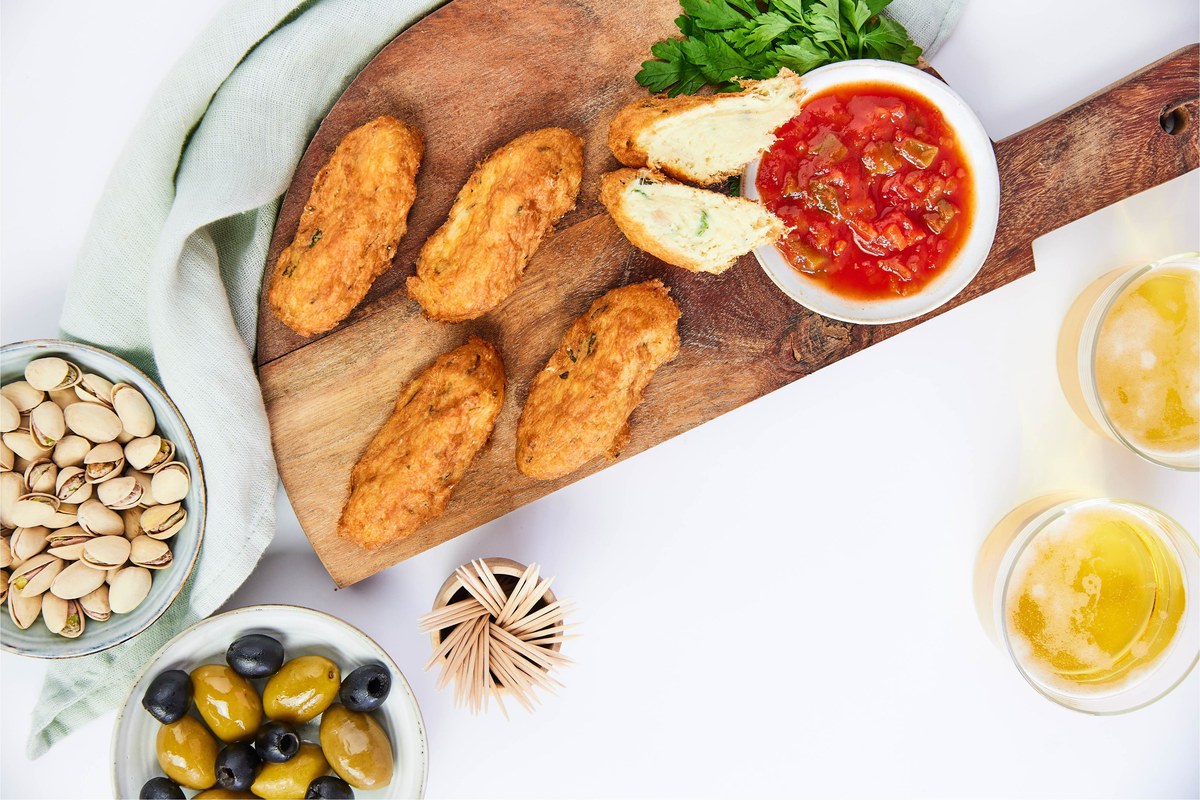
Pastel de bacalhau: the salt cod shaped between two spoons
It comes out of the oil golden, with three sharp ridges and a soft centre. Behind the pastel de bacalhau lies a fish…
Find our artisan pastries in our Brussels stores or order online.
Order now Our foodtruck for your events Our stores