
The doces were not born in convents: the myth that won't die
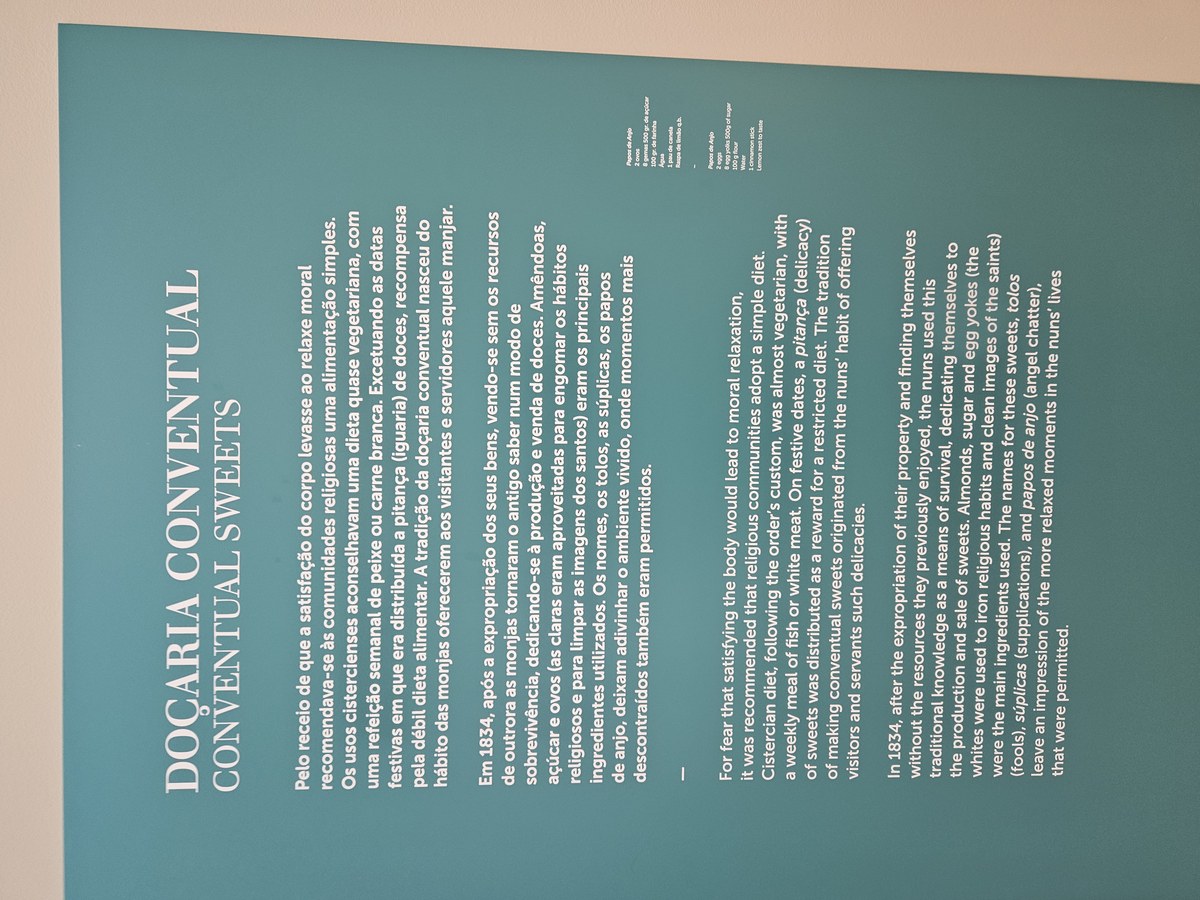
The story is almost too lovely to question. Cloistered nuns, egg yolks by the bowlful, fine sugar, and recipes guarded like family secrets behind the walls of a convent. You will read it in guidebooks, on packaging, in shop windows. It explains the taste, gives the recipe a face, and flatters regional pride: every town has its convent, every convent its speciality.
The trouble is that the story does not reduce to that picture. It is the starting point for the reasoning of João Pedro Gomes, a researcher in food history, who told the Portuguese magazine Sábado that the doces were not invented in convents and that nothing was created there by nuns. His argument does not deny that convents cooked and sold sweets. It denies that they were the origin.
Sugar, first a spice and a remedy
Before it was a pleasure at the table, sugar was a rare substance, sold as a spice and used in the apothecary's preparations. For someone living at the end of the Middle Ages, a pot of sugar was not a dessert: it was a luxury product, measured out with care. It is hard to imagine an everyday pastry built on an ingredient you first bought from the pharmacy.
Rome, the Arab world, and recipes that travel
The thread that João Pedro Gomes pulls goes much further back. According to him, a large part of our sweets derives from Roman and Muslim recipes. The Romans already worked flour, honey, dried fruit and fried dough. The kitchens of the Arab world, which occupied the Iberian peninsula for a long time, brought spices, ground almonds, very thin pastry and a culture of cane sugar. None of this fits in a single box, and that is precisely what makes the argument interesting: a recipe travels, adapts to a climate, an oven, a pair of hands.
The coscorões are dry fritters, flavoured with cinnamon and dusted with sugar, which people associate with Christmas. The leite-creme is the milk custard made with egg yolks, whose surface caramelises under a red-hot iron. These two sweets have ancestors who were not nuns. So the question is not who had the first idea, but how it was handed down from kitchen to kitchen.
Why convents kept the reputation
Because they had good reasons to keep it. Religious communities had kitchens, workers, and stocks of eggs and sugar that were often larger than those of an ordinary household. They received gifts, sold their jams and cakes at the convent gate, and in the end gave their name to a whole range of recipes. A good name is passed on more easily than a recipe notebook. Over the centuries the convent version found its place in books, then in tourist leaflets, then on the cardboard boxes you see slipped into a bag as you leave the bakery.
What the legend really says
The legend is not pure fiction. It says something about the place convents held in city life: centres of learning, care and trade, they wrote down and kept recipes that others might have lost. It would be unfair to strip them of all credit. What can be taken away is the monopoly on invention. Doçaria did not come out of a single cloister. It was built in layers, in the kitchens of houses and palaces, in village ovens where the Sunday bread was baked and, sometimes, a tigelada.
What it changes when you eat a doce
A recipe that came from a Roman or Arab kitchen is no less Portuguese for that. It was adopted, given a new name, adapted to local produce: the almond of the Algarve, the egg from the farm, the sugar that arrived through the ports. Knowing where a recipe comes from takes nothing away from the pleasure of eating it. It only adds depth to the taste: you are not biting into a frozen tradition, but into centuries of travel.
And at Wooly?
At Wooly, in Etterbeek, Uccle and Waterloo, we do not claim that our pastries come from a convent. We make them from Portuguese recipes, with the same care for the gesture, the baking and the sugar. The pastel de nata remains our flagship, and if you want to know where that little custard tart in its flaky pastry comes from, our blog tells you more. For an order to be delivered in Brussels, the details are on the home delivery page.
Sources: Sábado, “Os doces não foram inventados nos conventos”.
Photo: GualdimG, “Doçaria conventual, Centro Interpretativo do Mosteiro de Lorvão”, CC BY-SA 4.0, via Wikimedia Commons (cropped and resized).
Read next
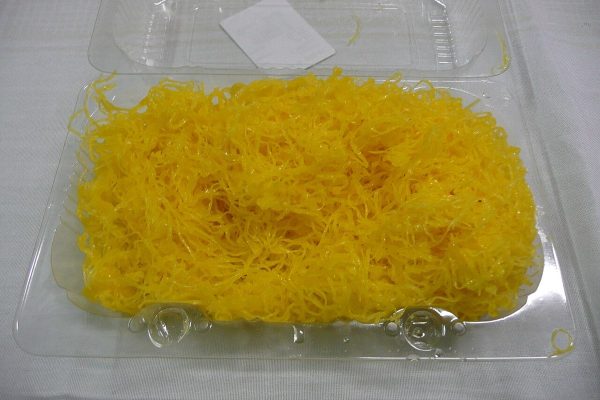
Palha de Abrantes: the golden straw the Tagus carried to Lisbon
On the Tagus, at Abrantes, a sweet took its name from the straw barges carried to Lisbon. Golden egg threads, an almond…
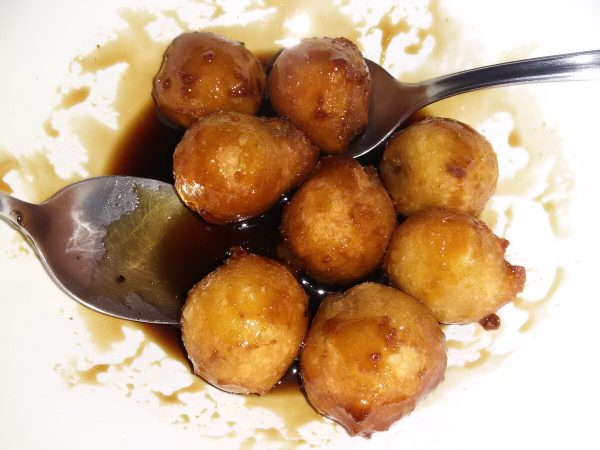
Bilharacos: the pumpkin Christmas sweet from Lousada to Aveiro
A kitchen in Lousada, a Christmas evening, a woman listing her ingredients from memory. Bilharacos are a pumpkin sweet,…
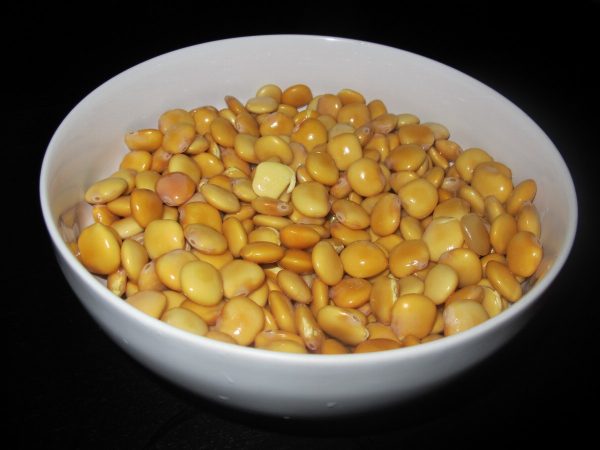
Tremoços: the poor man's seafood that goes with beer
On the table of a tasca, before the beer even arrives, there is often a small bowl of yellow seeds. Raw, tremoços are…

Tomar's Trays Festival: bread carried on the head
Every four years in Tomar, in central Portugal, young women in white dresses walk through the streets with a tray…
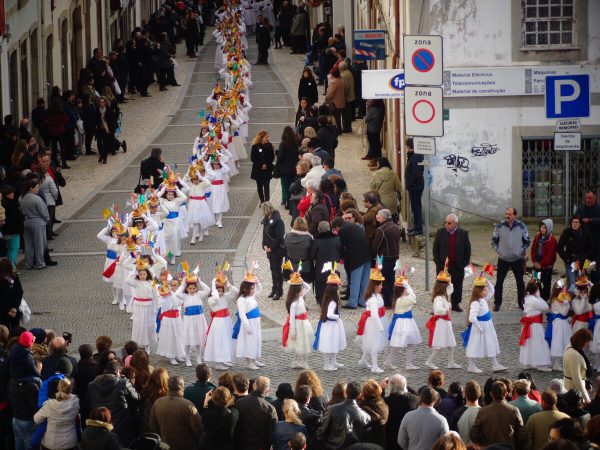
Fogaça: the sweet bread that young girls carry on their heads
You don't cut it like a cake: you carry it. Every 20 January in Santa Maria da Feira, young girls walk the streets with…
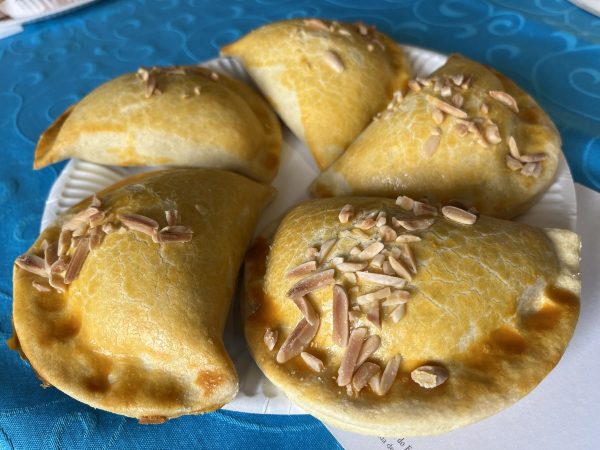
Barriga de freira: the nun's belly sweet from Portugal
A dessert with a name that makes you smile: barriga de freira, a nun's belly. Egg yolks, sugar, bread and cinnamon, a…
Queijinhos do Céu: the heavenly cheese made with neither milk nor cheese
A small white disc wrapped in paper cut like lace, and yet not a crumb of cheese. The queijinhos do céu come from the…
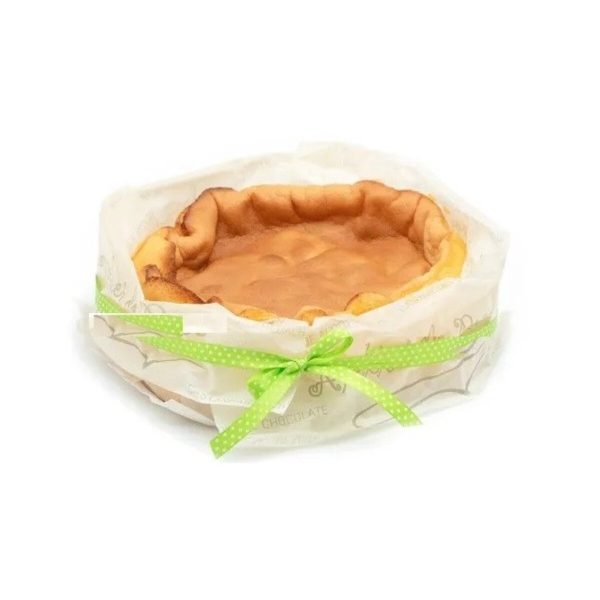
Pão de ló from Alfeizerão: the cake of the Lisbon–Porto road
On the Lisbon–Porto road, drivers used to stop at Alfeizerão for a pão de ló sold ready-wrapped. With no one at the…
Find our artisan pastries in our Brussels stores or order online.
Order now Our foodtruck for your events Our stores