
Fogaça: the sweet bread that young girls carry on their heads
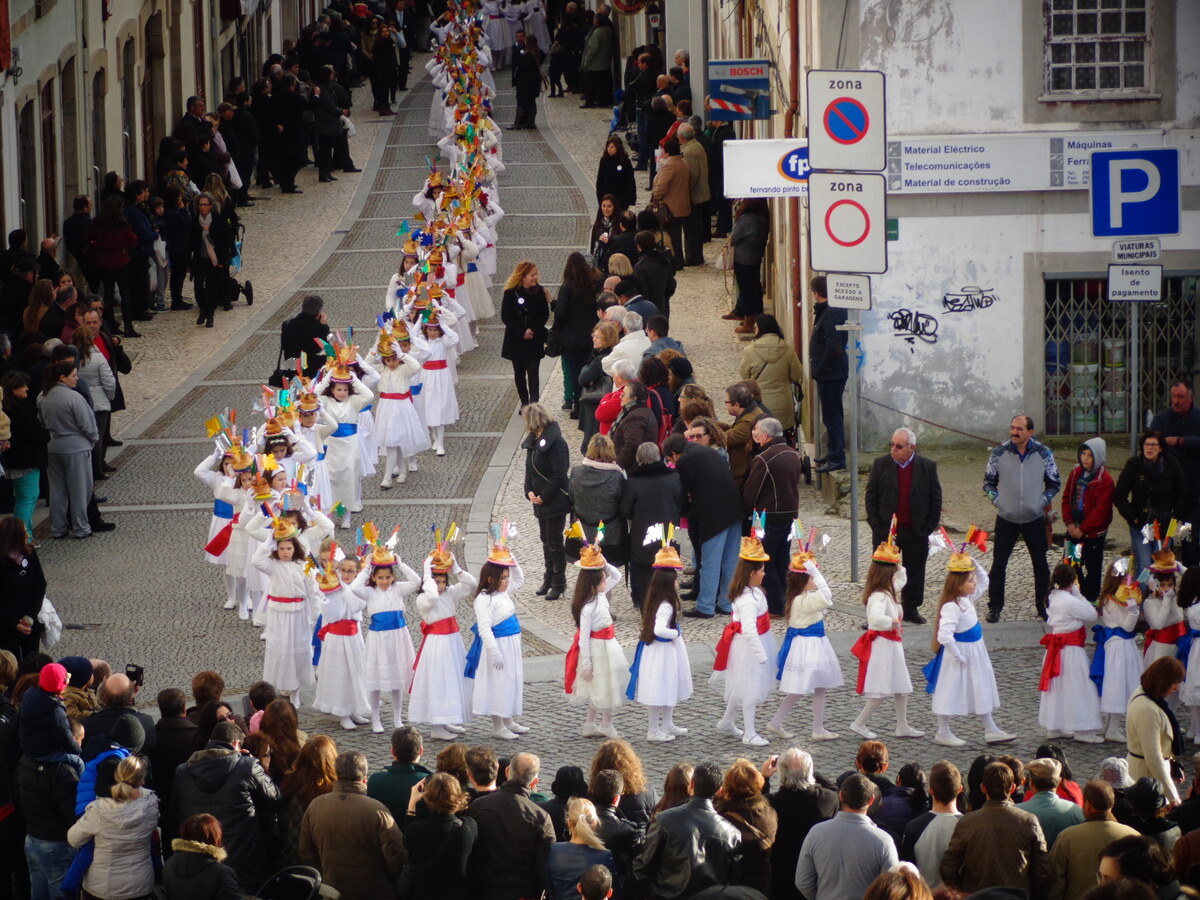
On 20 January, the town of Santa Maria da Feira becomes, for one day, a municipal public holiday. On that day the sweet bread called fogaça is not sliced on a plate. It is carried on the heads of young girls who walk through the streets, backs straight, in front of everyone.
The fogaça is a traditional sweet bread from the region. Wikipedia describes it as the local bread of the parish, famous together with its local market. It is shaped by hand in the neighbourhood bakeries and baked in the oven using traditional methods. The sources we read do not give a detailed recipe, and we will not invent one for you.
Why a bread, and why carry it? Because the story starts with a promise. According to the e-konomista article, the tradition was born from a vow made to Saint Sebastian during an outbreak of plague. The people of the Terras de Santa Maria promised their patron saint a yearly procession and the offering of a special sweet bread. The tradition goes back to 1505, and since then the promise has been kept every year.
That origin changes the way you look at the bread. It was not invented as a market treat. It is an offering, and that is why it leaves the bakery with so much care.
The shape is no accident either. According to the same article, the fogaça stylises the keep of the Castle of Feira, with its four small pointed turrets at the corners. The castle, which Wikipedia dates to the 11th century, still overlooks the town. The bread carries, in miniature, the silhouette of the fortress that protects the community.
The meninas fogaceiras are the ones who carry it. More than 250 young girls take part in the procession, dressed in white, with coloured sashes. They walk with the fogaça set on their heads, without holding it in their hands. The gesture asks for calm, a very straight posture and concentration: the bread must not move while the crowd watches.
20 January remains the high point, and the day closes with the procession that brings the promise back to mind. A religious celebration more than five centuries old, carried by young girls from the town: the image is rare, and it repeats itself every year.
What strikes you in this story is the contrast. On one side, a sweet bread you eat without thinking twice. On the other, a ceremony that asks for discipline: a procession, young girls who walk step by step under the weight of a whole loaf. Sweetness does not oppose solemnity. In this town the two go together, and that is probably why the celebration has lasted so long.
Many Portuguese sweets follow the same logic: cakes made to be shared with family, given to neighbours, kept for a few days for visitors. A festive dessert does not need to be spectacular to matter. It only has to bring people around one table.
For us in Brussels, the fogaça shows something obvious: Portuguese pastry belongs first of all to its feasts and its promises. A festive bread is not a product like the others. In our shops in Etterbeek, Stockel, Uccle and Waterloo, we share Portuguese pastry in the same spirit, starting with the pastel de nata.
If you pass by one of our shops, ask us what came out of the oven that day. And if you want to read about another Portuguese festive bread, our article on broa de Avintes, a maize and rye bread from the Douro, is waiting for you.
Sources: e-konomista, “Festa das Fogaceiras” ; Wikipedia, “Feira (Santa Maria da Feira)”.
Photo: L'Éclipse, “Fogaceiras”, Wikimedia Commons, CC BY 4.0.
Read next
Barriga de freira: the nun's belly sweet from Portugal
A dessert with a name that makes you smile: barriga de freira, a nun's belly. Egg yolks, sugar, bread and cinnamon, a…
Queijinhos do Céu: the heavenly cheese made with neither milk nor cheese
A small white disc wrapped in paper cut like lace, and yet not a crumb of cheese. The queijinhos do céu come from the…
Pão de ló from Alfeizerão: the cake of the Lisbon–Porto road
On the Lisbon–Porto road, drivers used to stop at Alfeizerão for a pão de ló sold ready-wrapped. With no one at the…
Bolinhos de chuva: the fritter made for rainy days
All it takes is a grey sky over Brussels to get the kitchen going. Runny batter, a spoon, hot oil, and golden fritters…
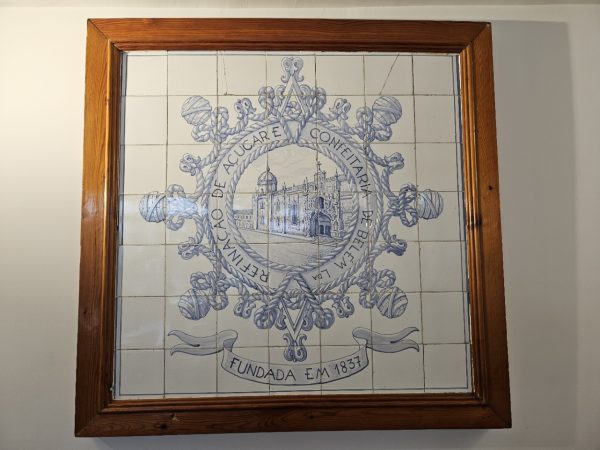
Azulejos in Portuguese pastelarias: the painted tiles that keep Lisbon's cafés
In many pastelarias in Lisbon, your eyes end up looking up at the walls. The painted tiles that cover them have a…
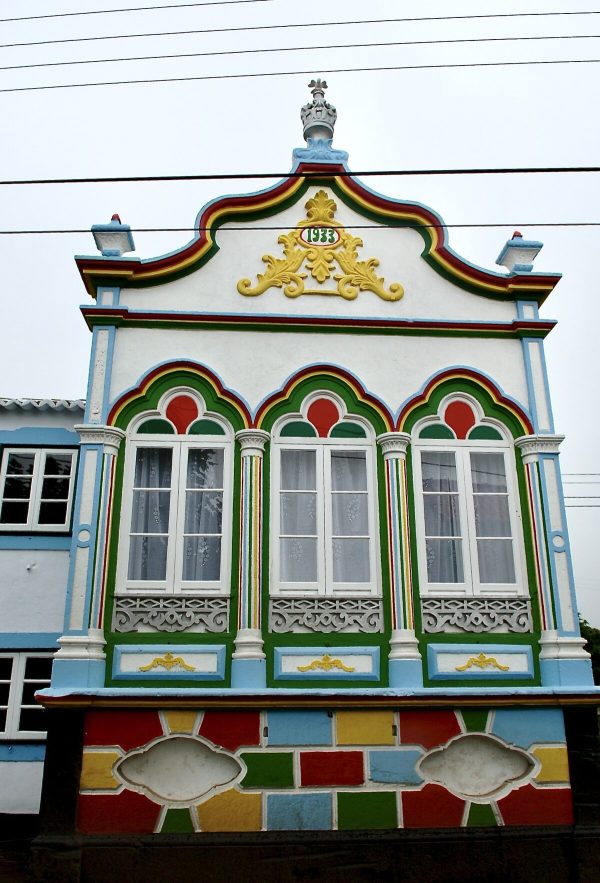
Impérios in the Azores: the house where sweets go to auction
On the island of Terceira, the Holy Spirit feast has its own houses, the impérios. An offering waits there until it is…
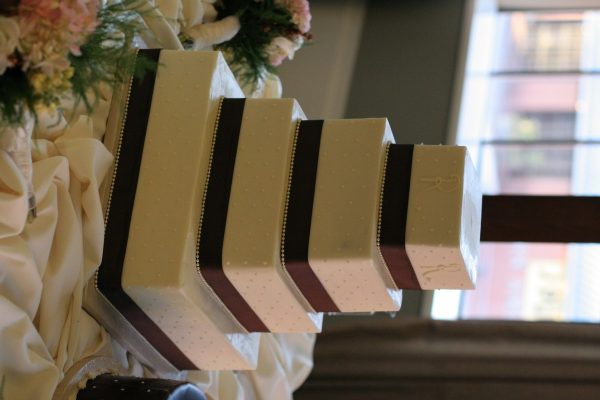
Bolo de noiva: the Portuguese wedding cake kept for a year
In Portugal the wedding cake has one more job than the others: a slice is kept for the first anniversary. A tradition…
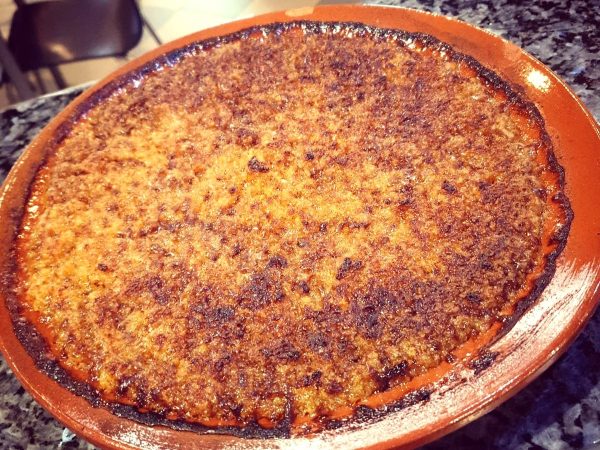
Encharcada: the Évora sweet whose convent origin may be a legend
Egg yolks cooked in syrup, then browned, served in earthenware. Encharcada from Évora takes its name from the word for…
Find our artisan pastries in our Brussels stores or order online.
Order now Our foodtruck for your events Our stores