
Jeropiga: the sweet wine you stop with brandy, poured at the magusto
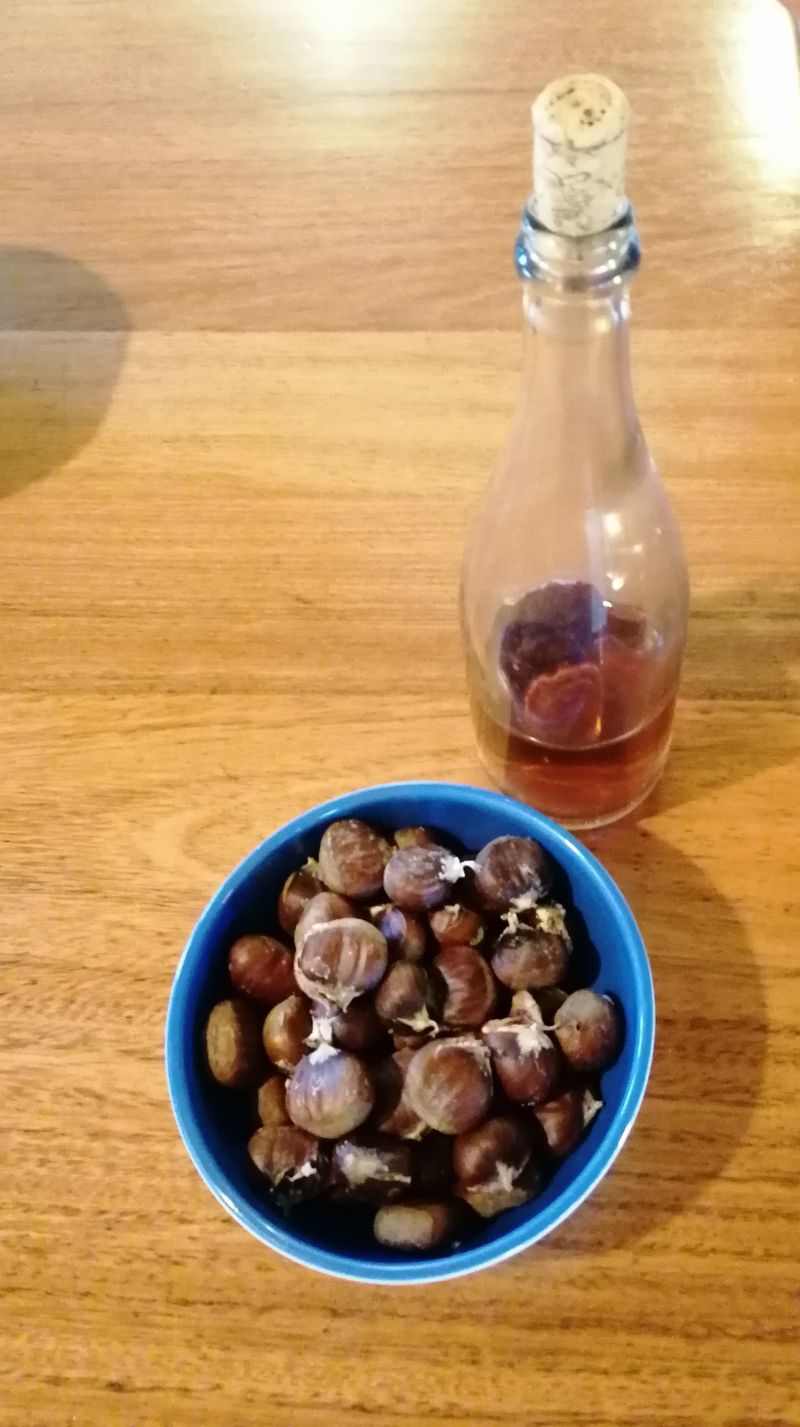
The principle fits in one sentence. Brandy is poured into grape must while it is barely fermenting. The alcohol stops the yeast, the sugar stays in the glass, and the wine keeps its sweetness. Portuguese sources give a common ratio: two parts must to one part aguardente.
This is not the same as the abafado, the other Portuguese sweet wine. There, the brandy goes in during fermentation, not at the start. On paper the difference looks small. It still explains why the two drinks do not taste alike.
The register of traditional Portuguese products, kept by the DGADR, describes jeropiga as a sweet wine with a high alcohol content, produced in the region of Trás-os-Montes, in the north-east of the country. The entry gives the reference recipe: two parts must, one part aguardente de bagaço, and a cinnamon stick. The text also describes the gesture. The must, the brandy and the cinnamon sticks go into a talha, a jar of glazed or black clay. You stir, then let it rest for four to five days. After twenty-four hours the liquid is already clear.
After that comes a choice. You keep the drink in the jar, or you pour it into bottles and glass demijohns. Jeropiga is therefore made at home, often in autumn, when the must is available, and it keeps from one season to the next.
The magusto, the festival of the chestnut
The magusto is an autumn festival. Chestnuts are roasted over a bed of embers, in the street or in the courtyard, and eaten hot while the glass goes from hand to hand. The DGADR text lists jeropiga among the drinks that go with these chestnut feasts, and notes that it is available around Saint Martin's Day, on 11 November.
The online encyclopedia Wikipedia adds a useful nuance: jeropiga is not tied to one season. In Trás-os-Montes and in the Beira region it is made at home and drunk all year round. The magusto is simply the most visible occasion, the one when the whole village pours it.
A sweetness that once went into port
For a long time jeropiga had another, less festive use. It was added to port wine to make it sweeter. The same encyclopedia reports that English merchants in the nineteenth century saw it more as an adulteration. In 1844 an anonymous pamphlet denounced its use in the wines of the Douro valley. The practice has not disappeared: it still survives in some fortified wines today.
That past explains jeropiga's poor reputation among connoisseurs. It also explains its charm as a country drink, made to last and to be shared, rather than to be judged.
Why 11 November?
The magusto was born on All Saints' Day, 1 November, according to Florestas.pt. Families honoured their dead around a fire, at a table where chestnuts were never missing. In 1582, the switch to the Gregorian calendar removed ten days from October. The 1 November festival slid to 11 November, a date later assigned to Saint Martin of Tours.
The legend of Saint Martin, who shared his cloak with a beggar on a rainy day, is tied to the Verão de São Martinho, the Saint Martin's summer: the fine weather that comes back around this time every year.
And in Brussels?
At Wooly, in Etterbeek, Uccle and Waterloo, we make pastries, not wine. Jeropiga remains a matter of family and jar. What connects us to it is the same Portuguese festive spirit, in which sugar and autumn belong together. For a traditional Portuguese pastry, our pastéis de nata are available in our shops.
Sources: Produtos Tradicionais Portugueses (DGADR), “Jeropiga” ; Wikipedia, “Jeropiga” ; Florestas.pt, “São Martinho: qual a origem da tradição das castanhas?”.
Photo credit: Gadogado123, CC BY-SA 4.0, via Wikimedia Commons.
Read next
Papo-seco: the Portuguese breakfast roll, minus its maminhas
It crackles under your thumb and is almost always eaten in the morning. The papo-seco, called carcaça or molete…
The doces were not born in convents: the myth that won't die
Cloistered nuns, egg yolks beaten by the dozen: the convent legend clings to Portuguese pastry. Historian João Pedro…
Palha de Abrantes: the golden straw the Tagus carried to Lisbon
On the Tagus, at Abrantes, a sweet took its name from the straw barges carried to Lisbon. Golden egg threads, an almond…
Bilharacos: the pumpkin Christmas sweet from Lousada to Aveiro
A kitchen in Lousada, a Christmas evening, a woman listing her ingredients from memory. Bilharacos are a pumpkin sweet,…
Tremoços: the poor man's seafood that goes with beer
On the table of a tasca, before the beer even arrives, there is often a small bowl of yellow seeds. Raw, tremoços are…

Tomar's Trays Festival: bread carried on the head
Every four years in Tomar, in central Portugal, young women in white dresses walk through the streets with a tray…
Fogaça: the sweet bread that young girls carry on their heads
You don't cut it like a cake: you carry it. Every 20 January in Santa Maria da Feira, young girls walk the streets with…
Barriga de freira: the nun's belly sweet from Portugal
A dessert with a name that makes you smile: barriga de freira, a nun's belly. Egg yolks, sugar, bread and cinnamon, a…
Find our artisan pastries in our Brussels stores or order online.
Order now Our foodtruck for your events Our stores