
Papo-seco: the Portuguese breakfast roll, minus its maminhas
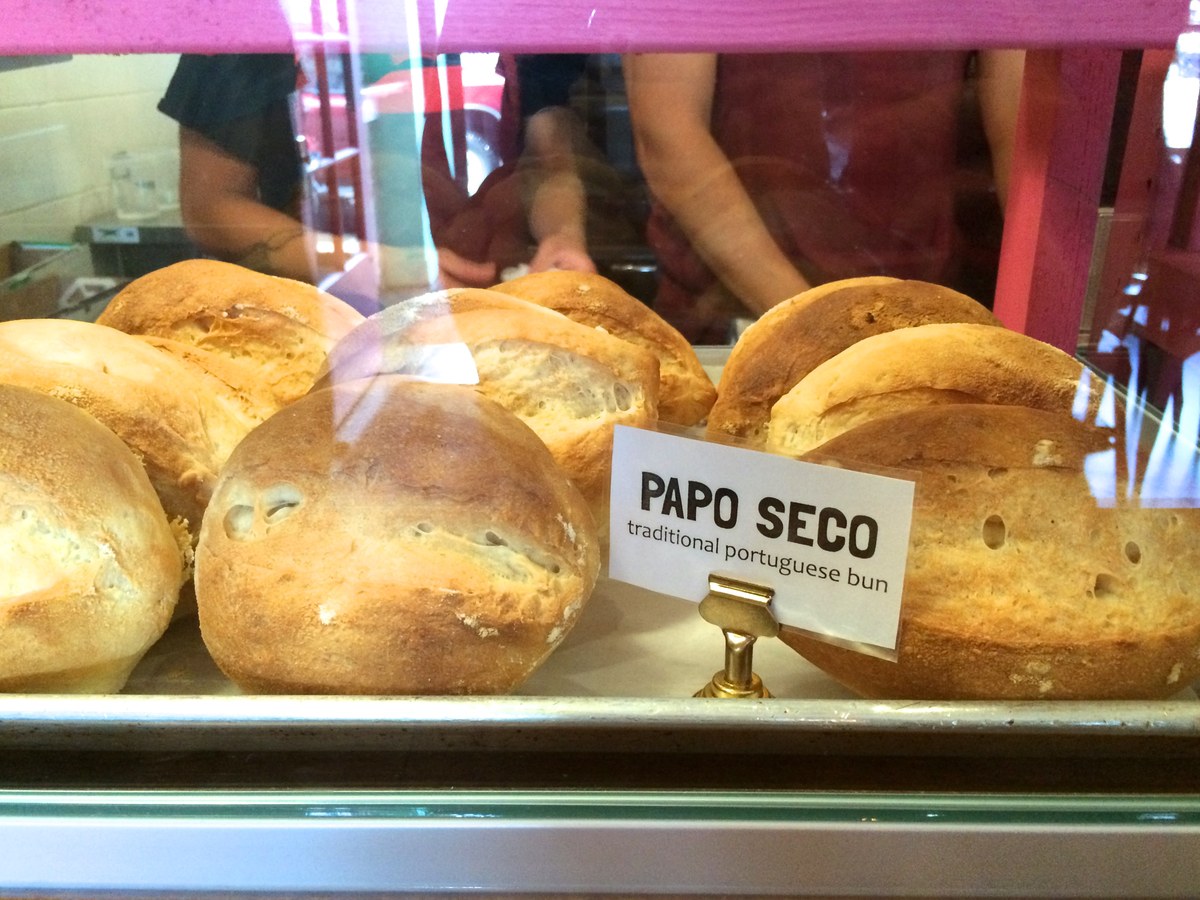
It crackles before you even cut it. In Portugal, the roll you bring home from the padaria in the morning has several names depending on the region: papo-seco, carcaça, molete, bijou. Nearly everyone has eaten one. Few people know the story behind its shape.
An individual roll with a slit down the middle
The papo-seco is a small, slightly elongated roll with a slit down the middle. The DGADR, which lists traditional Portuguese products, notes that it ends in small "maminhas" at each tip. It is eaten mostly at breakfast or as a light meal.
The name changes from region to region. In the north, people mostly say molete or bijou. In the Ribatejo, the Alentejo and the Oeste, they say papo-seco. In Lisbon and the Tagus valley, they say carcaça. These are several names for one and the same roll.
The maminhas, or the tips of the bread
"Maminhas" means little breasts. They are the two tips of the bread. The ethnologist Mouette Barboff, who studied traditional Portuguese bread, describes a loaf with a rounded belly, a cut in the centre and pointed ends. It was affectionately called the "bread with maminhas".
A bread of the people, and a question of weight
In the 1950s, under the Estado Novo, Salazar's government had to deal with a shortage of grain. According to Pãomania, it ordered bakers to reduce the weight of bread without touching its price, to limit spending and imports.
The DGADR tells it differently: everywhere in the world, the small loaf costs more than the big one. In Portugal, for political and corporatist reasons, it became "the bread of the people".
Vítor Moreira takes off the tips
Vítor Moreira, a chemical engineer known as the "Papa do Pão", took the papo-seco and made two simple changes: he removed the two tips, then added a slit along its length.
Why? Because a papo-seco with tips is shaped with two hands, whereas a carcaça is rolled with one. The baker saves time with every roll. Pãomania sums it up: the carcaça is, technically, a papo-seco without its maminhas. The shape changed; the name of the bread stayed.
Why "à papo-seco" means elegantly
Ciberdúvidas, the service that answers Portuguese-language questions at ISCTE-IUL, reports the Houaiss dictionary's explanation of the word's origin. The papo-seco cost more than other breads. It was bought only by those who "andavam à papo-seco", that is, the most elegant and well-off.
The meaning has stayed in the language. Vestir-se à papo-seco means dressing with care and elegance. The same service points out that the meaning depends on the context of the sentence.
At the counter, in the morning
It is spread with butter, or filled with cheese and ham, as Pãomania notes. It goes with breakfast or a light meal, and never tries to steal the show.
It is the same logic as the bica, the coffee drunk standing at the counter, whose story we told here. At Wooly, in Etterbeek, Uccle and Waterloo, the pastel de nata has its place at the counter, just as the bica does in Portugal. You can discover the whole range of pastéis de nata, or have them delivered to your home in Brussels: the delivery page sets out the conditions.
Sources: DGADR, “Produtos Tradicionais Portugueses — Pãozinho” ; Pãomania, “Papo Seco - Carcaça - Molete” ; Ciberdúvidas (ISCTE-IUL), “A expressão ‘à papo-seco’”.
Photo: Lou Stejskal, “Papo-secos”, Wikimedia Commons, CC BY 2.0.
Read next
The doces were not born in convents: the myth that won't die
Cloistered nuns, egg yolks beaten by the dozen: the convent legend clings to Portuguese pastry. Historian João Pedro…
Palha de Abrantes: the golden straw the Tagus carried to Lisbon
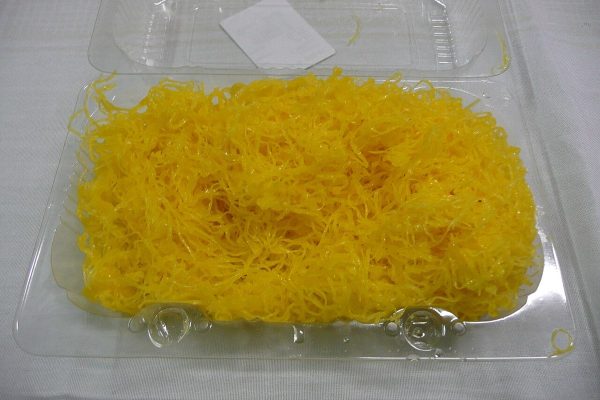
On the Tagus, at Abrantes, a sweet took its name from the straw barges carried to Lisbon. Golden egg threads, an almond…
Bilharacos: the pumpkin Christmas sweet from Lousada to Aveiro
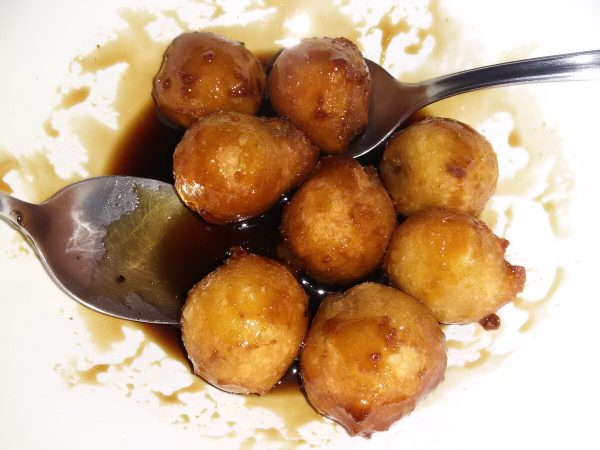
A kitchen in Lousada, a Christmas evening, a woman listing her ingredients from memory. Bilharacos are a pumpkin sweet,…
Tremoços: the poor man's seafood that goes with beer
On the table of a tasca, before the beer even arrives, there is often a small bowl of yellow seeds. Raw, tremoços are…

Tomar's Trays Festival: bread carried on the head
Every four years in Tomar, in central Portugal, young women in white dresses walk through the streets with a tray…
Fogaça: the sweet bread that young girls carry on their heads
You don't cut it like a cake: you carry it. Every 20 January in Santa Maria da Feira, young girls walk the streets with…
Barriga de freira: the nun's belly sweet from Portugal
A dessert with a name that makes you smile: barriga de freira, a nun's belly. Egg yolks, sugar, bread and cinnamon, a…
Queijinhos do Céu: the heavenly cheese made with neither milk nor cheese
A small white disc wrapped in paper cut like lace, and yet not a crumb of cheese. The queijinhos do céu come from the…
Find our artisan pastries in our Brussels stores or order online.
Order now Our foodtruck for your events Our stores