
Pão de ló de Ovar: the cake whose heart still runs
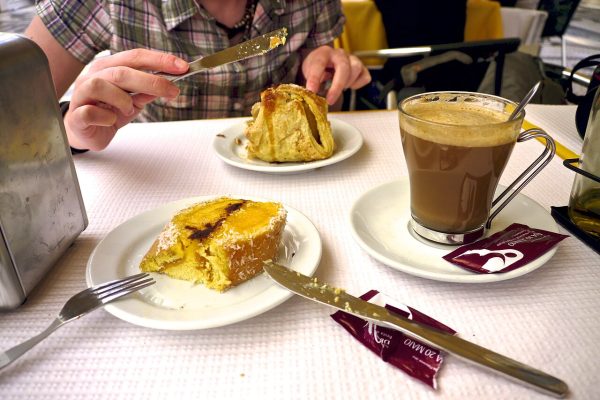
On the plate, the cake does not quite hold together. The top is golden and almost dry under a fingertip, then the knife meets a yellow cream that slowly spreads. This is the pão de ló of Ovar, and this is how it is eaten: with a spoon, when the slice has moved too much while being cut.
A town in the Aveiro district that gives the cake its name
Ovar is a town in the Aveiro district, in the north-centre of Portugal. The Portuguese edition of Wikipedia describes the cake as a typical and traditional pastry product, considered the main gastronomic dish of the town. The name of the cake therefore follows the name of the town, just as the pão de ló of Alfeizerão carries the name of its village.
What sets it apart from an ordinary pão de ló
The basic pão de ló is a very simple cake: eggs, sugar and flour, beaten until the crumb is light and spongy. The one from Ovar follows the same principle, but it is distinguished by a heart of ovos moles, that thick cream of egg yolks and sugar for which the Portuguese convents became famous. The contrast gives the cake its character: the outside holds, the inside stays soft and almost liquid.
That creamy heart is also what makes the cake hard to imitate. A slice left too long in the oven loses its centre; a slice taken out too early does not hold its cut. The bakers of Ovar know this, and so do the people who love the cake: you recognise a good pão de ló by the way it falls apart on the plate without breaking.
A protected designation, not just a recipe
In 2016, the pão de ló of Ovar was entered in the European register of protected geographical indications, under implementing regulation (EU) 2016/1407. A PGI does not protect a name in the commercial sense: it ties a product to a territory and to a method of making. A pão de ló sold under that name must therefore meet a specification, not only the idea people have of it.
In an opinion piece published by the Observador, the author insists on this point: formal protection is not enough. It means little if industrial versions or hurried imitations end up looking like the cake without having its heart. The text recalls that the recipe passed from hand to hand, from kitchen to kitchen, without shortcuts. The cake depends less on its name than on the gestures of those who make it.
A ranking that travelled across Portugal
According to the Observador, the pão de ló of Ovar was named the best sweet in the world by the TasteAtlas ranking. The newspaper sees in it an occasion to think about our relationship with tradition: a cake that has not changed to please new audiences, that has not adopted foams, geometric shapes or reductions, and that is none the worse for it.
The ranking also raises a simple question: how do you protect what becomes famous? The more a product is wanted, the more it attracts imitations. The challenge, for Ovar and its producers, is to keep the quality without sliding into standardisation.
The same family, other towns
Discovering the pão de ló of Ovar quickly leads to other variations of the same family, each tied to its town: the pão de ló of Alfeizerão, that of Alpiarça, that of Arouca. To understand where the Ovar cake stands in Portuguese pastry, it is worth reading our article on the ovos moles of Aveiro, which tells the story of that yellow cream and its convent origins.
In Brussels, Portuguese pastry has its own story. At Wooly we do not claim to make the pão de ló of Ovar: the name is protected, and the recipe belongs to the town. We prefer to let people taste the gestures and flavours around it, in our shops on rue des Tongres in Etterbeek, in Uccle and in Waterloo. If you want to see what we offer, all our addresses are listed here.
To go further
If you come across one whose heart does not run, that does not necessarily mean it is a bad cake: it may simply have baked a little too long. In Portuguese pastry, the gesture counts as much as the recipe, and that is exactly what the cake of Ovar tells.
Sources: Wikipedia (pt), “Pão de ló” ; Observador, “Pão de Ló de Ovar, a tradição portuguesa que conquista o mundo”.
Read next
Broas de mel: the small Madeiran cake made with cane honey
They come out of the oven golden, crisp at the edges and scented with cinnamon. Broas de mel, from Madeira, are made…
Pitos de Santa Luzia: the cake Vila Real's women give on 13 December
In Vila Real, in northern Portugal, women are the ones who give on 13 December. A small square of dough folded into a…
Melindres d'Arouca: the little cake that likes to be coaxed
Small round cakes with a golden crumb and white icing, born in northern Portugal. Their very name says they are not…
Esquecidos: the Covilhã biscuit whose batter makes you forget everything
Three ingredients, one spoon, and a batter you have to beat for so long that you forget what you were doing. That is…
Consoada: the 24 December dinner that began as a broken fast
It starts with the smell of garlic and warm olive oil in the kitchen, and it ends late at night, when nobody remembers…
Pampilhos: the cake born around 1970 in a Santarém pastelaria
You have probably seen it in a café display case, next to the pastéis de nata, without asking where it comes from. The…
Leite-creme: the festive dessert with a disputed origin
A warm custard, a veil of burnt sugar and a question nobody has settled: where does leite-creme come from? Portugal has…
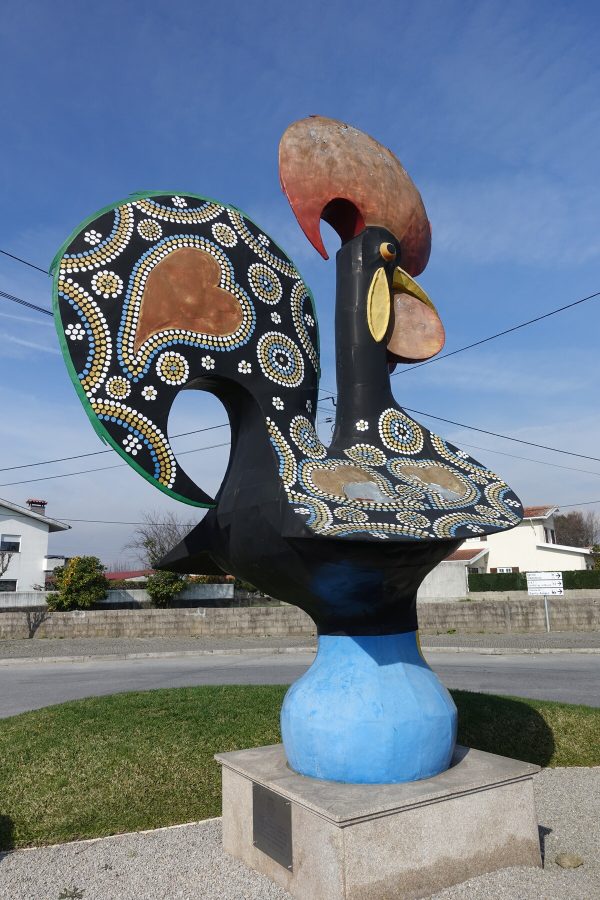
Galo de Barcelos: the rooster that crowed to save a pilgrim
A pilgrim from Galicia, a judge dining with friends and a roast rooster on the plate. In Portugal people still tell of…
Find our artisan pastries in our Brussels stores or order online.
Order now Our foodtruck for your events Our stores