
Pitos de Santa Luzia: the cake Vila Real's women give on 13 December
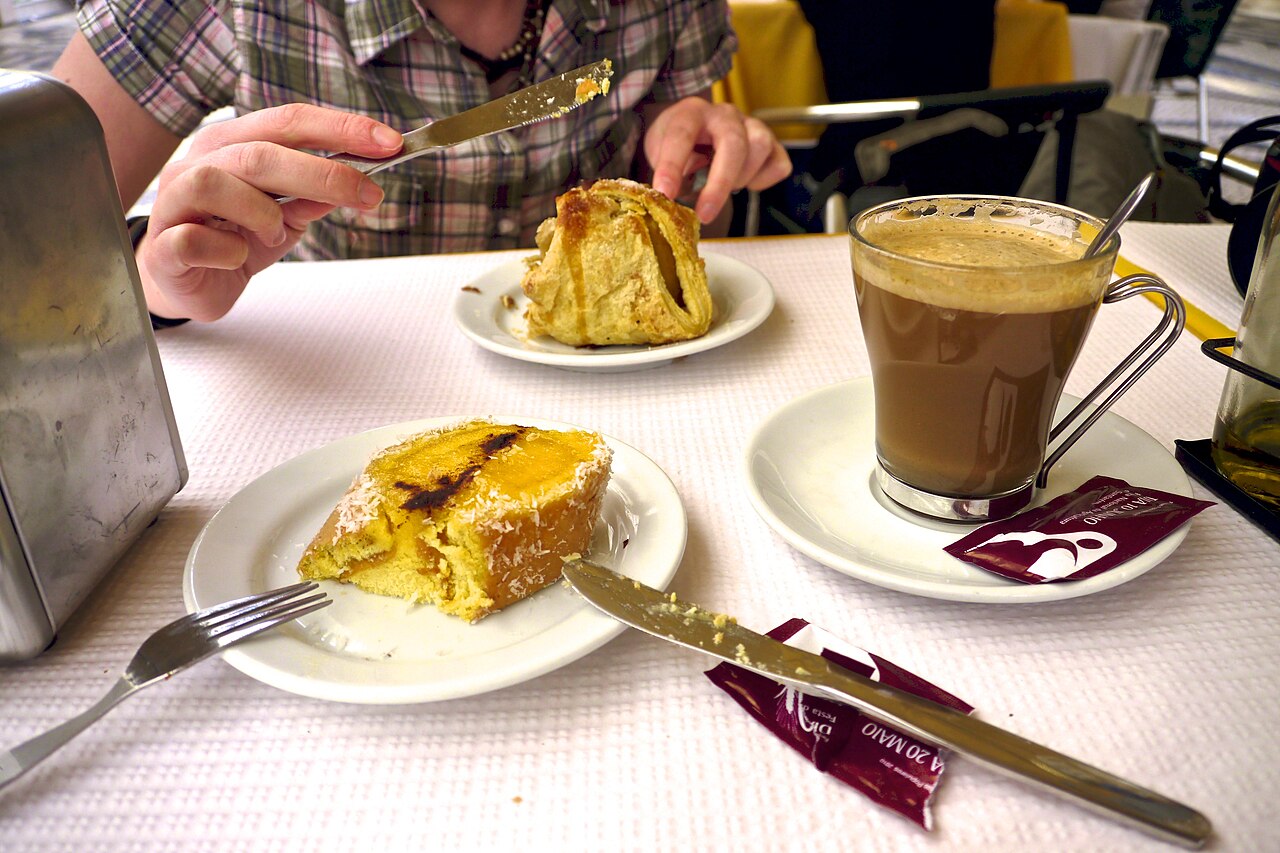
On 13 December, in Vila Real, in northern Portugal, it is the women who give. They hand the men a small square of dough folded into a parcel and filled with cinnamon pumpkin compote. These are the pitos de Santa Luzia. In February, the men answer with another sweet, the gancha.
13 December is the feast of Saint Lucy, Santa Luzia in Portuguese. She is the patron saint of the blind and of all things to do with sight, and her feast falls about ten days before Christmas.
A dated invention, and a legend that follows it
The surest point comes down to a name: Ermelinda Correia, a woman who lived between the 18th and 19th centuries and who is credited with inventing the doce. In December 2017, a seminar at the University of Trás-os-Montes and Alto Douro, the UTAD, based in Vila Real, heard the anthropologist Ricardo Manuel Ferreira de Almeida present ongoing research on the city's doçaria tradicional. His example: the pitos de Santa Luzia.
The popular version goes further. It turns the same woman into a nun, Irmã Imaculada de Jesus, said to have been shut away in the convent of Santa Clara. A girl with a great sweet tooth, she was supposedly sent there to turn her sin into virtue. One day, while tending her patients with linen compresses, she is said to have had the idea: dough cut into squares, a pumpkin compote, the oven. Meeting the Mother Superior, who was blind, she pretended to be carrying linen compresses. The legend adds that, back in her cell, she reassured herself with the saying repeated in convents: what is not seen does not count as a sin.
A word of caution. This version comes from a website about Portuguese outings and traditions, not from a historical source. The UTAD seminar keeps only the name of Ermelinda Correia and does not make her a nun.
The recipe, as it is described
The dough is simple: flour, eggs, salt and water, worked into a firm ball and then left to rest. Meanwhile, the pumpkin is cooked, put through a food mill and sweetened, with cinnamon.
The dough is rolled out and cut into squares, a spoonful of compote goes in the centre, and the corners are gathered into a little pouch, which the Portuguese call a trouxinha, a small bundle. The pouches are set on a floured tray and baked. The legend says the shape comes from the nun's linen compresses: squares of cloth whose points fold back towards the centre to hold the filling in.
An exchange, not a gift
What makes the pitos more interesting than most sweets is the rule around them. On 13 December, the young women give. On 3 February, the day of São Brás, the boys give back with a gancha. The UTAD seminar describes this as a relationship of dádiva and counter-dádiva: one gives, and the other gives back. Each gesture calls for a reply, a few weeks apart, in the same city.
That is why a pito is not ordered like a cake. It is given, and it is returned. The sweetness is almost secondary.
And in Brussels?
Portugal's pumpkin sweets have their place on the end-of-year table, alongside the bolo-rei and the rabanadas. If the story of Vila Real has made you want a taste, start with bilharacos, the pumpkin Christmas doce from Lousada, then stop by one of our shops: rue des Tongres 16 in Etterbeek, Uccle or Waterloo. The details of our shops are here.
Sources: UTAD, “Seminário na UTAD debateu doçaria popular” (2017); Lifecooler, “Pitos de Santa Luzia”.
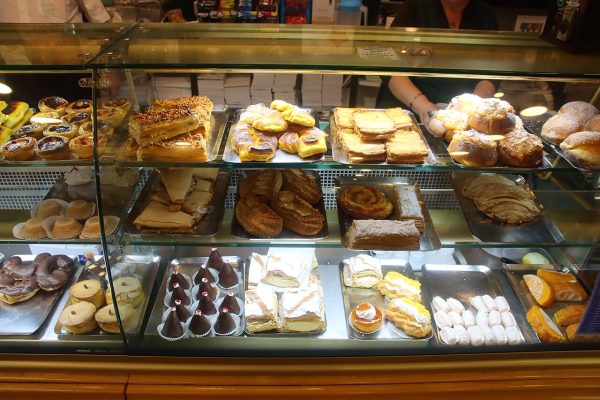
Photo: islandjoe (Flickr), CC BY 2.0, via Wikimedia Commons. Generic illustration of Portuguese pastries, not taken in Vila Real.
Read next
Melindres d'Arouca: the little cake that likes to be coaxed
Small round cakes with a golden crumb and white icing, born in northern Portugal. Their very name says they are not…
Esquecidos: the Covilhã biscuit whose batter makes you forget everything
Three ingredients, one spoon, and a batter you have to beat for so long that you forget what you were doing. That is…
Consoada: the 24 December dinner that began as a broken fast
It starts with the smell of garlic and warm olive oil in the kitchen, and it ends late at night, when nobody remembers…
Pampilhos: the cake born around 1970 in a Santarém pastelaria
You have probably seen it in a café display case, next to the pastéis de nata, without asking where it comes from. The…
Leite-creme: the festive dessert with a disputed origin
A warm custard, a veil of burnt sugar and a question nobody has settled: where does leite-creme come from? Portugal has…
Galo de Barcelos: the rooster that crowed to save a pilgrim
A pilgrim from Galicia, a judge dining with friends and a roast rooster on the plate. In Portugal people still tell of…
Store pastel de nata: never in the fridge, three minutes in the oven
How long do pastel de nata last? Three to four days, uncovered and never in the fridge. Do pastel de nata need to be…
Broa: the Portuguese bread that was rye before maize arrived
Before it became a maize bread, broa was a rye bread. Its name is older than the American grain, and its history shows…
Find our artisan pastries in our Brussels stores or order online.
Order now Our foodtruck for your events Our stores