
Bica: What the Portuguese Actually Order at the Counter
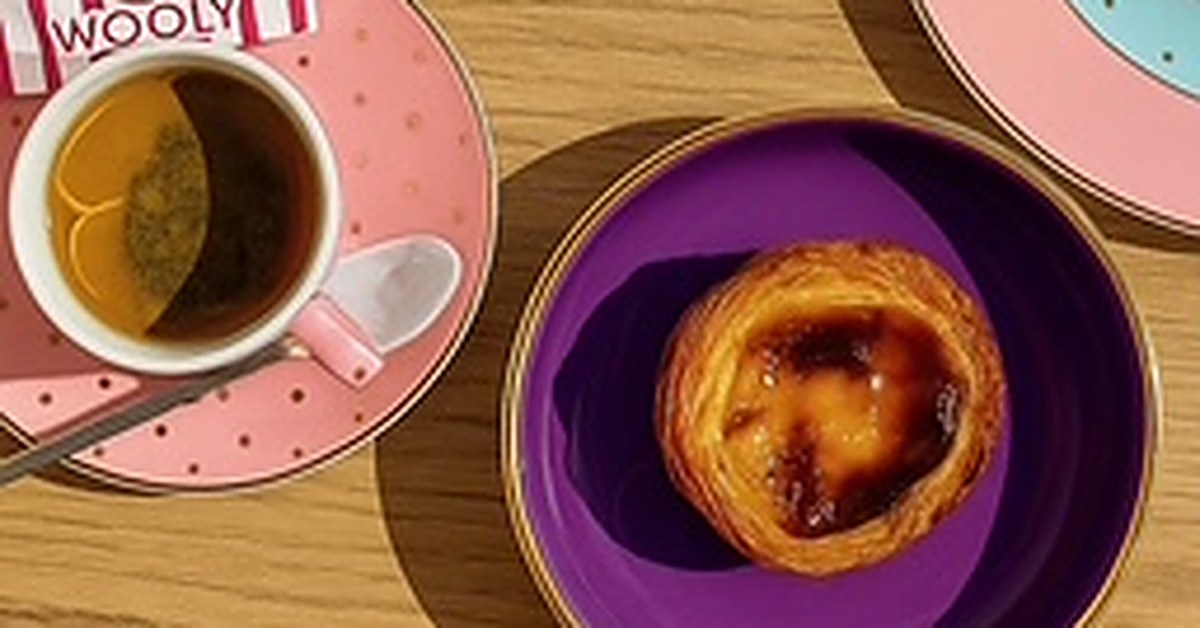
At the counter it takes thirty seconds. The customer walks in, says one word, the machine hisses, a small cup lands on the zinc. He tips in the sugar, stirs twice, drinks it in one go, leaves a coin and walks out. Portuguese coffee is not a break: it is a punctuation mark in the day. And in Lisbon it goes by a name nobody uses in Porto.
Bica, cimbalino, café: three words for one cup
Ask for um café anywhere in Portugal and you will be handed a short, strong espresso in a thick cup barely bigger than a thimble. It is the default, the coffee you never have to specify.
In Lisbon, though, people say uma bica. In Porto and the north, the very same coffee is a cimbalino. That word comes from La Cimbali, the Italian brand whose machines equipped the city's cafés: the appliance gave its name to the drink, much as Hoover came to mean vacuum cleaner in English.
These are not harmless regional variants: they draw a border. Order a bica in Porto and you are instantly marked as a Lisboner, and the other way round. It is a badge of belonging as much as an order.
Where does the word "bica" come from?
Here begins one of the most stubborn Portuguese legends.
The version you will be told at the counter: bica is supposedly an acronym for Beba Isto Com Açúcar, "drink this with sugar". The story is set at A Brasileira in the Chiado, one of Lisbon's most emblematic cafés. The Brazilian coffee served there is said to have struck locals as too bitter, so the house posted the advice to reassure them.
It is a lovely story. It is probably not the true one.
The explanation linguists favour is more prosaic, and rather more beautiful: in Portuguese, a bica is a spout, a nozzle, the little channel through which water falls from a fountain into its basin. And that is exactly how coffee runs, from the spout of the machine into the cup. The word does not describe the taste: it describes the gesture.
A Brasileira itself is entirely real. It opened on 19 November 1905 under Adriano Telles, a merchant importing coffee from Brazil, and launched a promotion that became famous: buy a kilo of coffee, get a cup free. That is part of how people got into the habit of drinking their coffee on the spot, standing, rather than carrying it home.
A roast with nothing Italian about it
The bica is readily compared to Italian espresso. The cup does look alike; the contents rather less so.
Portuguese roasters work with blends in which robusta holds a place northern Italy denies it, alongside arabica. The country long sourced its beans from its former colonies (Angola, Timor) which are robusta lands. And the bean is roasted longer, at a lower temperature: a slow, dark roast.
The result is a dense, emphatically strong coffee with a clean bitterness and a thick, almost orange crema. It also explains the sachet of sugar that arrives on the saucer as a matter of course: it is not decorative.
The vocabulary of the counter
Beyond the bica, Portuguese has developed a formidable precision for saying exactly how much water and how much milk you want. The orders you hear most:
- Curto: the same dose of coffee with less water: half a cup, more concentrated still.
- Cheio: the opposite, the cup filled, so a little longer.
- Abatanado: lengthened with hot water in a large cup, the equivalent of an americano.
- Pingado: a bica with a drop of milk. Pingo means drop.
- Garoto: the reverse of the pingado: plenty of milk, little coffee. The word means "kid".
- Meia de leite: half coffee, half milk, in a cup.
- Galão: a quarter coffee, three quarters milk, served in a glass. This is the breakfast coffee.
One detail that trips visitors up: a galão is drunk from a glass, never a cup. Ask for a galão in a cup and you have in fact ordered a meia de leite.
Standing, and fast
Portuguese coffee is taken at the counter, standing, often in under a minute. You do not settle in, you do not unpack a laptop: you pass through. The same establishment serves the morning coffee, lunch at midday and the evening drink, the Portuguese pastelaria is bakery, bar and neighbourhood canteen all at once.
That is why a Portuguese can drink several a day without it resembling a ritual of indulgence. It is a social breath: you run into a neighbour, exchange three words, move on. The bolo de arroz and Lisbon's neighbourhood cafés tell the same story, in fact, one of places that hold a city's fabric together. And when the day winds down, the little glass of ginjinha takes over from the little cup.
And with it, a pastel de nata
There is a very concrete reason Portuguese coffee calls for pastry: that clean bitterness needs a counterweight. The custard of a pastel de nata, warm and scented with cinnamon, does exactly that work, the sugar rounds off the attack, the puff pastry clears the palate. The two do not complement each other by accident: they grew up together, on the same counters.
In Brussels, that pairing is what we serve from morning to evening. A short coffee, a nata straight from the oven, standing at the counter if you are in a hurry, on the Rue des Tongres in Etterbeek as much as in Stockel, Uccle or Waterloo. The gesture is the same as in Lisbon. All that is missing is the tram behind the window.
Our pastéis de nata, in seven flavours, can also be ordered online, with home delivery in Brussels and to neighbouring countries.
Sources: Ciberdúvidas da Língua Portuguesa (ISCTE-IUL), “Ainda se diz «uma bica, se faz favor»?”; Ciberdúvidas da Língua Portuguesa (ISCTE-IUL), “Café/bica”.
Read next
Empada, chamuça, rissol: which is which?
Empada, chamuça, rissol, empanada: four parcels that look alike and have almost nothing in common. How to tell them…
Salame de chocolate: the Portuguese chocolate salami
It looks like a salami, is sliced like a salami, and contains not a gram of meat. What it is, where it comes from, and…
Rissóis: the Portuguese fried turnover, and its recipe
Rissol, rissóis, rissoles: the most misspelled breaded snack in Portugal. What it actually is, the two classic…
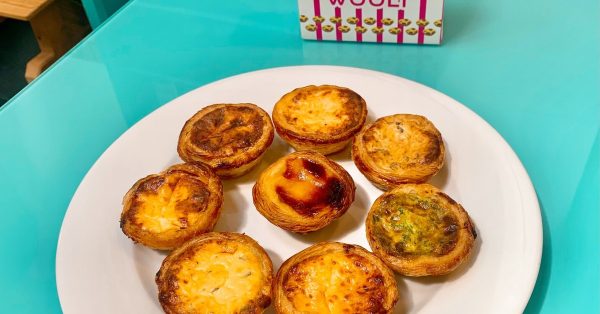
Pastéis de Nata Recipe: The Traditional One, Step by Step
This is not our house recipe but the traditional Portuguese one: the proportions that work, the steps that matter, and…
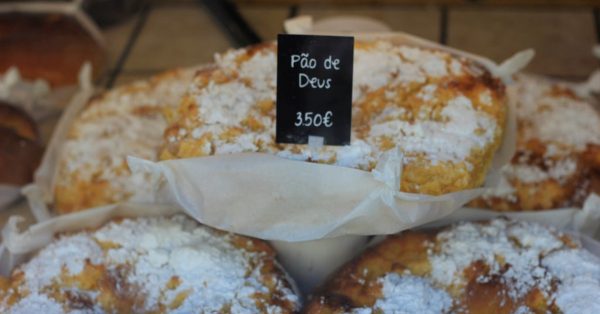
Pão de Deus: The Bun That Smells Like Every Portuguese Morning
Warm crumb, almost stretchy when you tear it open, topped with a soft, lightly golden layer of coconut: that's often…
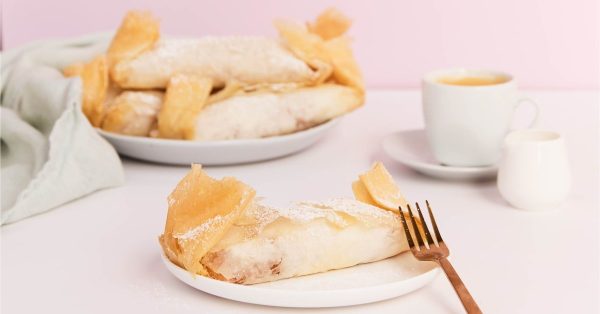
The Pastel de Tentúgal, Portugal's Most Delicate Pastry
It cracks before you've even touched it: paper-thin pastry, warm egg cream spilling out. Meet the pastel de Tentúgal,…
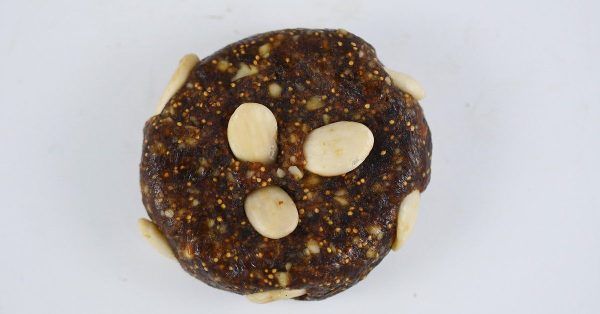
Morgado: the Algarve's Hand-Sculpted Fig and Almond Secret
A hand presses a small ball of almond paste, folds it closed around a dark, fragrant filling. That's how a morgado is…
Farturas: The Fairground Pastry That Lights Up Portugal's August Nights
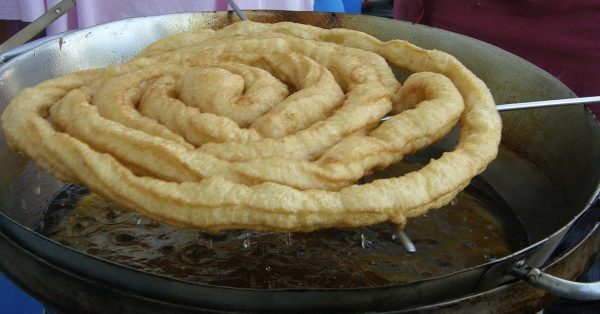
The oil hisses, a long ribbon of batter spirals down into the fryer, curls back on itself, browns unevenly, and cracks…
Find our artisan pastries in our Brussels stores or order online.
Order now Our foodtruck for your events Our stores