
Pastéis de Nata Recipe: The Traditional One, Step by Step
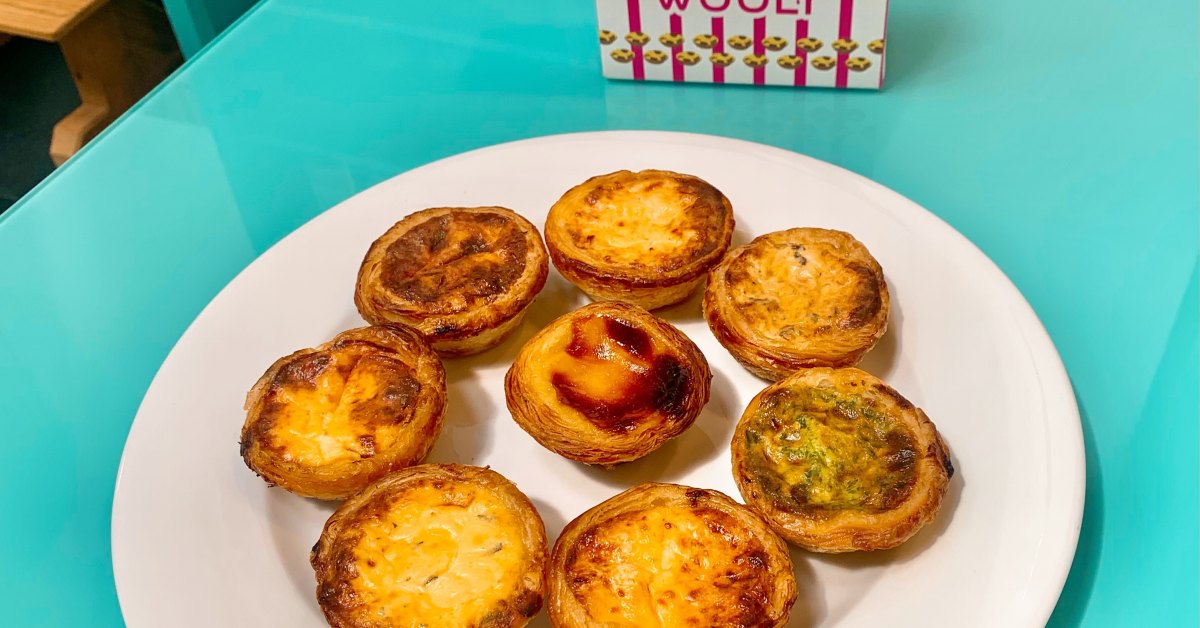
There are two ways to eat a pastel de nata in Brussels: come and see us, or turn on your oven. This page is about the second. It is not our house recipe, which stays our secret, but the traditional Portuguese recipe, the one you will find in cookbooks from Lisbon to Porto. With the proportions that work, and above all the difficulty nobody warns you about.
What is a pastel de nata?
A Portuguese egg custard tart, built in rolled puff pastry and baked in a very hot oven until the top is covered in brown, almost black blisters.
No time to bake? Our pasteis de nata come out of the oven several times a day in our 4 shops.
Those blisters are not a baking accident. They are the signature. A pale, smooth custard is a flan: perfectly good, but it is not a pastel de nata. A pastel de nata caramelises on the surface while the centre stays creamy.
The pastry was born in the early nineteenth century at the Jerónimos Monastery in Belém, on the edge of Lisbon. The monks used egg whites to starch their habits and were left with yolks by the hundred. When Portugal dissolved its religious orders in 1834, they sold the recipe to a nearby sugar refinery, which opened in 1837 the shop that still stands today.
Pastel or pastéis? The question that always comes up
Pastel is singular, pastéis is plural. One pastel de nata, two pastéis de nata. The word nata means « cream » and never changes.
The most common mistake is ordering « a pasteis », the exact equivalent of asking for « a cakes ». Nobody will hold it against you, but now you know.
And pastel de Belém? That is a brand name, not a protected designation: it belongs to the historic house in Belém, the only one to use it. Everywhere else in the world, Portugal included, the same pastry is called a pastel de nata.
Is it a flan?
No, and three things separate them.
The pastry. A flan sits in shortcrust pressed into the tin. A pastel de nata uses puff pastry that is rolled into a log, sliced, and pushed up the tin with a thumb, which is where the spiral you can see on the sides comes from, and the crispness that does not go soft.
The bake. A flan bakes slowly at a gentle temperature. A pastel de nata bakes for about fifteen minutes at the oven's maximum. It is a heat shock, not a slow set.
The texture. A flan sets and slices. The custard in a pastel de nata should stay loose, almost running in the middle. If it holds to a knife, it has overbaked.
The traditional recipe, step by step
Makes 12
- 1 rectangular sheet of all-butter puff pastry (about 250 g)
- 250 ml whole milk
- 200 g sugar
- 100 ml water
- 25 g plain flour
- 6 egg yolks
- 1 cinnamon stick
- 1 wide strip of unwaxed lemon zest
- Ground cinnamon and icing sugar, to serve
Method
- The syrup. Bring the sugar, water, cinnamon stick and lemon zest to the boil. Simmer for three minutes without stirring, to about 100 °C. Take off the heat, remove the cinnamon and zest, and let it cool to lukewarm.
- The base. Whisk the flour into a little cold milk until there is not a single lump, then add the rest of the milk. Heat over medium, whisking constantly, until it thickens, about three minutes.
- Bringing them together. Pour the lukewarm syrup onto the hot base in a thin stream, whisking as you go. This is where it most often fails: if the syrup is boiling, or goes in all at once, the custard splits.
- The yolks. Let it cool to lukewarm (this matters, or the yolks will cook) then whisk them in one at a time. Pass the custard through a sieve: that is the difference between smooth and grainy.
- The pastry. Roll the puff pastry into a tight log along its length. Cut 1.5 cm discs. Lay each disc flat in a muffin tin, then press it out with a wet thumb, from the centre upwards, until it just clears the rim.
- Filling. Fill three-quarters full, no more: the custard rises a great deal.
- Baking. Oven at its maximum, fan or bottom heat depending on your appliance, 12 to 15 minutes. Take them out once the tops are clearly blistered dark brown.
- Serving. Turn them out while still warm. Dust with cinnamon and icing sugar as you serve, never before.
The real obstacle is your oven
Here is what recipes do not say often enough: in a pastry shop these tarts bake in ovens that reach 350 or even 400 °C. Your domestic oven stops at 250 or 275 °C. That is the only reason a first attempt at home tends to produce decent but pale pastéis, without the blisters.
Three things genuinely help:
- Preheat for a long time: forty-five minutes at full heat, not ten. What matters is not the number on the dial but the heat stored in the walls.
- Heat an empty tray in the oven and set the tin on it as you load. The shock from underneath sets the pastry.
- Put the shelf high, close to the top element, so the surface browns before the custard fully sets.
And if the result is still paler than in Portugal, it is not you. It is the oven.
How they are eaten
Warm, within the hour they come out. That is the only moment the contrast fully works: pastry still crisp, custard still loose.
In Portugal they are dusted with cinnamon, sometimes icing sugar, never both to excess, and taken with a short coffee. Standing at the counter, more often than not. A pastel de nata is not a plated dessert, it is a ten-minute pause.
They do not keep: by the next day the pastry has drunk the moisture from the custard. Make twelve, eat twelve.
And if you would rather not turn the oven on
We bake them several times a day in our Brussels shops, in ovens that do get hot enough. The pastry is laminated as it should be, the custard is sieved, and the blisters are where they should be.
Sources: Wikipédia (pt), “Pastel de nata”; Direção-Geral de Agricultura e Desenvolvimento Rural, “Pastéis de Belém”.
Read next
Pão de Deus: The Bun That Smells Like Every Portuguese Morning
Warm crumb, almost stretchy when you tear it open, topped with a soft, lightly golden layer of coconut: that's often…
The Pastel de Tentúgal, Portugal's Most Delicate Pastry
It cracks before you've even touched it: paper-thin pastry, warm egg cream spilling out. Meet the pastel de Tentúgal,…
Morgado: the Algarve's Hand-Sculpted Fig and Almond Secret
A hand presses a small ball of almond paste, folds it closed around a dark, fragrant filling. That's how a morgado is…
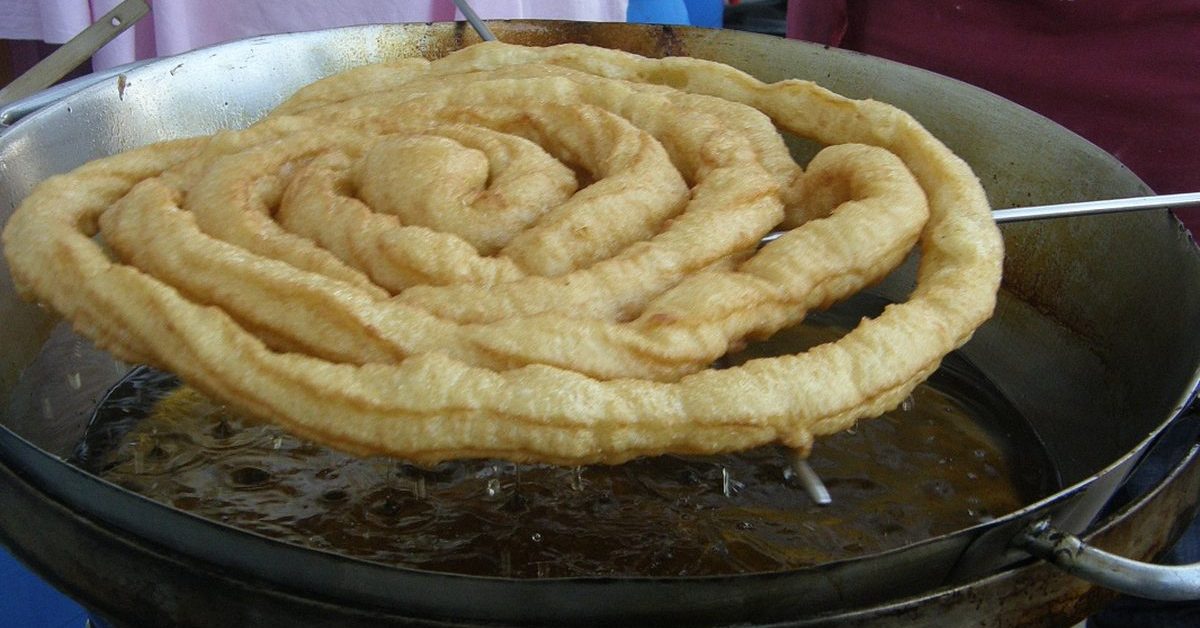
Farturas: The Fairground Pastry That Lights Up Portugal's August Nights
The oil hisses, a long ribbon of batter spirals down into the fryer, curls back on itself, browns unevenly, and cracks…
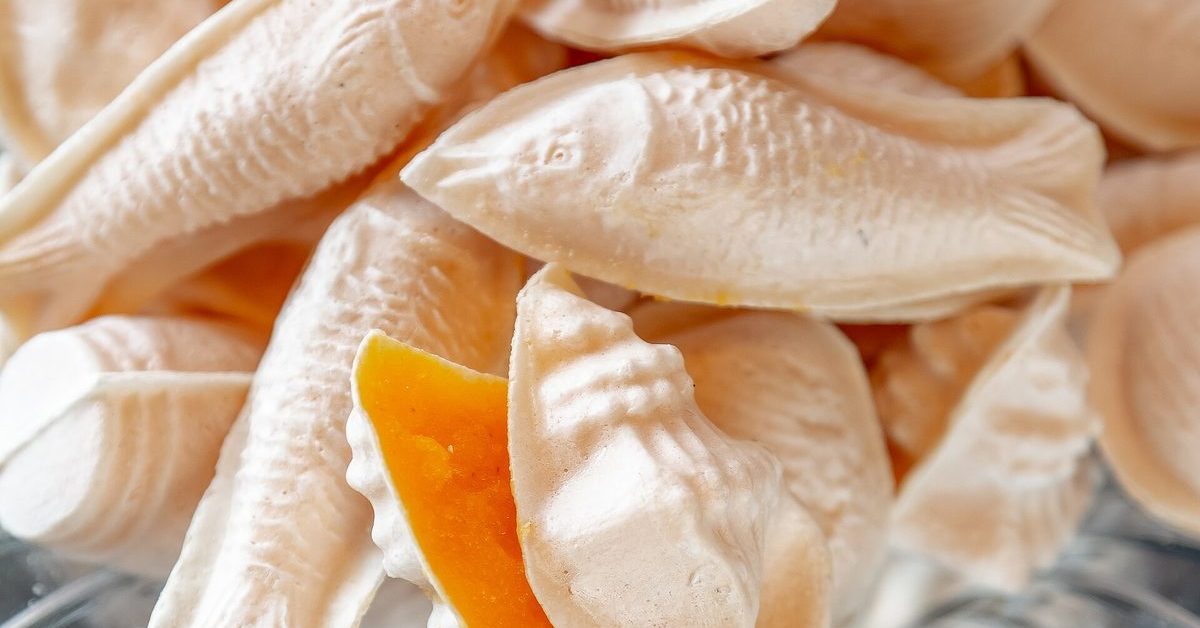
Ovos Moles: The Convent Sweet Aveiro Never Stopped Making
A wafer shell so thin it's barely thicker than a sheet of paper, cracking under your teeth before a deep golden cream…
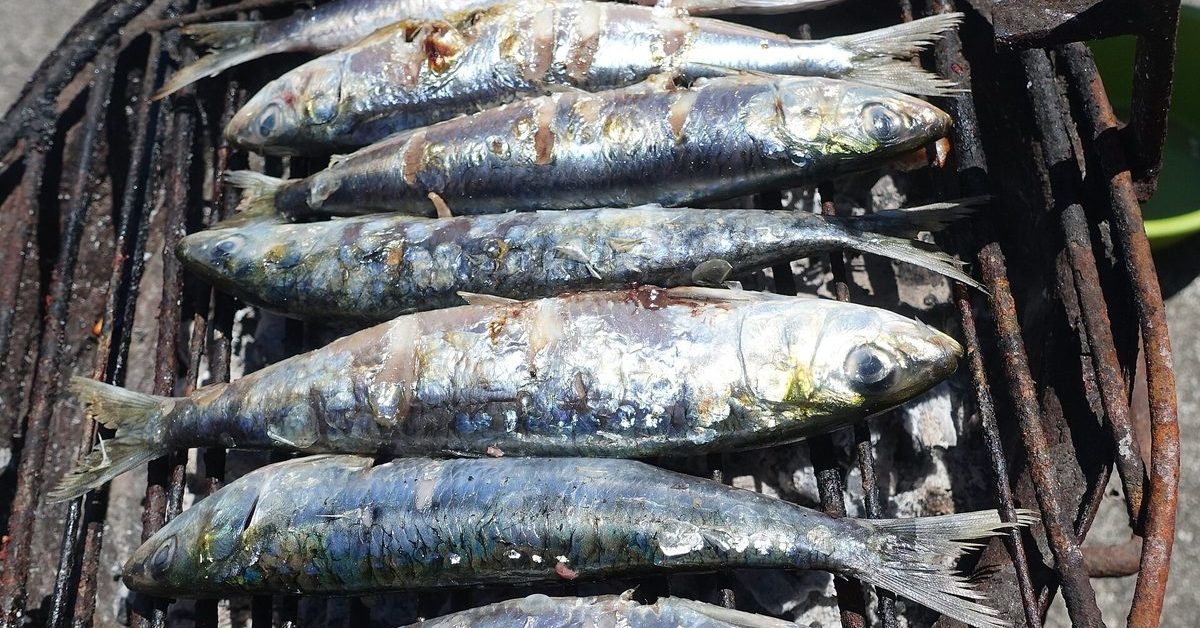
The Sardinhada: Lisbon's Summer Ritual of Grilled Sardines
A grill set right on the cobblestones. A cloud of oily smoke curling up between two façades strung with paper garlands.…
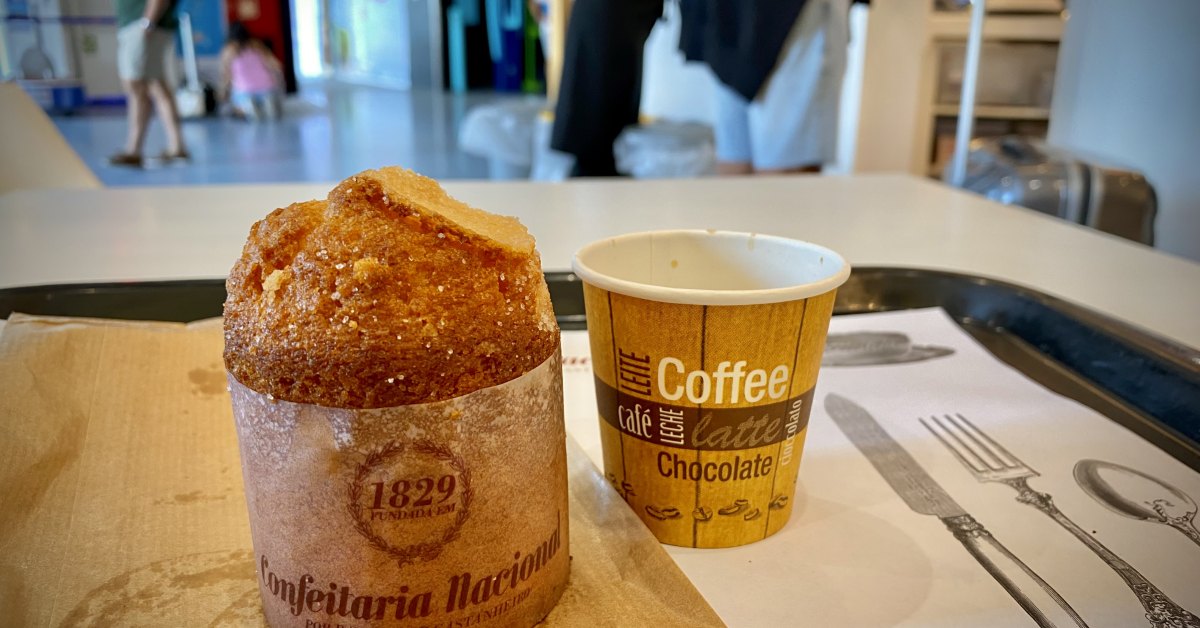
Bolo de Arroz: The Little Cake Standing Between Lisbon and the Loss of Its Cafés
Standing at the counter, an espresso gone in three sips, a small golden cake in hand: that's the most ordinary, most…
Ginjinha: The Tiny Cup That Sums Up Lisbon
The first time, someone hands you a plastic cup barely bigger than a thimble. You knock it back in one go, standing on…
Find our artisan pastries in our Brussels stores or order online.
Order now Our foodtruck for your events Our stores