
Rissóis: the Portuguese fried turnover, and its recipe
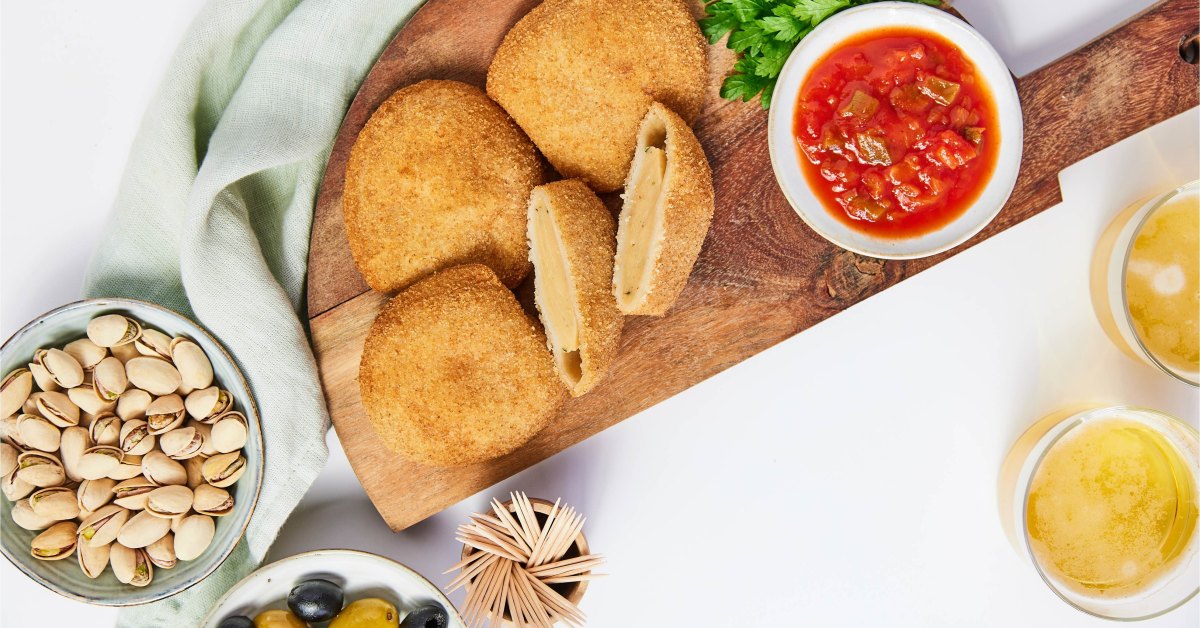
The rissol is probably the most misspelled Portuguese snack there is. You will see it written rissois, rissóis, rissoles, sometimes just rissóis de camarão. It is a half-moon parcel of dough, breaded and deep-fried, with a creamy filling. Here is what it actually is, how it is made, and why the dough is the only real difficulty.
The recipe below is the traditional Portuguese one, the version you find in family cookbooks. It is not ours: that one stays our secret.
What is a rissol?
A rissol is a half-moon of cooked dough filled with a béchamel-bound mixture, coated in egg and breadcrumbs, then fried. The dough is neither shortcrust nor batter: it is a dough cooked in boiling water, made from flour, water, butter and salt, and kneaded while still hot. That pre-cooking is what gives it its particular texture: supple, slightly elastic, never crumbly.
The result is a thin, crisp shell around a creamy centre that barely flows. That contrast is the whole point.
Rissol, rissóis, rissoles: which is right?
Rissol is the singular. Rissóis is the Portuguese plural, the ending -ol becomes -óis, exactly as pastel becomes pastéis. "Rissoles" is the anglicised and French form, which no Portuguese speaker uses.
Since nobody orders just one, the plural is what you hear everywhere: rissóis de camarão, prawn rissóis.
Prawn or suckling pig: the two classic fillings
The reference filling, served in every pastelaria, is prawn: small peeled prawns, béchamel, onion, a little lemon and parsley. You will find this version from the north of Portugal to the south.
The second, more regional and richer, is leitão, roast suckling pig, shredded and bound. It comes from the Bairrada, the region between Coimbra and Aveiro where oven-roast suckling pig is an institution. Rissóis de leitão began as a way of using up Sunday's leftovers and became a speciality in their own right.
There are also chicken, salt cod and vegetarian versions, but those are variations rather than classics.
The traditional recipe, step by step
For the dough (about 20 rissóis)
- 250 ml water
- 250 g plain wheat flour
- 25 g butter
- 1 pinch of salt
- A squeeze of lemon juice
For the prawn filling
- 300 g peeled prawns
- 1 onion, finely chopped
- 30 g butter
- 30 g flour
- 250 ml milk
- Salt, pepper, nutmeg, parsley
For coating and frying
- 2 beaten eggs
- 200 g fine breadcrumbs
- Oil for deep-frying
The method
- Make the béchamel. Melt the butter, add the onion and soften it without colouring. Add the flour all at once, stir for a minute, then pour in the milk gradually while whisking. Cook until the mixture coats the spoon.
- Add the prawns. Fold them in roughly chopped, season, add the parsley. The filling must be thick: a runny filling will soak through the dough. Let it cool completely, ideally overnight in the fridge.
- Cook the dough. Bring the water, butter, salt and lemon to a full boil. Take off the heat, tip in all the flour at once and stir vigorously until you have a ball that comes away from the sides.
- Knead it hot. Turn it out onto the worktop and knead while it is still scalding, until it turns smooth. This is the step everyone cuts short, and it is the one that decides everything.
- Roll and cut. Roll very thin, 2 to 3 mm, and cut discs of 8 to 10 cm.
- Fill and seal. A spoonful of filling in the centre, fold into a half-moon, press the edges firmly. A badly sealed edge will burst open in the oil.
- Coat. Dip in beaten egg, then in breadcrumbs. For a sturdier shell, repeat a second time.
- Fry. Oil at 170-175 °C, two to three minutes, until deep golden. Drain on kitchen paper.
Where it usually goes wrong: the dough
Nine failures out of ten come from the dough, and almost always from the same cause: it was kneaded too cold. Rissol dough is worked scalding hot, using a scraper or spatula for the first few seconds if you must. Once cooled, it turns brittle, tears when rolled, and the edges no longer seal.
Second cause: a filling that is still lukewarm. The warmth relaxes the dough and soaks through it. A properly cold, set filling can be handled without damaging anything.
Third cause: oil that is too hot. Above 180 °C the crumb browns before the centre is warm. Too cold, below 160 °C, the shell absorbs oil and the rissol turns greasy.
When they are eaten in Portugal
The rissol belongs to the salgados, the savoury snacks eaten standing at the counter, between breakfast and lunch or late in the afternoon. They are ordered with a coffee, often alongside a chamuça or a pastel de bacalhau.
They are also a fixture at family celebrations, christenings and weddings, where they arrive in pyramids on the aperitif tables, much like croquettes and empadas.
And if you would rather not get the fryer out
Cooked dough, a béchamel that has to set overnight, rolling to 2 mm, double coating and frying to temperature: that is a lot of work for an aperitif. Which is why, in Portugal, people buy them.
You will find ours, prawn and suckling pig, in our four shops in Brussels. They also go out on platters for receptions.
Sources: Wikipédia (pt), “Rissole”.
Read next
Pastéis de Nata Recipe: The Traditional One, Step by Step
This is not our house recipe but the traditional Portuguese one: the proportions that work, the steps that matter, and…
Pão de Deus: The Bun That Smells Like Every Portuguese Morning
Warm crumb, almost stretchy when you tear it open, topped with a soft, lightly golden layer of coconut: that's often…
The Pastel de Tentúgal, Portugal's Most Delicate Pastry
It cracks before you've even touched it: paper-thin pastry, warm egg cream spilling out. Meet the pastel de Tentúgal,…
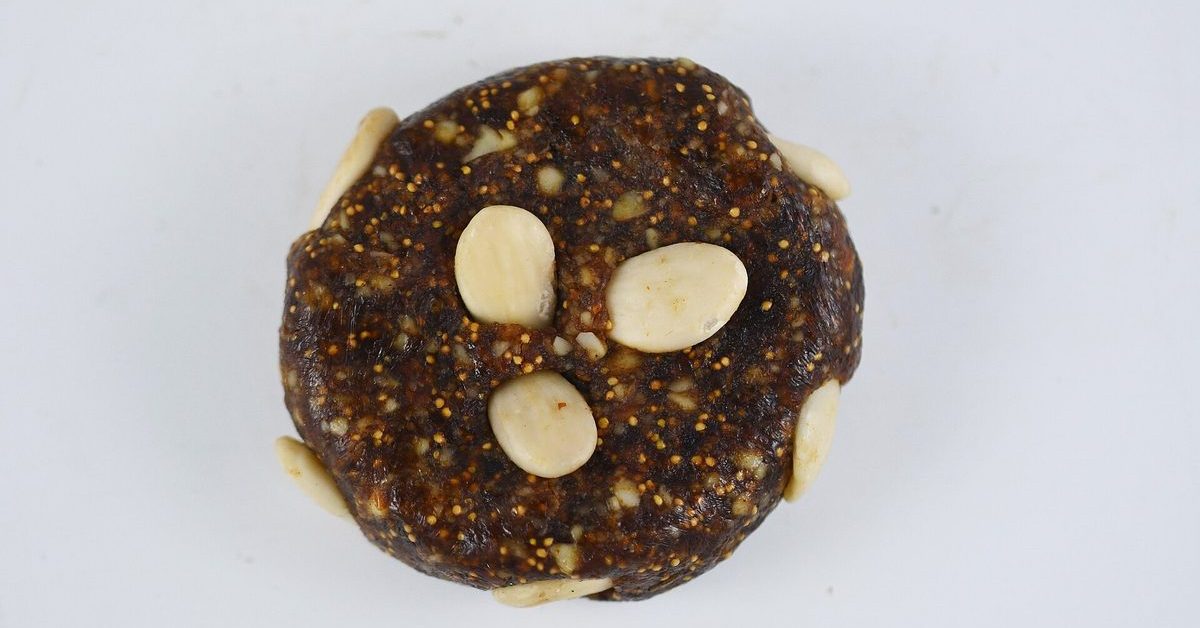
Morgado: the Algarve's Hand-Sculpted Fig and Almond Secret
A hand presses a small ball of almond paste, folds it closed around a dark, fragrant filling. That's how a morgado is…
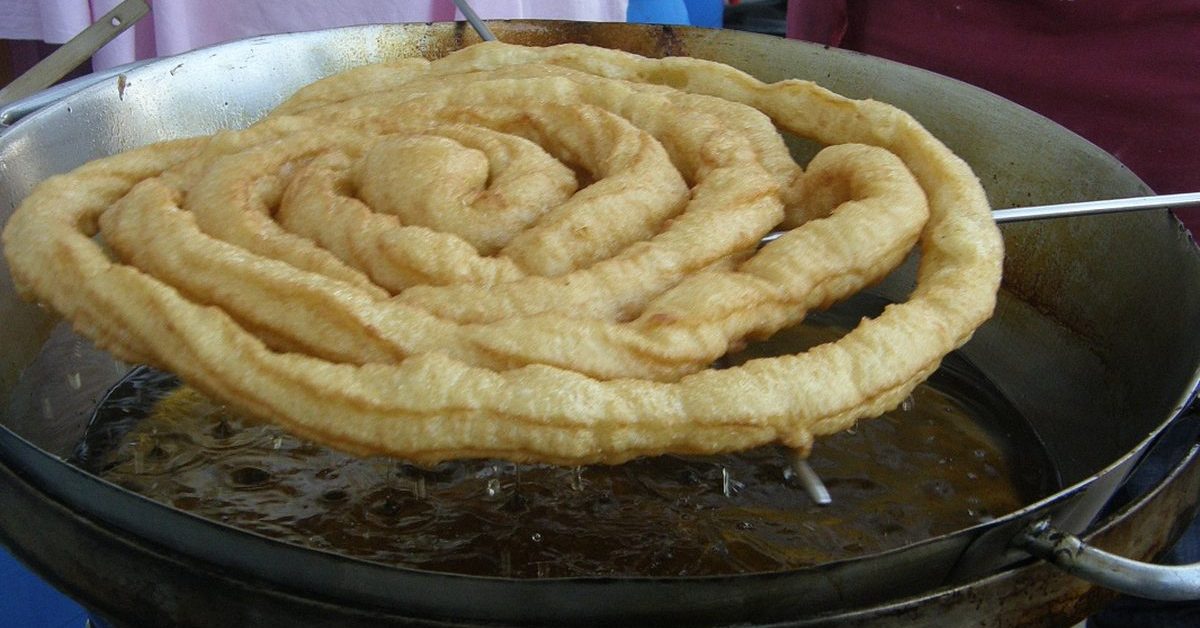
Farturas: The Fairground Pastry That Lights Up Portugal's August Nights
The oil hisses, a long ribbon of batter spirals down into the fryer, curls back on itself, browns unevenly, and cracks…
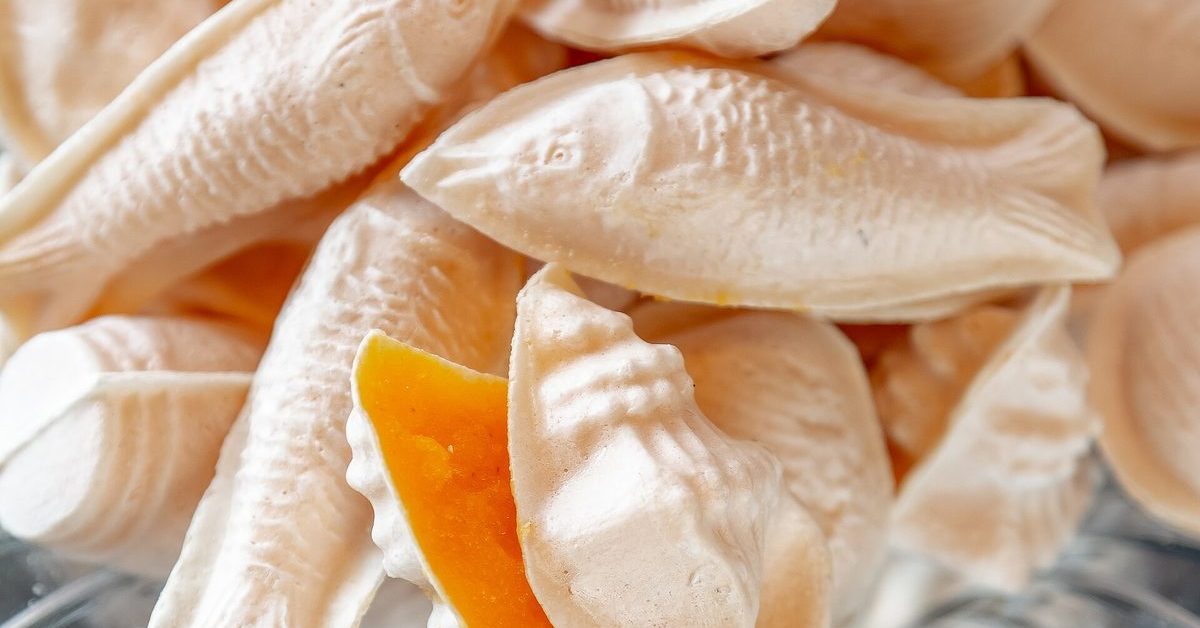
Ovos Moles: The Convent Sweet Aveiro Never Stopped Making
A wafer shell so thin it's barely thicker than a sheet of paper, cracking under your teeth before a deep golden cream…
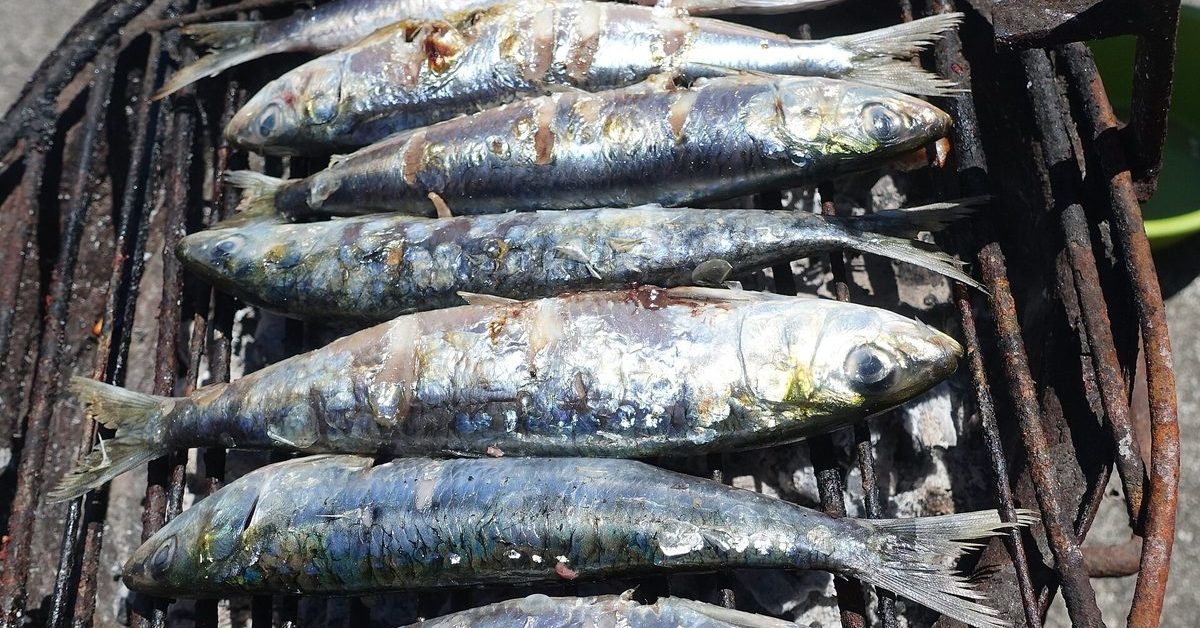
The Sardinhada: Lisbon's Summer Ritual of Grilled Sardines
A grill set right on the cobblestones. A cloud of oily smoke curling up between two façades strung with paper garlands.…
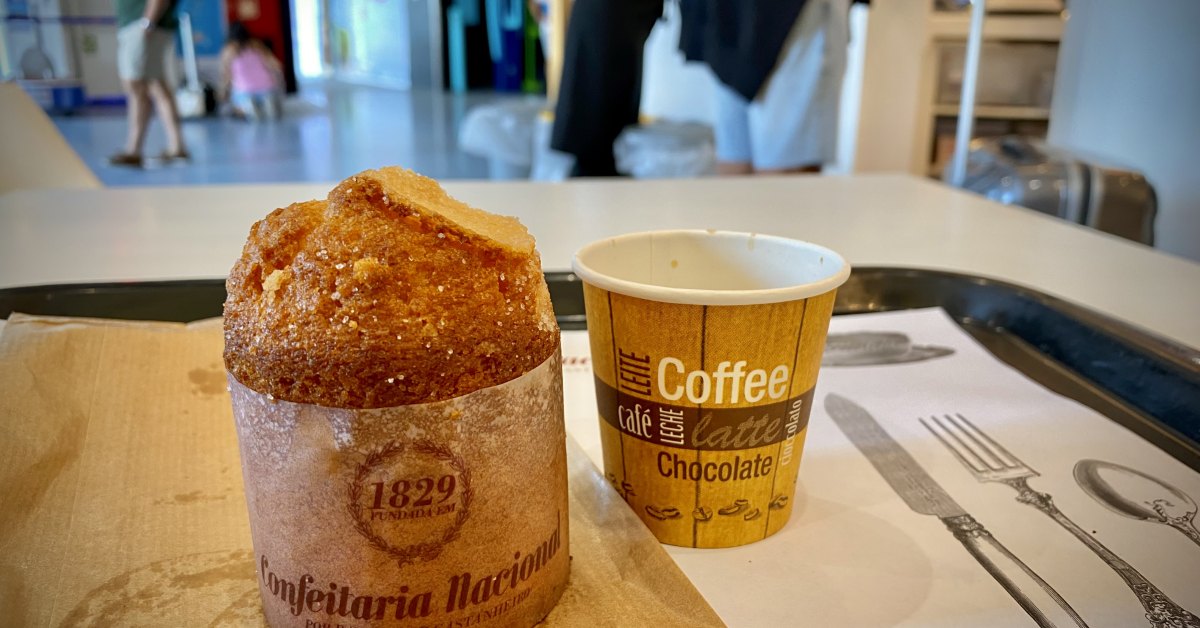
Bolo de Arroz: The Little Cake Standing Between Lisbon and the Loss of Its Cafés
Standing at the counter, an espresso gone in three sips, a small golden cake in hand: that's the most ordinary, most…
Find our artisan pastries in our Brussels stores or order online.
Order now Our foodtruck for your events Our stores