
Bolo lêvedo: the Furnas bread whose age nobody knows
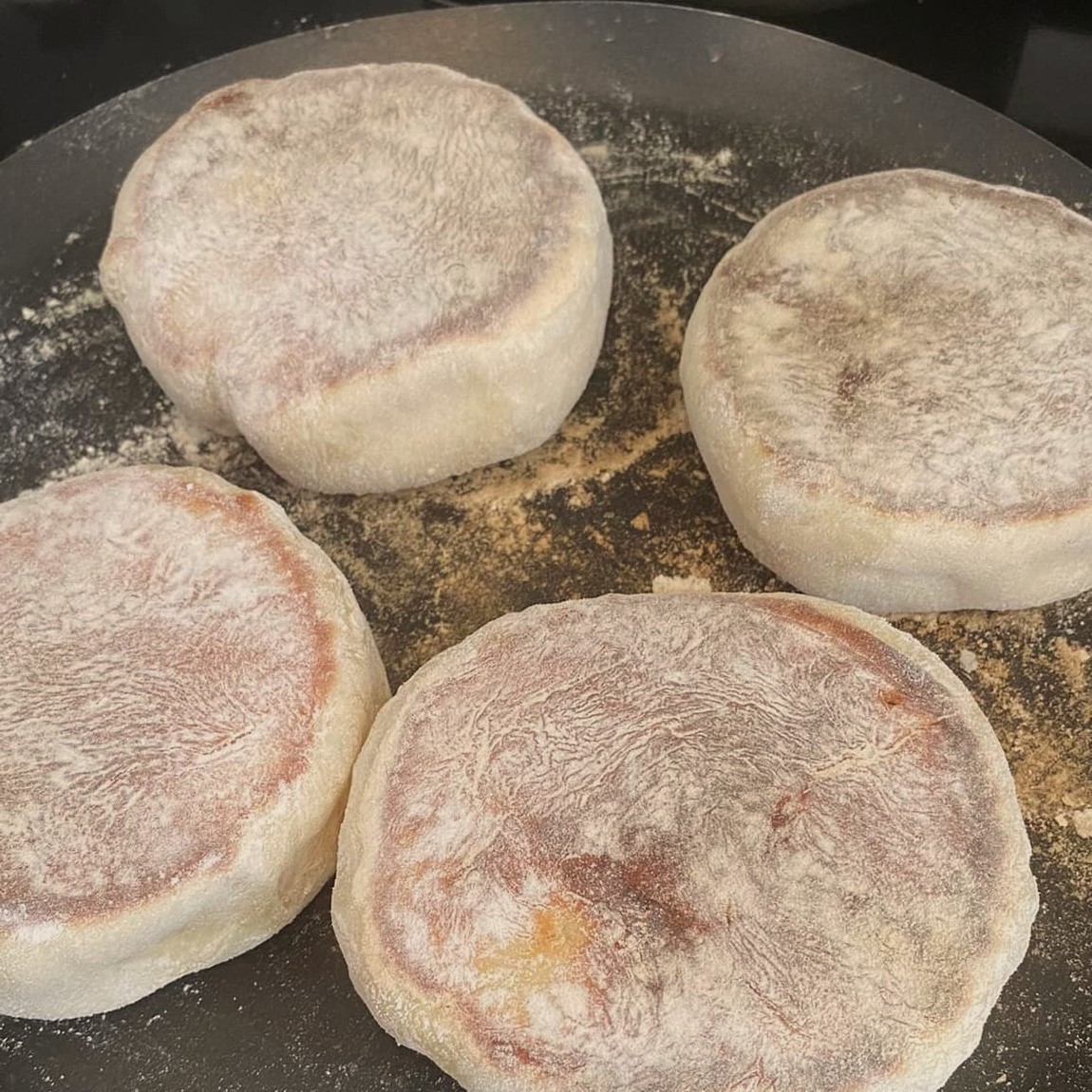
The griddle is floured by hand, in one wide sweep. Discs of white dough go on top, a finger thick, and then you wait. After a few minutes a smell of warm bread and butter rises, and the underside turns speckled brown. Flip. No oven has been lit. In the valley of Furnas, on the island of São Miguel in the Azores, this is how a bolo lêvedo is born.
The name means "risen cake". It is misleading: Portugal's official register of traditional products itself notes that it bears the name of a cake but can really be considered a sweet bread. A small round loaf, airy, golden on both faces, barely sweet. And, which makes it an endless topic of conversation in the Azores, a bread whose age nobody agrees on.
A valley that cooks with the earth
Furnas is a parish of the municipality of Povoação, in the east of São Miguel. The valley is volcanic: water comes out of the ground hot, fumaroles steam by the lake, and the most famous local dish, cozido das Furnas, cooks for hours buried in the warm earth. You might think the bolo lêvedo comes from the same geological magic. It does not need to. All it takes is a sertã, a flat pan once made of clay, or a metal plate dusted with flour.
The dough holds no secrets. The official record lists wheat flour, sugar, butter, baker's yeast, milk, whole eggs and salt. It is kneaded like bread, left to rise, then shaped into balls the size of an orange. Each one is pressed down to a centimetre thick. It cooks on one side, then the other, with the heat lowered halfway so the middle cooks through before the crust burns.
The result looks uncannily like an English muffin. One bite is enough to tell them apart: more egg, more butter, noticeably more sugar, a tighter, softer crumb, without the big nooks and crannies of the English version.
Three ages for one bread
This is where the story gets complicated. Depending on who you ask, the bolo lêvedo has three different ages.
The oldest: it would be as old as the settlement of the island. São Miguel's first settlers are said to have made these risen, pan-cooked flatbreads a staple of their diet. The official register keeps a trace of old versions from the island's north coast, in Capelas, Santo António or Bretanha: flat, round breads cooked in clay pans, but with no sugar and no eggs. Lenten breads, tied to fasting.
The middle one: several Furnas bakeries, and the Portuguese online encyclopedia, place its birth in the mid-nineteenth century, when the valley's bakers began producing this enriched version.
The youngest: the official record, written with Portugal's federation of gastronomic brotherhoods, suggests that the Furnas bolo lêvedo as we know it, the one called "the authentic", is rather the result of an innovation from the mid-twentieth century, which then took root in the valley until it became its emblem.
The English trail
Finally, there is a fourth version, the most romantic, which people in Furnas like to tell. The valley was long a spa town, visited by bathers from abroad, many of them English. They are said to have brought the taste of their English muffin with them, and local bakers to have adapted it their own way, richer and sweeter.
Nothing settles the question. There is no birth certificate, no dated recipe, no founding baker. And perhaps that is what makes this little bread so endearing: it probably holds a bit of every one of these stories. A very old Lenten flatbread, enriched over time, adopted by a spa valley, then turned into its signature once tourism arrived.
Plain, in a sandwich, even as a burger
In the Azores, bolo lêvedo is eaten at any hour. Plain at breakfast, with a coffee or a glass of milk. Warm, split in two, with butter, fresh cheese or jam. Toasted the next day, once it has dried a little. As a misto, filled with ham and island cheese.
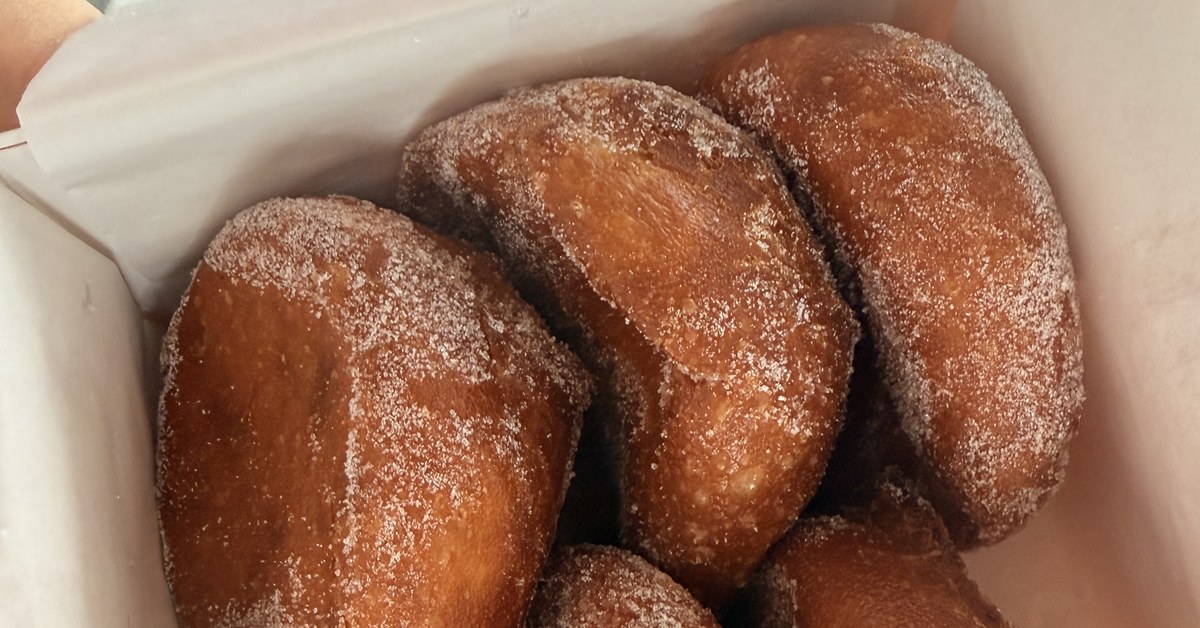
In recent years, restaurants on São Miguel have also started using it as a burger bun, or as a pizza base. Purists roll their eyes, visitors love it, and the little bread from the valley keeps travelling far beyond Furnas. Across the Atlantic, recipe books now present it as the Portuguese muffin. A journey that recalls that of the malassada, the Azorean doughnut that became an emblem of Hawaii.
What the bolo lêvedo reminds us of in Brussels
At Wooly, we do not bake bolo lêvedo: it belongs to the floured griddles of Furnas, and that is where it should be tasted, warm, straight off the plate. But the idea speaks to us: a simple, lightly golden bread you split open and fill. That is the whole spirit of our bifanas and chorizo rolls, the Portuguese sandwiches you will find in our Brussels shops, in Stockel, in Woluwe-Saint-Pierre, as well as on Rue des Tongres in Etterbeek, in Uccle and in Waterloo.
If you ever find yourself on São Miguel, take a detour through the valley. Look for a floured griddle and a smell of warm butter. And ask the baker how old their bread is: you will probably never get the same answer twice.
Photo: bolos lêvedos cooking on a floured griddle, by Chedlund808, Wikimedia Commons, licence CC BY-SA 4.0.
Read next
Cristas de galo: the Vila Real turnover that lost its convent
Little teeth cut into the edge of an almond turnover: that is all that remains of the convent of Santa Clara in Vila…
Trouxas de ovos: the little egg bundle you bring home from Caldas da Rainha
A thin sheet of egg poached in boiling syrup, rolled around its own trimmings, glossy as a jewel. Nobody ever leaves…
Pastel de bacalhau: the salt cod shaped between two spoons
It comes out of the oil golden, with three sharp ridges and a soft centre. Behind the pastel de bacalhau lies a fish…
Pastel de Vouzela: the recipe nobody ever wrote down
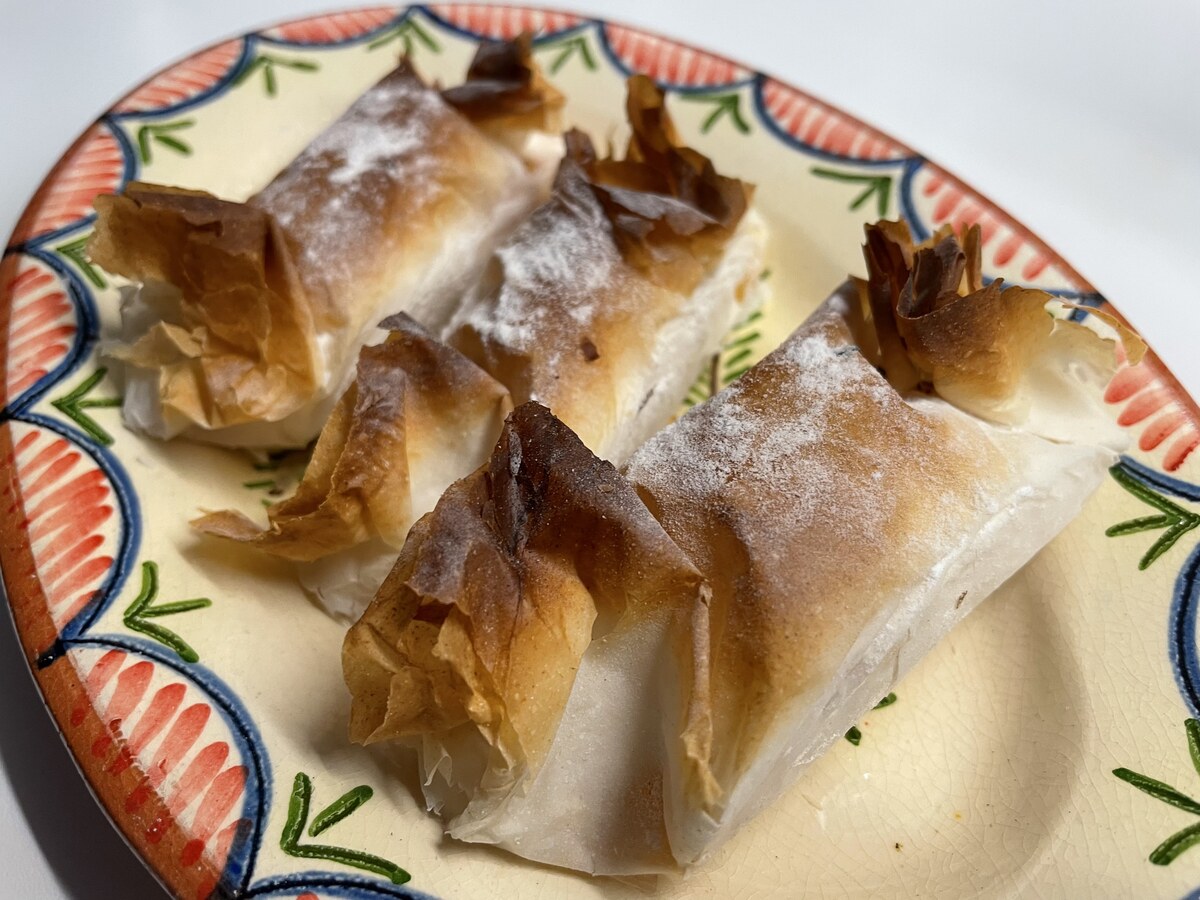
Very thin pastry, a cream of egg yolks, a veil of icing sugar. The pastel de Vouzela came out of a Porto convent, is…
Bolo de mel: the Madeira cake you break by hand, never with a knife
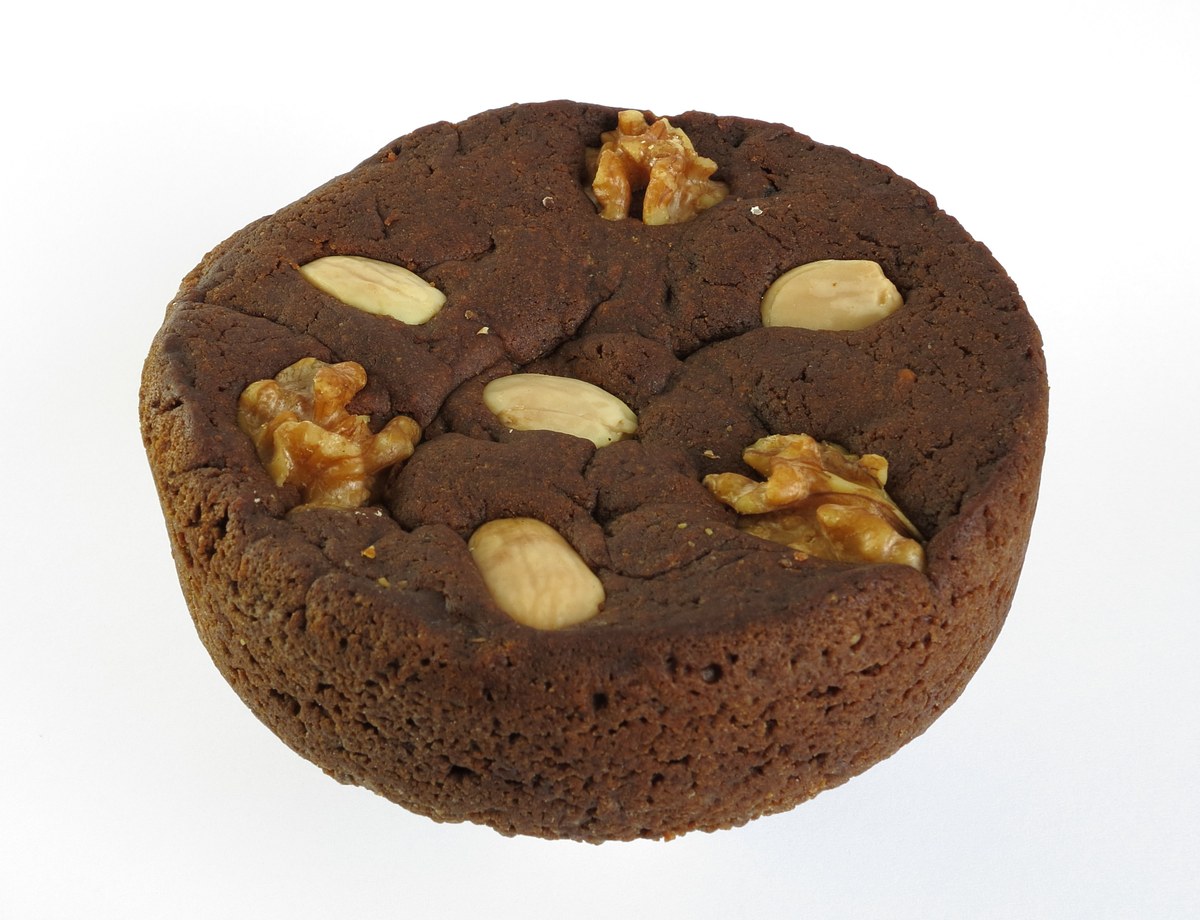
A low, dark, dense disc studded with almonds and walnut halves. On Madeira it is baked on 8 December so that it is…
Pinhoada: the honey and pine nut diamond from Alcácer do Sal's roads
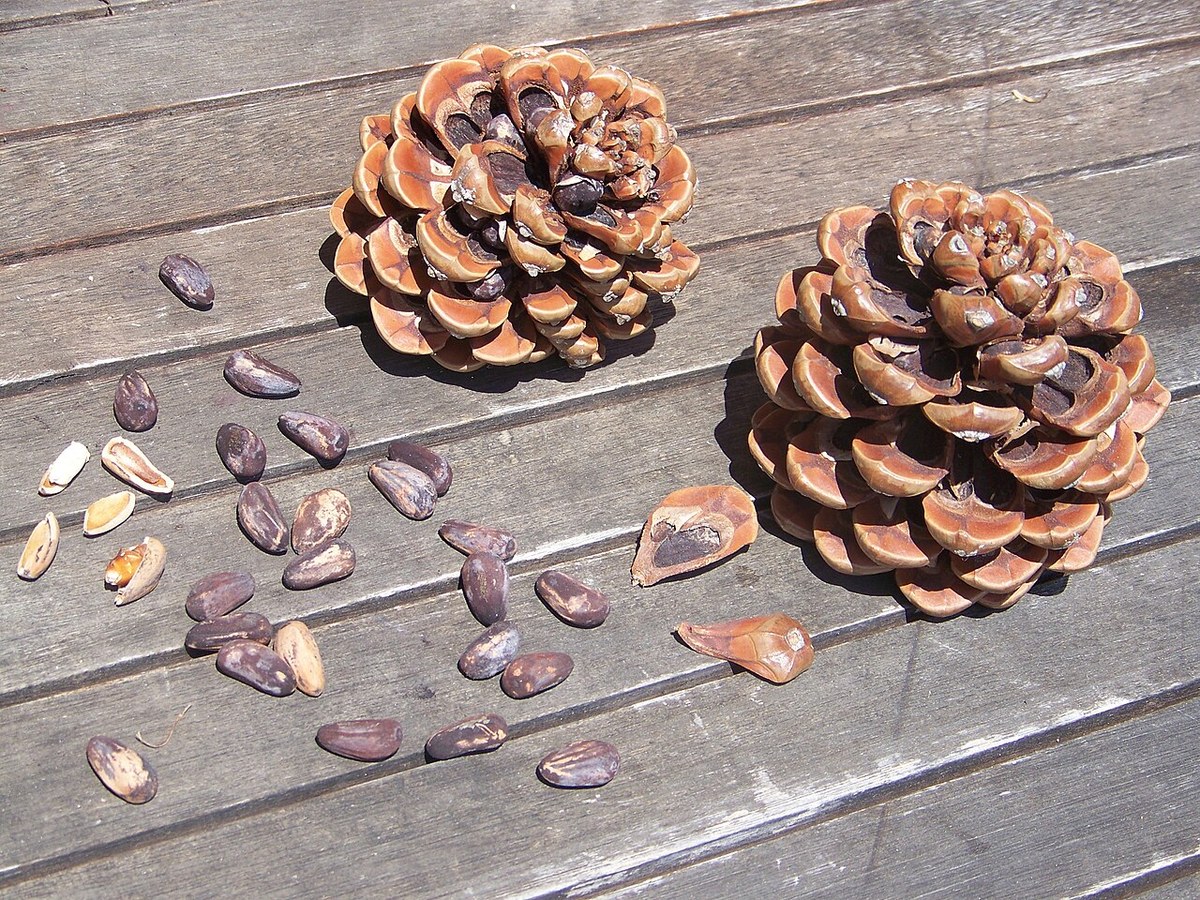
A brown diamond, hard as a tile, folded two by two into thick white paper. The pinhoada from Alcácer do Sal is made of…
Batata-doce de Aljezur: a legend three centuries too early
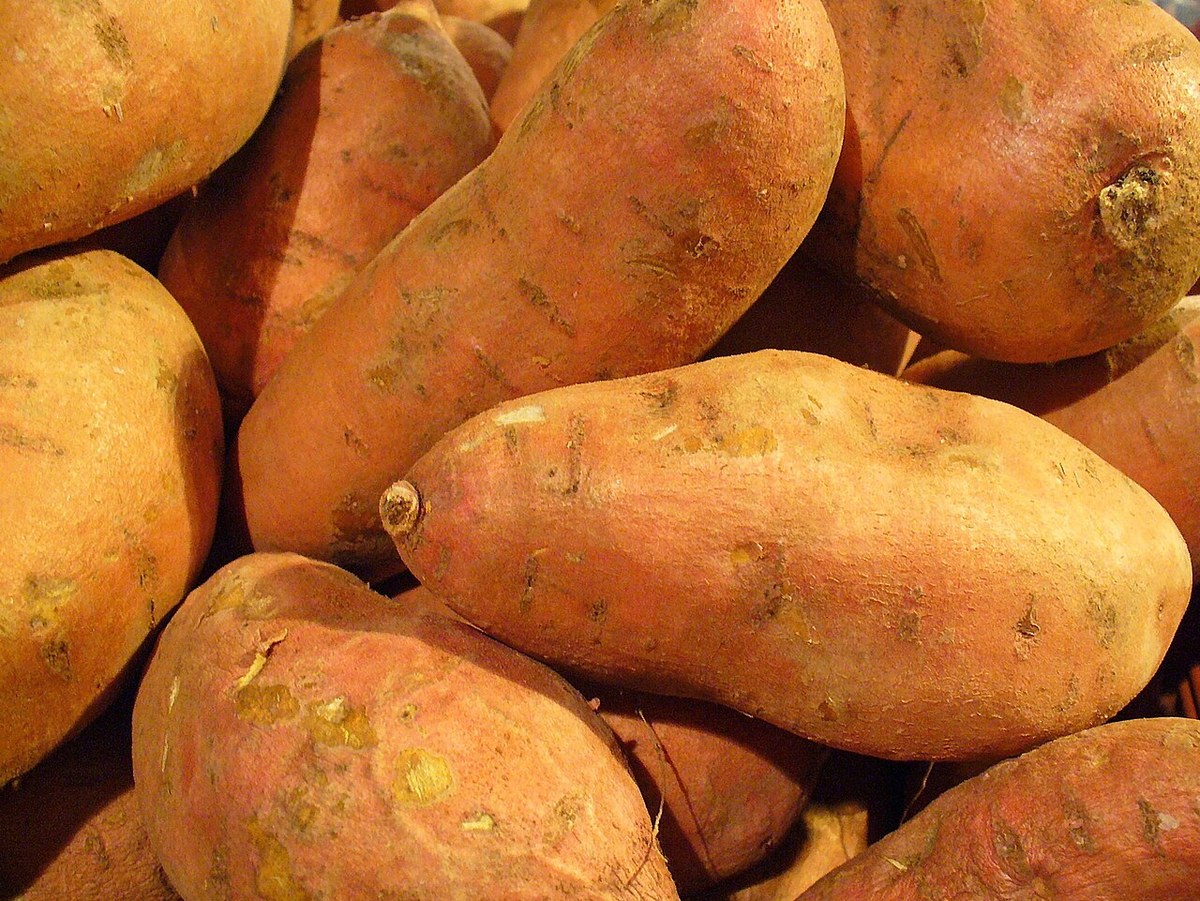
It comes out of the ground still wearing its sand, heavy and oddly fragrant. In Aljezur they say it won a battle in…

Malassada: the Azorean doughnut that became a Hawaiian icon
The sugar sticks to your fingers before the first bite. No hole in the middle, no glaze: just a golden ball, still…
Find our artisan pastries in our Brussels stores or order online.
Order now Our foodtruck for your events Our stores