
Bolo de mel: the Madeira cake you break by hand, never with a knife
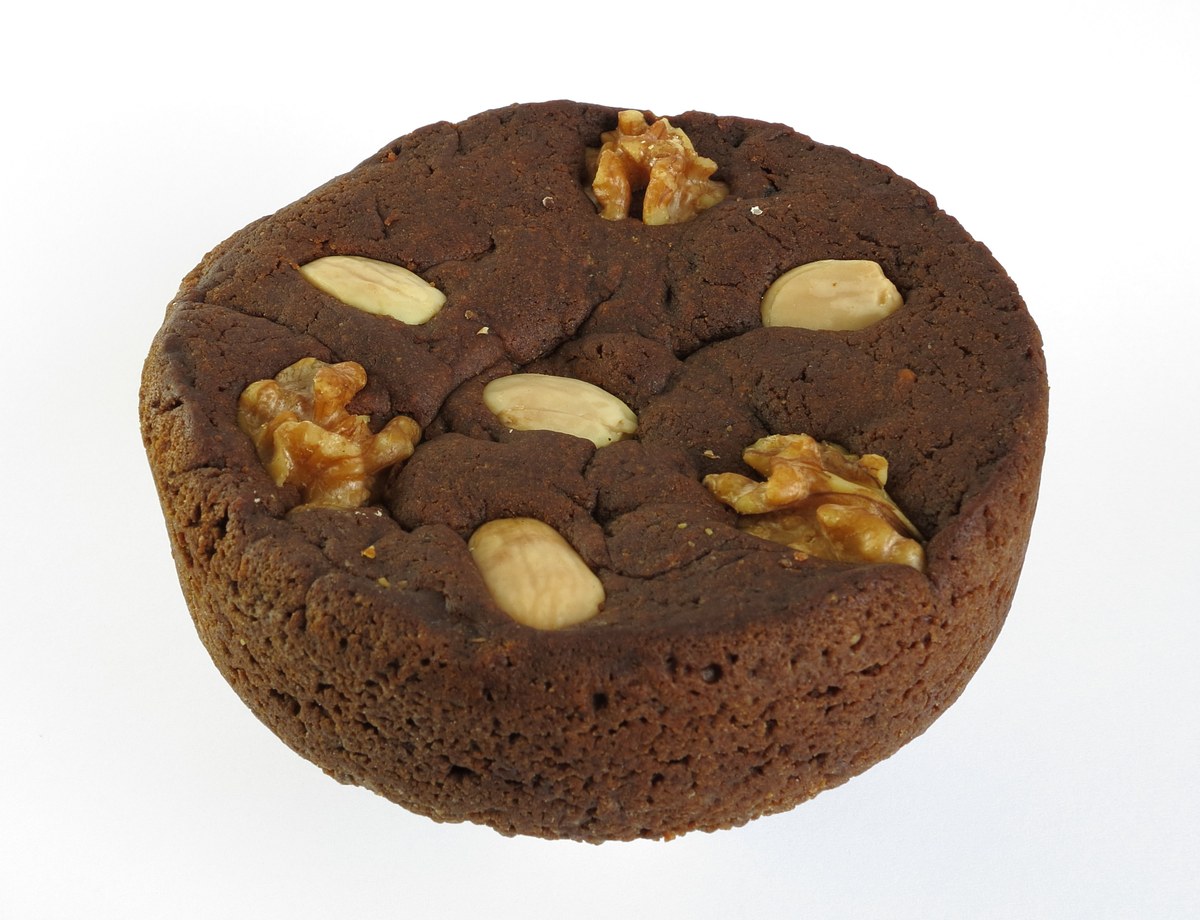
You do not slice it, you break it. Thumbs in the middle, a gentle pull outwards, and the dark disc gives way with a dull crack. A smell rises at once: cinnamon, clove, ginger, and something deeper, almost smoky, that tastes like no bee honey at all. This is Madeira's bolo de mel, and the island's tradition is clear on the point: it is broken by hand, not with a knife.
Writing about a Christmas cake in September may seem early. Not for this one. Bolo de mel is made in advance, left to rest, and keeps for months. Its story is that of an island, a plant and a calendar.
A "honey" that has nothing to do with bees
The name is misleading. The mel in bolo de mel is not honey as we know it in Belgium. It is mel de cana, cane honey: a thick, dark syrup made from sugar cane. It gives the cake its almost black colour, its dense texture and its slightly bitter taste, and it also explains why the cake keeps so well. In the official records of traditional Portuguese products, it is listed under its other name too: bolo de mel de cana.
If Madeira has a cane honey cake, it is because the island had sugar cane before almost anyone else. In the 15th century Madeira became one of the great sugar centres of the Atlantic, and its sugar travelled to the markets of northern Europe. We told that story in our article on Madeira sugar, from Funchal to Bruges. Bolo de mel is its most delicious legacy: the golden age of Madeiran sugar is over, but the syrup stayed in the kitchens.
Five centuries of spices, added one by one
According to its entry in the inventory of traditional Portuguese products, the cake is thought to have first been made in the 15th and 16th centuries, in a simpler form than today. It then grew richer with the sea routes: first European spices, then those from India, and finally bicarbonate of soda, which lightened it.
Today's recipe still carries those successive layers. It contains:
- wheat flour and a little maize flour;
- cane honey, sugar and butter;
- cidra, candied citron, with walnuts and almonds;
- spices: cinnamon, clove, ground aniseed, ginger;
- and bicarbonate of soda to make it rise.
The result is a low cylinder inlaid with nuts, its top decorated with almonds and walnuts placed one by one. Size and weight vary from house to house, and so do the recipes: on the island, every family guards its own.
8 December, kneading day
The bolo de mel calendar is set by a single date. In many Madeiran homes, the rule is that it is made on 8 December, the feast of the Immaculate Conception and a public holiday in Portugal. Why so early? So that it is good by Christmas. The cake needs those two and a half weeks: the spices blend, the cane honey spreads, the crumb firms up.
Traces of it turn up in the archives. A menu for religious ceremonies covering the years 1813 to 1815 lists bolo de mel de cana among the sweets served for major feasts, in quantities measured in alqueires, an old grain measure. Over time, giving a bolo de mel at Christmas became a mark of courtesy, and then a habit shared across the whole island.
Why you break it with your hands
The official record is brief on this: the cake deve ser partido à mão, must be broken by hand, and is served with liqueurs or a glass of Madeira wine. No regulation requires it. It is a gesture passed down, the way you pass down how to lay a table.
There is logic to it all the same. A crumb this dense, full of walnuts and almonds, does not like a blade: the knife crushes, the nuts snag. Broken, the cake opens along its own lines, and everyone gets an uneven piece with its share of almond or walnut. There is something about sharing in the gesture, too: bolo de mel is not served, it is handed round.
A cake that waits
What stands out most is its patience. Bolo de mel naturally keeps for several months without losing its qualities. In families, it is not unusual for a Christmas cake to still be on the table long after the holidays. It is a travelling cake, too: well wrapped in its paper, it is one of the things people bring home from the island in their suitcase.
And in Brussels?
You will not find bolo de mel in our display cases: it belongs to Madeira and its family kitchens, and that is as it should be. But it says something we know well in our shops in and around Brussels, on Rue des Tongres in Etterbeek, in Stockel, in Uccle and in Waterloo: in Portugal, the year-end holidays have their own cakes, and those cakes tell a story. Ours is the bolo-rei, Portugal's other great festive cake. Our addresses and opening hours are on our shops page.
A piece of the island in your hand
A dark disc, a few almonds, the smell of cinnamon and clove. Nothing spectacular. But in this cake kneaded on 8 December and broken by hand, there are five centuries of sugar cane, spices from far away and families who keep their recipe to themselves. 8 December is still a long way off. Bolo de mel knows how to wait.
Photo: a bolo de mel from Madeira — Bolo de Mel, by TeWeBs, CC BY-SA 4.0, via Wikimedia Commons.
Read next
Pinhoada: the honey and pine nut diamond from Alcácer do Sal's roads
A brown diamond, hard as a tile, folded two by two into thick white paper. The pinhoada from Alcácer do Sal is made of…
Batata-doce de Aljezur: a legend three centuries too early
It comes out of the ground still wearing its sand, heavy and oddly fragrant. In Aljezur they say it won a battle in…
Malassada: the Azorean doughnut that became a Hawaiian icon
The sugar sticks to your fingers before the first bite. No hole in the middle, no glaze: just a golden ball, still…
Portokali: the orange named after Portugal, from Athens to Tehran
Ask for an orange at a market in Athens and you will be handed a portokali. In Istanbul, a portakal. All across the…
Castanhas de ovos: the chestnuts of Viseu made from egg yolks
Small golden chestnuts, ridged, a little scorched on top. None of them has ever seen a chestnut tree: in Viseu they are…
Pão de rala: the fake loaf of Évora that the nuns offered a king
It has the shape of a country loaf and the name of a poor man's flour. Under its crust, though, there is nothing but…
Pêra Rocha: the pear that turned up by accident in a Sintra garden
It has a neck, a skin freckled with russet, and it reaches Portuguese market stalls in September. Every Rocha pear in…
From Flagey to Stockel: how Portuguese pastry reached Brussels
The hiss of the coffee machine, the cup set down with a click, two words of Portuguese across the counter: that counter…
Find our artisan pastries in our Brussels stores or order online.
Order now Our foodtruck for your events Our stores