
Castanhas assadas: the white smoke that brings autumn to Lisbon
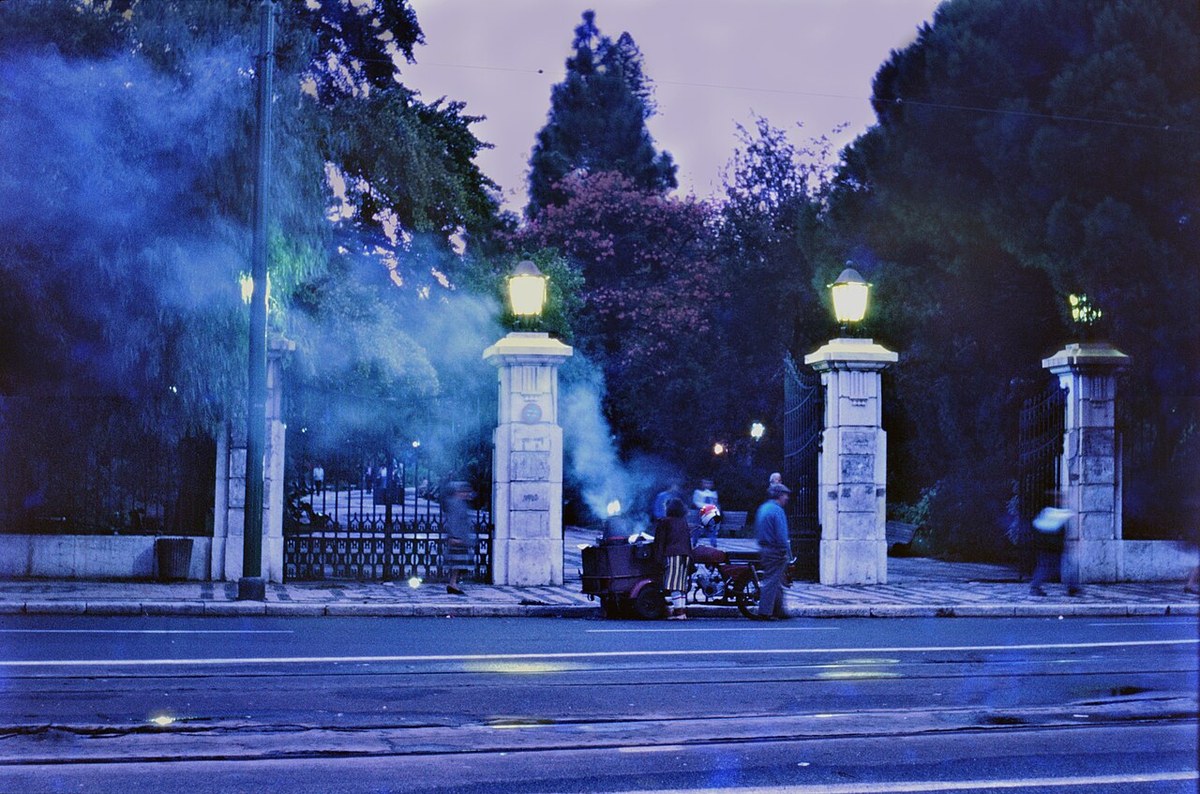
You see it before you smell it. A column of white smoke rises from a street corner, clings to the lampposts, drifts along tiled facades. Then the smell arrives: burnt wood, salt, something sweet and earthy at once. And finally the voice, a little hoarse, calling out to anyone who will listen: "Quentes e boas!", hot and good. In Lisbon, autumn does not begin on 23 September. It begins on the day the first seller of castanhas assadas, roasted chestnuts, lights his stove.
An iron machine and a pot full of holes
The equipment has hardly changed. An iron cart on wheels, pushed to its usual corner: a square, a metro exit, the gate of a park. Above the charcoal fire sits a pot pierced with holes, made of iron or clay, where the chestnuts roll over the embers. That fire makes the unmistakable smoke, thick and white, which you can spot several streets away.
The technique itself takes only a few steps. Before going on the fire, each chestnut gets a cut in its shell: without it, it would burst in the heat. It is then roasted over fierce coals and salted. In the traditional recipe described by the official register of Portuguese traditional products, they are finally covered for a moment with a flannel cloth to let them "steam", which makes them softer and more fragrant. The blackened, split shell reveals golden flesh that is still steaming as you peel it.
A good chestnut, enthusiasts say, can be judged by eye: it shines, it has a decent size, and above all it is full, never hollow. In the mouth it is lightly sweet and floury, sometimes with a hint that recalls cinnamon.
The paper cone
Chestnuts are traditionally sold by the dozen, in a paper cone rolled by hand. For decades that cone had a quirk every Lisboeta of a certain age remembers: it was made from newspaper pages, or better still from pages of the telephone directory, preferably the yellow pages. You ate your chestnuts while unintentionally reading the classified ads, or the number of a complete stranger.
That cone has almost disappeared. Portuguese rules on street vending require food to be wrapped in paper that has never been used and carries no print on the inside. The Portuguese press was already pointing this out in December 2007: no more newspapers, no more directories. Today the cone is made of fresh paper. The gesture has stayed; the phone book has gone.
The gold of the North-East
Although chestnuts are sold on Lisbon's pavements, they come mostly from the north. In Trás-os-Montes, in the north-east of the country, people like to call them "the gold of the North-East": chestnut trees cover the hillsides, and the harvest sets the pace of autumn in the villages.
The habit of roasting them is very old. For more than a thousand years, the register of traditional products notes, shepherds and woodcutters threw a few chestnuts into the fire that kept them warm, and ate them as a meal. The Lisbon street seller simply put that fire on wheels.
Until Saint Martin's Day
The season peaks on 11 November, the feast of São Martinho. All over Portugal, and especially in the north, people hold magustos: gatherings around a big fire where chestnuts are roasted by the dozen, hands black with soot, with a glass of jeropiga, água-pé or the year's new wine. It is the moment to taste what the grape harvest has produced, and when the chestnut becomes a celebration rather than a snack.
In Lisbon, the carts stay until the first cold of winter. You find them on the squares of the centre, from Praça da Figueira to Praça de Londres, and at the gates of the parks. The photo illustrating this article was taken in 1988 in front of the gates of the Jardim da Estrela: a cart, two silhouettes, smoke rising between the lamps. Thirty-eight years later, the same scene plays out every autumn, give or take a few details.
From Lisbon to Brussels
At Wooly in Brussels, we do not roast chestnuts on the pavement. But we know that small autumn pleasure: something warm you hold in your hand, eat as you walk, and that smells of Portugal. Ours is called the pastel de nata, with its pinch of cinnamon. And for those who dream of chestnuts, Portugal has turned them into a pastry too: the castanhas de ovos of Viseu, chestnuts shaped from egg yolks. When you miss the white smoke, step into one of our shops, for example in Uccle: we talk about the Portuguese autumn over a coffee there.
Photo: "Castanhas assadas, entrada do Jardim da Estrela", pedrik, Wikimedia Commons, licence CC BY 2.0.
Read next
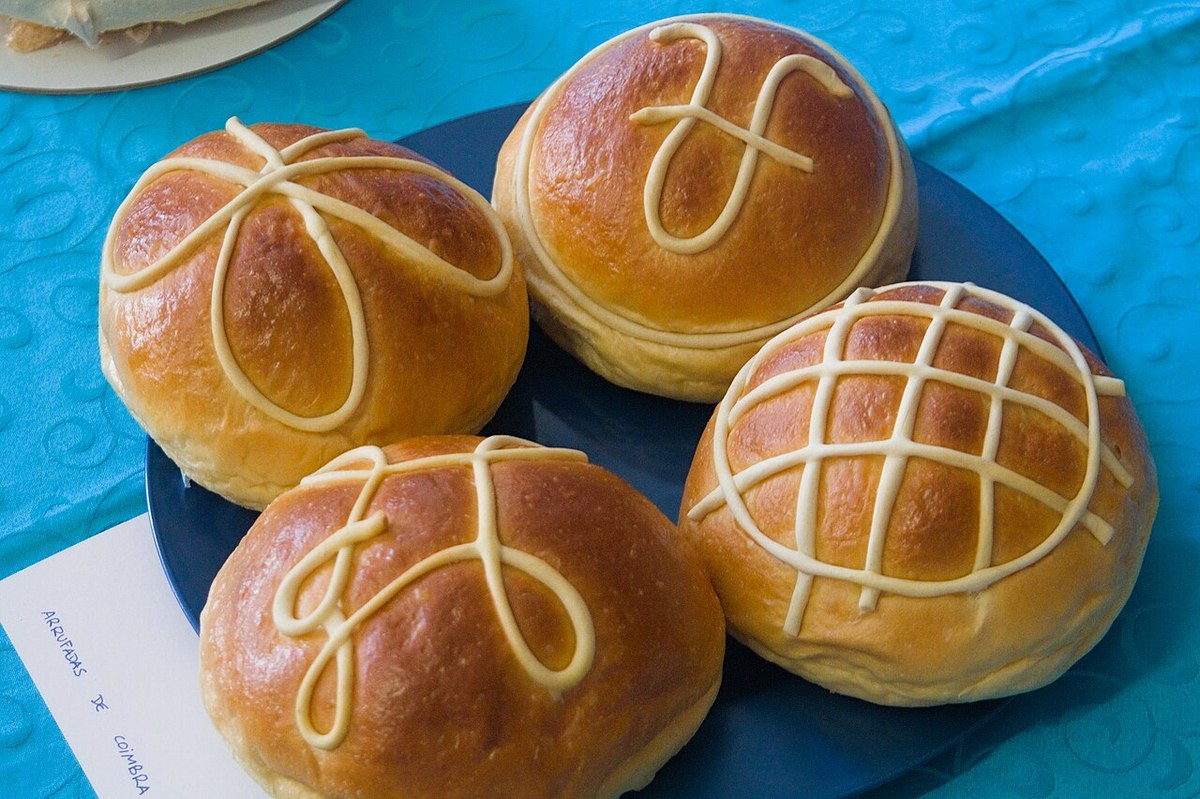
Arrufada de Coimbra: the sweet bread carried to engagements
Sold from baskets under a white cloth at Coimbra station, left to rise for twenty-four hours under a blanket, the…
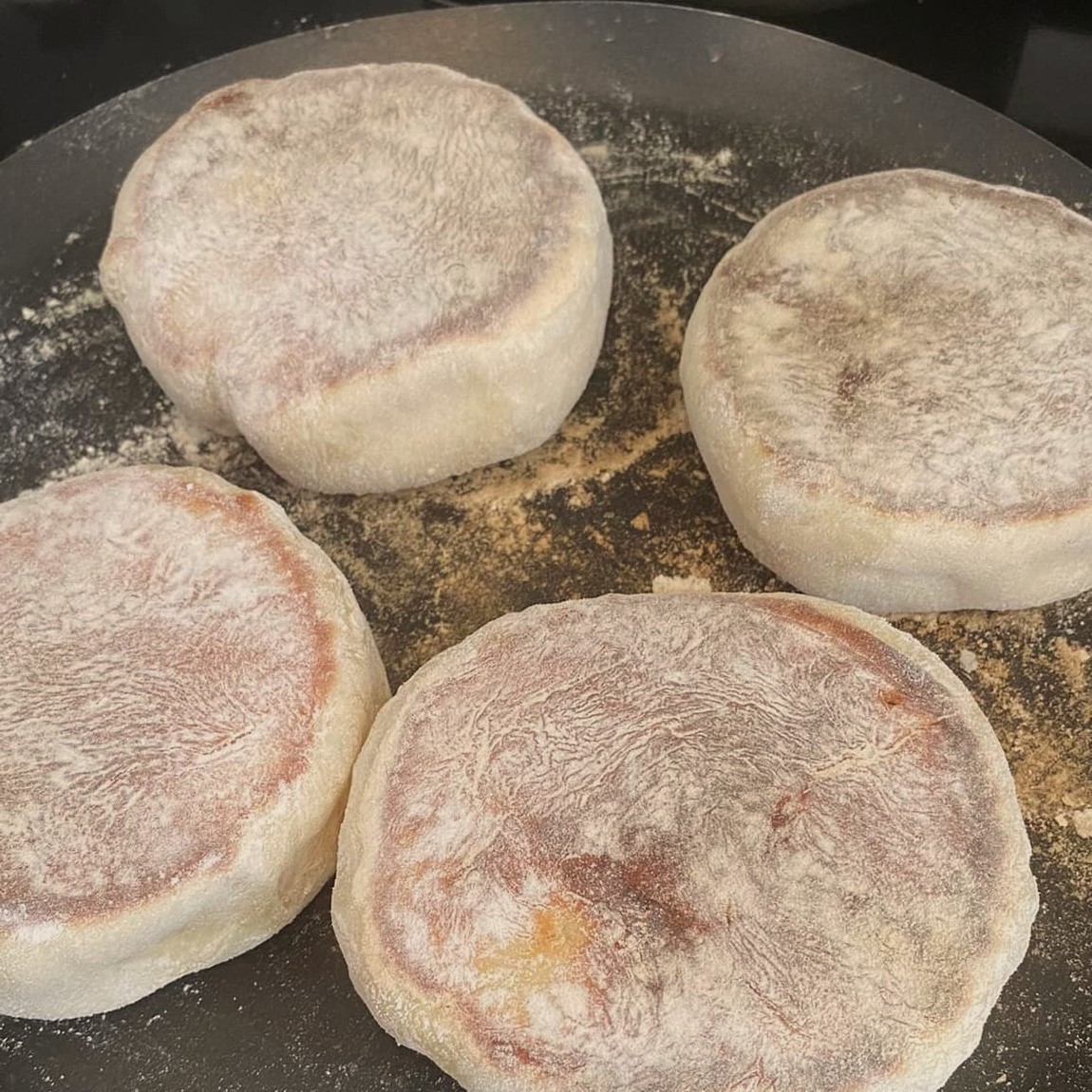
Bolo lêvedo: the Furnas bread whose age nobody knows
It cooks on a floured griddle, never in an oven, in a volcanic valley of the Azores. Lenten flatbread, 19th-century…
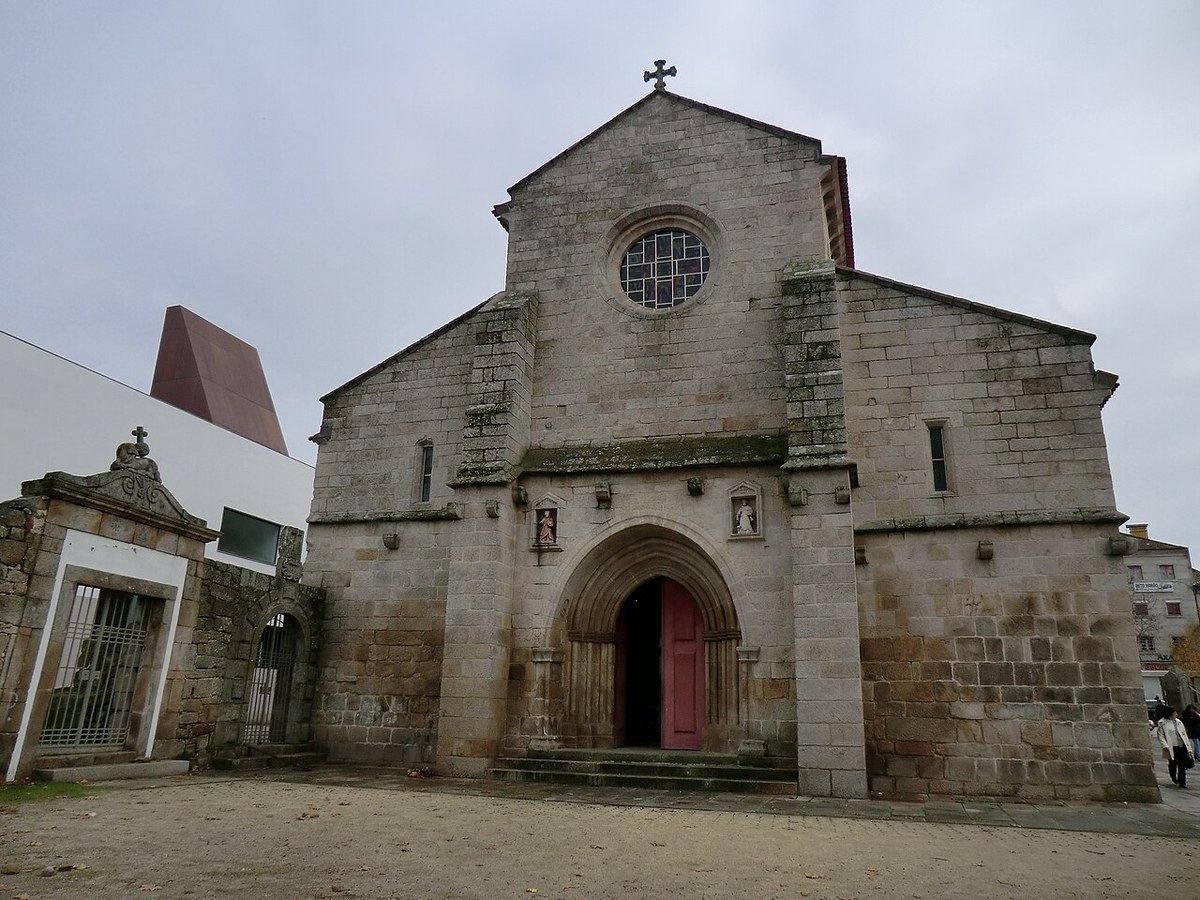
Cristas de galo: the Vila Real turnover that lost its convent
Little teeth cut into the edge of an almond turnover: that is all that remains of the convent of Santa Clara in Vila…
Trouxas de ovos: the little egg bundle you bring home from Caldas da Rainha
A thin sheet of egg poached in boiling syrup, rolled around its own trimmings, glossy as a jewel. Nobody ever leaves…
Pastel de bacalhau: the salt cod shaped between two spoons
It comes out of the oil golden, with three sharp ridges and a soft centre. Behind the pastel de bacalhau lies a fish…
Pastel de Vouzela: the recipe nobody ever wrote down
Very thin pastry, a cream of egg yolks, a veil of icing sugar. The pastel de Vouzela came out of a Porto convent, is…
Bolo de mel: the Madeira cake you break by hand, never with a knife
A low, dark, dense disc studded with almonds and walnut halves. On Madeira it is baked on 8 December so that it is…
.jpg)
Pinhoada: the honey and pine nut diamond from Alcácer do Sal's roads
A brown diamond, hard as a tile, folded two by two into thick white paper. The pinhoada from Alcácer do Sal is made of…
Find our artisan pastries in our Brussels stores or order online.
Order now Our foodtruck for your events Our stores