
Arrufada de Coimbra: the sweet bread carried to engagements
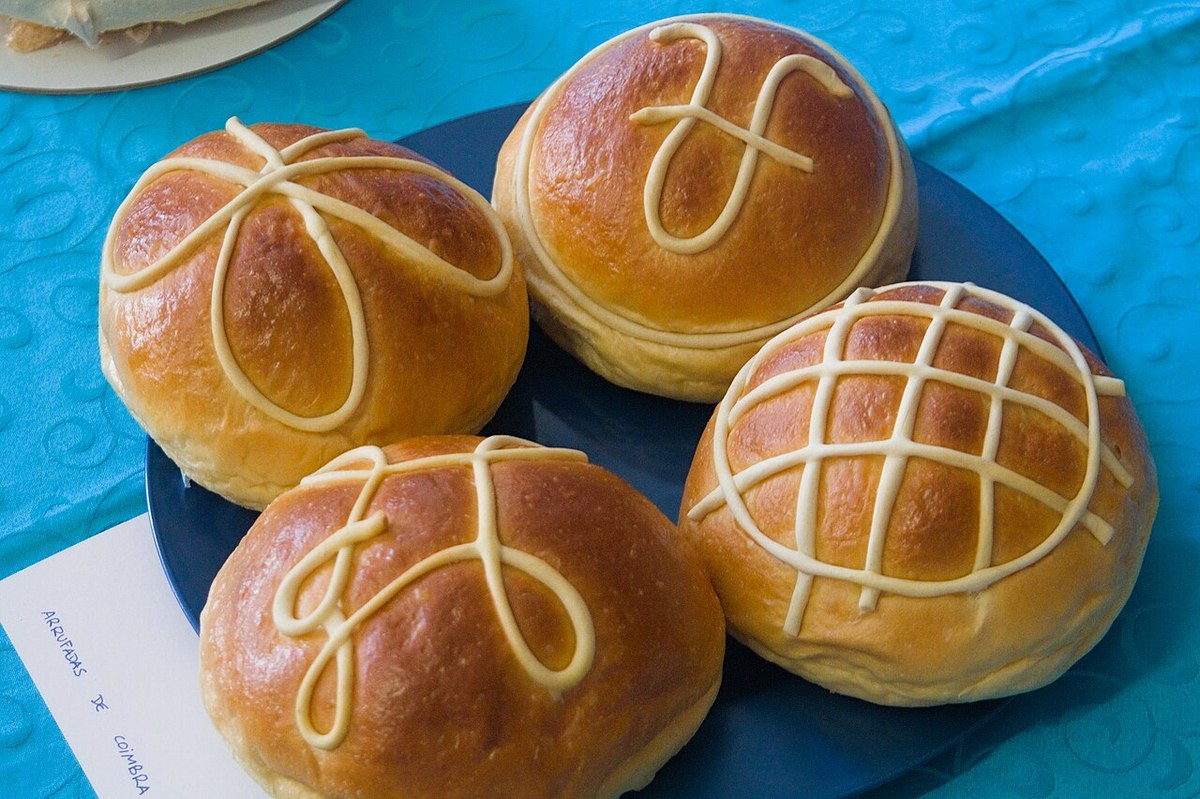
The basket rests against the arm, covered with a white cloth. Lift the cloth and a smell of butter and cinnamon escapes, revealing a row of small, round, golden buns, each crowned with a thin cord of pale dough. In Coimbra, that basket was for a long time part of the scenery at the railway station. The bun is called arrufada, and this soft sweet bread tells a story that goes well beyond an afternoon snack.
A bread that thinks it is a cake
The official register of traditional Portuguese products describes it plainly: a bolo lêvedo, a leavened cake, round, made with flour, eggs, sugar, butter, milk and a teaspoon of cinnamon. On top, a roll of dough forms a crown, and the centre is sometimes sprinkled with granulated sugar. The same entry sums it up in a few words: a soft, fluffy sweet bread that tastes of cinnamon.
What stands out is the patience it demands. The traditional recipe begins in an alguidar, the large earthenware bowl of Portuguese kitchens. The flour is sifted into it, baker's yeast dissolved in lukewarm milk is added, then the eggs and sugar, and the dough is kneaded for a long time. Cinnamon and melted butter follow. Then the bowl is covered with a blanket, set in a warm corner of the house, and left alone. Twenty-four hours. Only then is the dough shaped into balls, brushed with egg, topped with its ring of dough and put in the oven.
In today's photos, the crown has taken some liberties: loops, bows, lattices, almost letters, drawn by hand with a cord of pale dough that stays white while the rest of the bread turns brown. Every baker signs it in their own way.
An origin between two convents
Coimbra is a city of doces conventuais, sweets born in convents, and the arrufada is no exception. Local tradition links it to the convent of Sant'Ana, and it also appears in the recipe books of the convent of Santa Clara-a-Velha, the very convent whose nuns left us the pastéis de Santa Clara, and which the floods of the Mondego eventually swallowed.
Unlike many convent sweets, though, the arrufada did not stay behind the walls. It went out into the street, sold from makeshift stalls in the lanes of Coimbra, and found its way into every social class. In 2019, when the city put forward its sweet heritage for the "7 Sweet Wonders of Portugal" competition, the arrufada was among the seven candidates, alongside arroz doce, manjar branco and the pastéis de Santa Clara. The submission described it as a festive treat found on every table, from religious orders and wealthy homes to the humblest ones.
The engagement tray
This is where the arrufada becomes more than bread. The official register records a custom that existed, and in places still exists, in the region. When a couple got engaged, the bride-to-be, accompanied by her mother, would go and introduce her fiancé to the family. Nobody came empty-handed: the couple carried trays and açafates, wicker baskets, beautifully decorated and filled with arrufadas and lovely plates of arroz doce, Portuguese rice pudding, made here without eggs.
Eight days later, the couple came back for their dishes. They did not come back empty either: they arrived with the wedding present. A whole exchange lived in that coming and going of trays. You gave sweet bread and rice pudding, and received something to start a life together. A cinnamon bun as the calling card of a new family.
A name that sulks
The name itself raises a smile. In Portuguese, the verb arrufar means to show bad temper without saying why, or to ruffle up and puff out, like a turkey fluffing its feathers. An arrufo is a small tiff between people close to each other, a sulk whose reason is kept quiet. No text proves that the bread owes its name to one meaning rather than the other. But it is hard not to see a wink in a bread that swells for a whole day under its blanket, and that was carried to families precisely to seal an alliance.
The baskets at the station
The official entry, published in 2001, ends on an image: even today, it wrote, women can be seen at Coimbra station selling arrufadas from baskets lined with white cloths. A traveller stepping off the train could leave with a sweet bun, for the journey or for the family.
That is also how it is eaten: at breakfast, or between meals, with nothing else. The crumb is soft and light, the crust thin and shiny, the cinnamon discreet. It is especially popular around Easter.
From Coimbra to Brussels
At Wooly in Brussels, we do not make arrufadas. But we love what this story says about Portuguese pastry: a simple gesture, a dough that takes its time, and a treat you share rather than keep. The Coimbra region is dear to us: it is home to the pastel de Tentúgal, whose pastry is so thin it is called the most fragile pastry in Portugal. It is in our catalogue, and our shops, including the one on Rue des Tongres in Etterbeek, are waiting for you to talk about Portugal over a coffee. And if you ever pass through Coimbra, look for the basket with the white cloth.
Photo: "Arrufadas de coimbra", Fillorian Archivist, Wikimedia Commons, licence CC BY-SA 4.0.
Read next
Bolo lêvedo: the Furnas bread whose age nobody knows
It cooks on a floured griddle, never in an oven, in a volcanic valley of the Azores. Lenten flatbread, 19th-century…
Cristas de galo: the Vila Real turnover that lost its convent
Little teeth cut into the edge of an almond turnover: that is all that remains of the convent of Santa Clara in Vila…
Trouxas de ovos: the little egg bundle you bring home from Caldas da Rainha
A thin sheet of egg poached in boiling syrup, rolled around its own trimmings, glossy as a jewel. Nobody ever leaves…
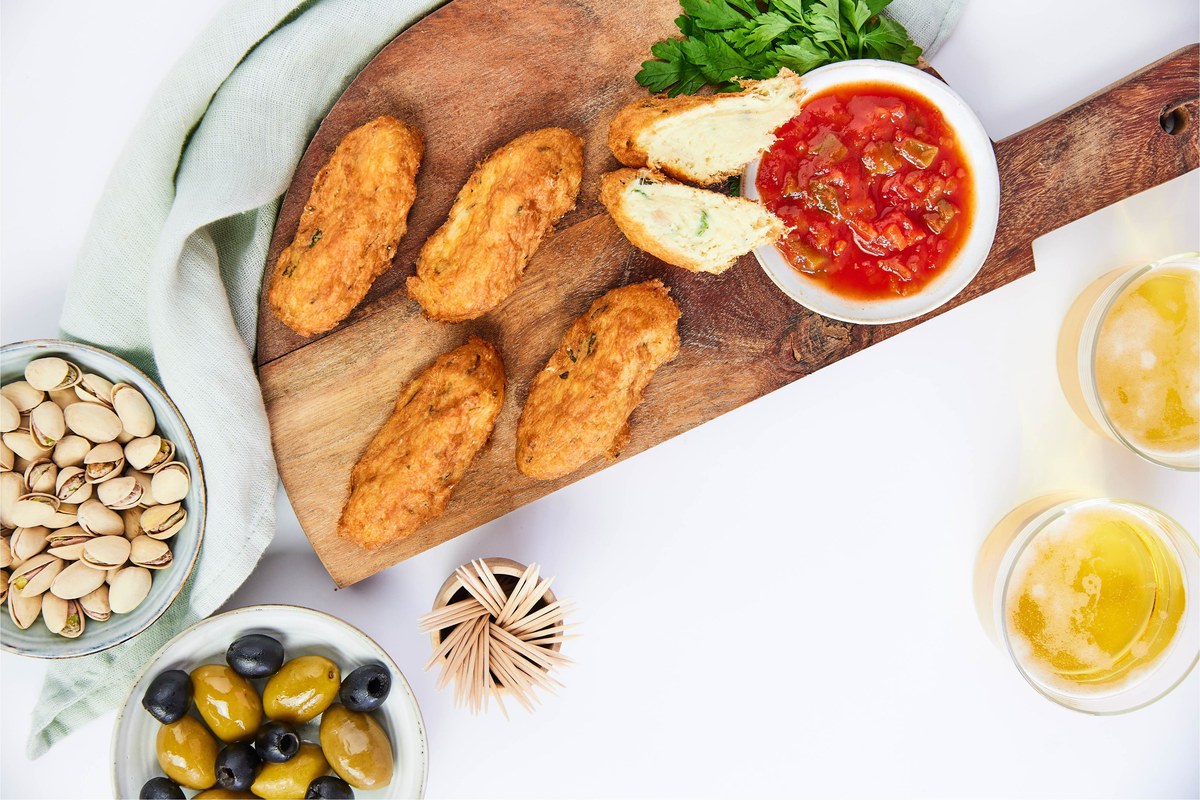
Pastel de bacalhau: the salt cod shaped between two spoons
It comes out of the oil golden, with three sharp ridges and a soft centre. Behind the pastel de bacalhau lies a fish…
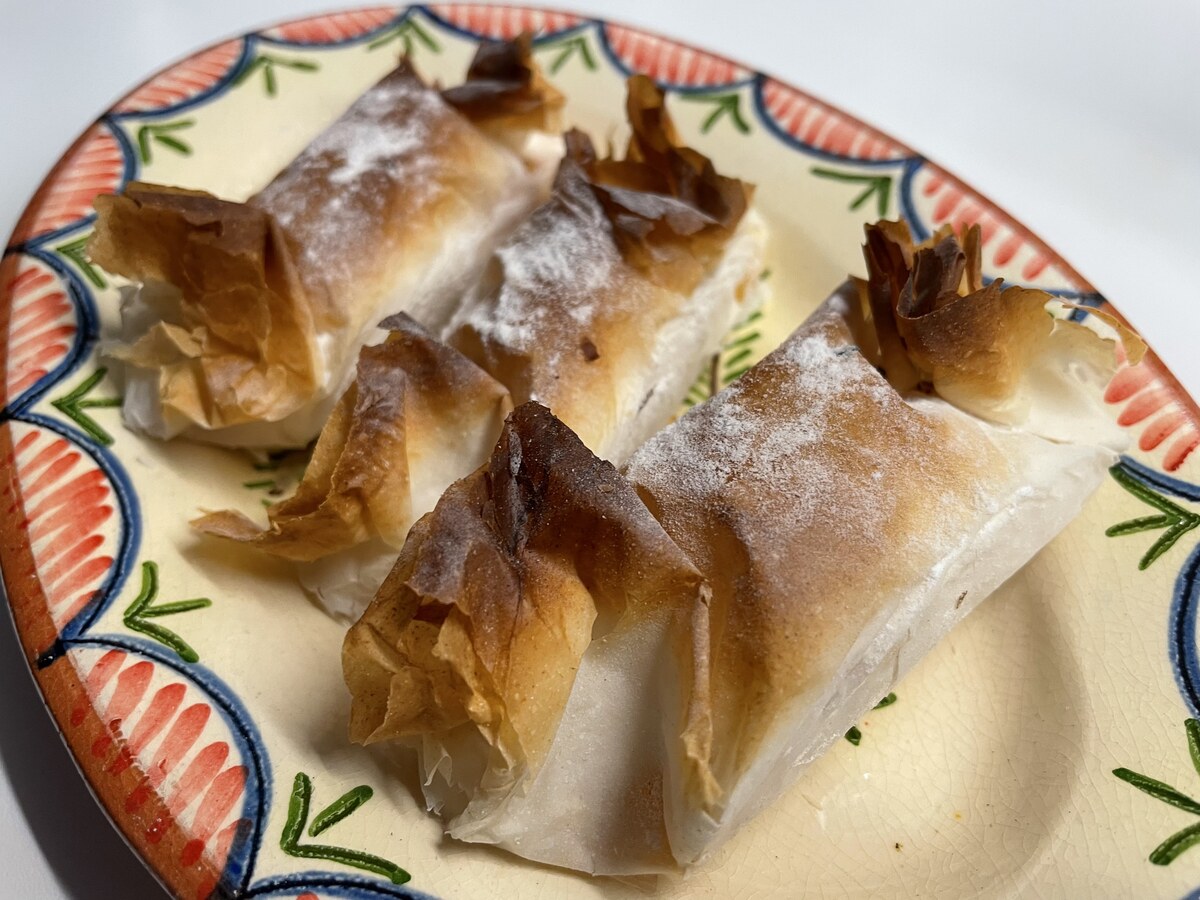
Pastel de Vouzela: the recipe nobody ever wrote down
Very thin pastry, a cream of egg yolks, a veil of icing sugar. The pastel de Vouzela came out of a Porto convent, is…
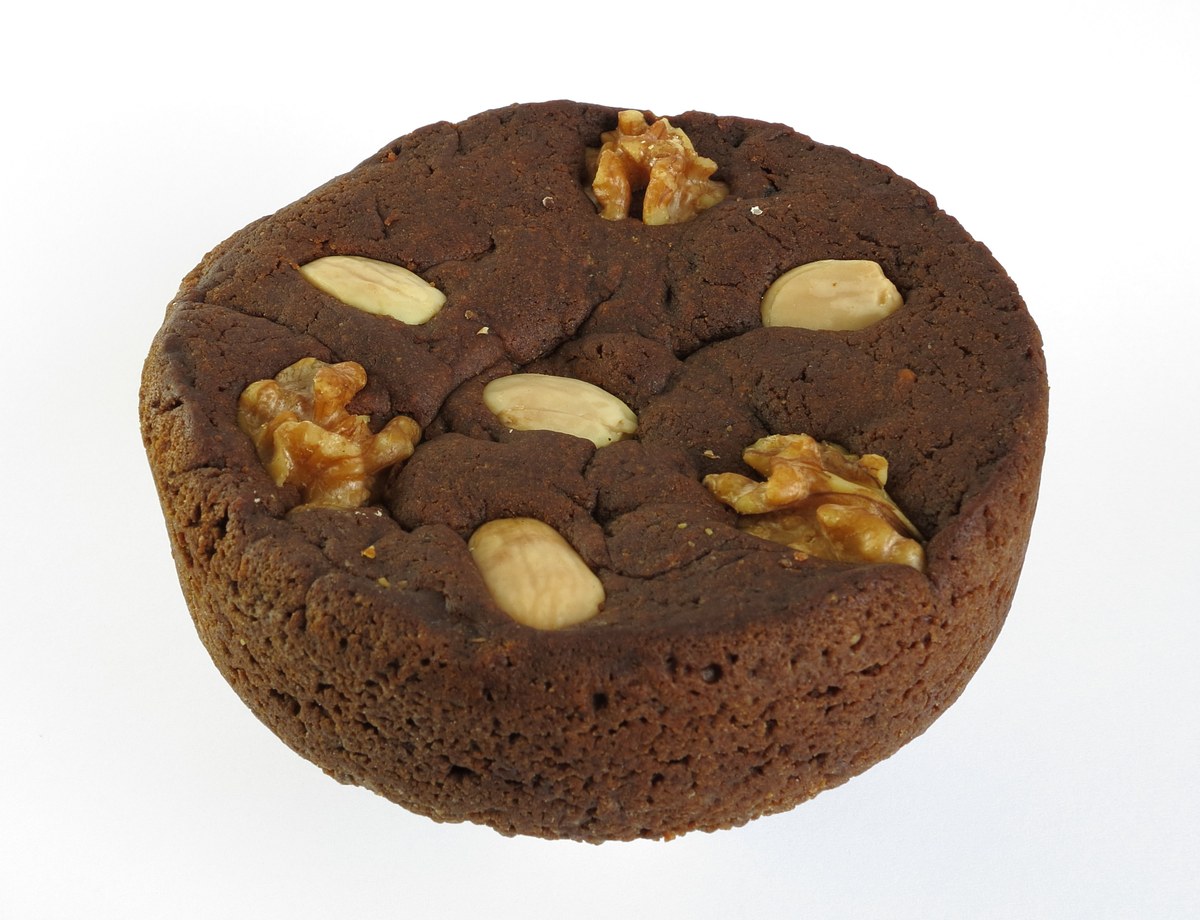
Bolo de mel: the Madeira cake you break by hand, never with a knife
A low, dark, dense disc studded with almonds and walnut halves. On Madeira it is baked on 8 December so that it is…
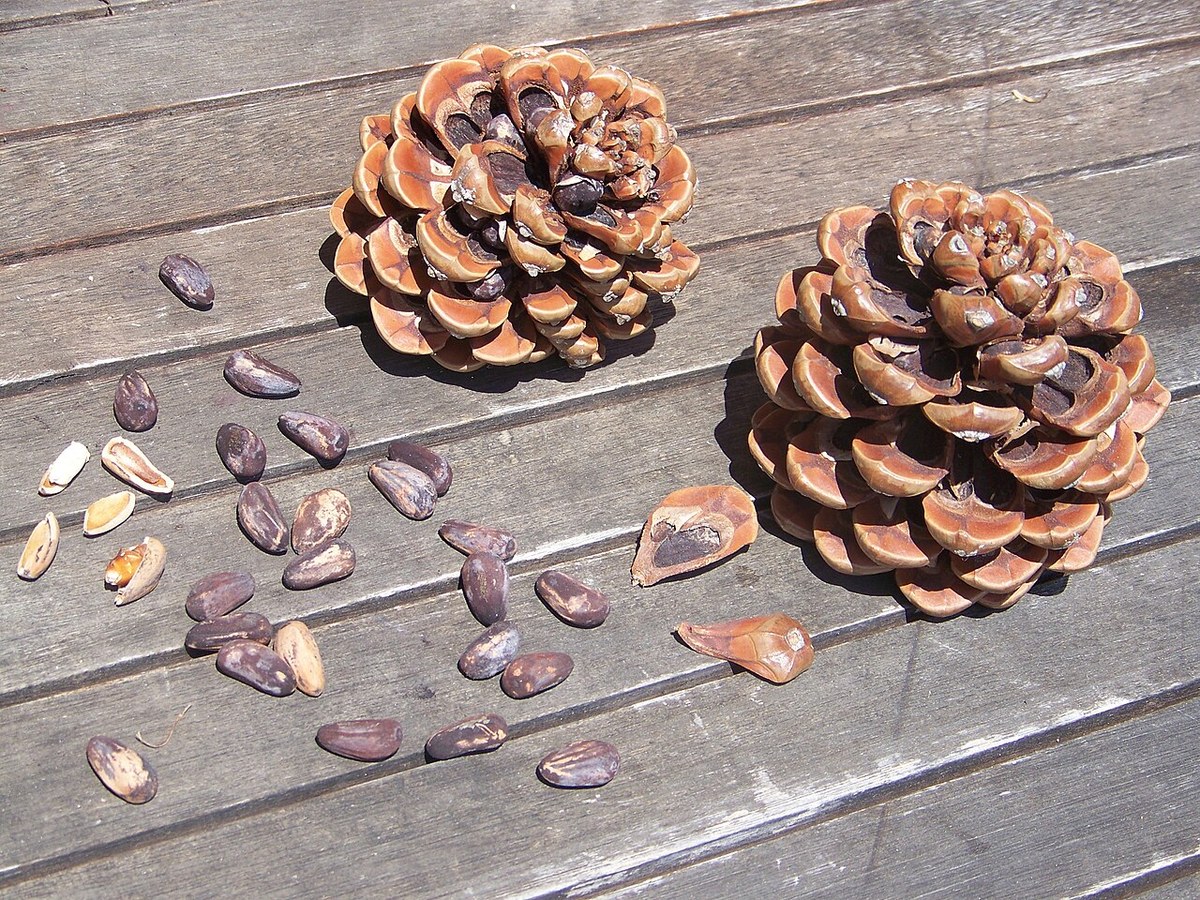
Pinhoada: the honey and pine nut diamond from Alcácer do Sal's roads
A brown diamond, hard as a tile, folded two by two into thick white paper. The pinhoada from Alcácer do Sal is made of…

Batata-doce de Aljezur: a legend three centuries too early
It comes out of the ground still wearing its sand, heavy and oddly fragrant. In Aljezur they say it won a battle in…
Find our artisan pastries in our Brussels stores or order online.
Order now Our foodtruck for your events Our stores