
Why Portuguese pastry is so yellow: the wine took the whites
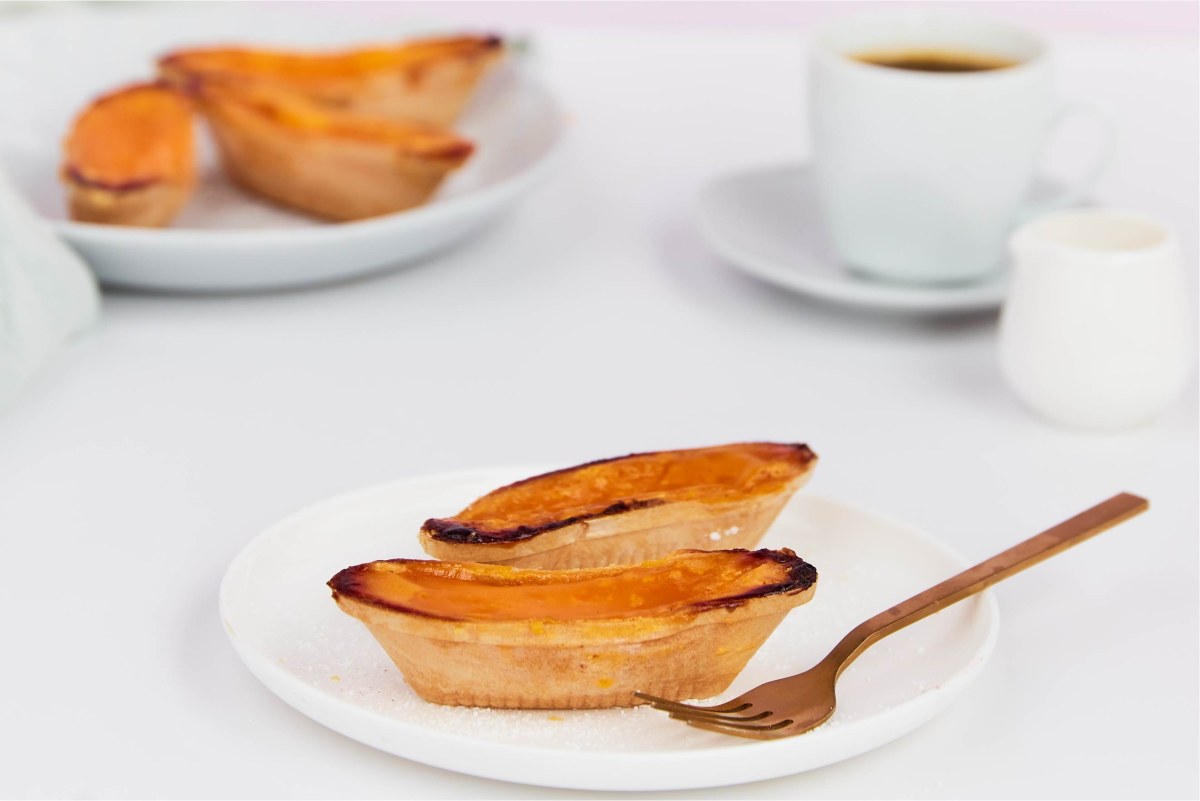
Crack an egg and separate it. The white slides away, clear, almost nothing at all. The yolk stays in the shell, dense and domed, frankly orange in the light. For centuries in Portugal those two halves went in opposite directions. And that parting explains something you notice without ever quite asking about it: the counter of a Portuguese pastelaria is yellow from top to bottom.
September, the season that called for whites
Right now, in the Douro, in the Oeste, in the Alentejo, the grapes are coming in. This is the vindima, the few weeks when the whole country smells of crushed fruit. It is also, historically, the moment when egg whites were needed.
Freshly fermented wine is cloudy. It carries particles too fine to settle on their own. Long before modern filtration, wine was clarified with beaten egg white: poured into the barrel, the white slowly coagulates, binds to the particles and drags them to the bottom. The process is called fining. It is not folklore — it is still practised on certain reds aged in oak.
So the wine wanted whites. A great many whites. And nothing else.
And the linen wanted just as many
The other customer was the laundry room. Egg white served as a dressing: rubbed through cloth to stiffen it, to hold a collar, to hold a headdress. In wealthy houses it was a matter of appearance. In convents it was a matter of habit, in both senses: a community that means to look immaculate uses egg white the way anyone else uses starch.
The account most often attached to Aveiro fits in a single sentence: the nuns of the Convent of Jesus used the whites to stiffen their habits and to clarify wine. What tends to go unsaid is what that sentence implies. Break eggs by the hundred and keep only the less nourishing half, and you are left with a problem on the table every single day.
A mountain of yolks
Nobody wanted the yolk. It was eaten, fed to animals, thrown out. A rich and costly food made awkward by sheer abundance.
What changed everything was sugar. From the fifteenth century onwards, cane from Madeira and later from Brazil brought into Portugal a product that elsewhere in Europe remained an apothecary's luxury. The convents, often endowed, had it. And they had the yolks.
The rest writes itself. Yolk and sugar, cooked, spun, thickened, reduced — with almost no flour. That is the real difference between Portuguese doçaria conventual and the rest of baking Europe: elsewhere the foundation is flour and butter, here it is yolk and sugar. The sweets were made first for religious feast days, then for visitors, then for benefactors who had to be thanked.
By the eighteenth and nineteenth centuries Portugal was among Europe's major egg producers. There was no shortage of raw material, and each convent refined its own version, its own turn of the wrist, its own name.
1834: the recipe walks out the door
On 30 May 1834, a decree drafted by the Minister of Justice, Joaquim António de Aguiar, dissolved the religious orders in Portugal. Convents, monasteries and colleges were closed and their property transferred to the Fazenda Nacional. The text earned its author the nickname mata-frades, friar-killer.
For pastry, that is the date of the exodus. Former religious suddenly had to live on something, and what they knew how to do was precisely this: make sweets nobody else could make. The recipes left the parlours for families, for shops, for pastelarias that still carry them today — often under their original names.
Those names are the best evidence left, in fact. Barriga de freira, nun's belly. Papos de anjo, angel's cheeks. Toucinho do céu, bacon from heaven. Cakes born in a shop do not get christened like that.
What the parting left in the window
Stand in front of a Portuguese counter and look at the colour before you look at the shapes. Pão de ló with its molten centre, fios de ovos drawn out into threads, toucinho do céu, the ovos moles of Aveiro moulded into shells and little barrels: it is the same equation every time, yolk and sugar, conjugated region by region.
Sugar had its own season too. Where it was missing, grape must was boiled down into a sweet with nothing added — that is the story of uvada, the harvest preserve. September, it turns out, holds both ends of this.
With us, in Brussels
You will find that colour in our windows in Brussels, and we never have to explain it to anyone: it is the colour of egg yolk cooked with sugar, and it is the colour of half our counter. Our barquinhos de Aveiro come straight out of this history — the little golden boats of a city of salt, canals and convents. You will find them on rue des Tongres in Etterbeek, and in Stockel, Uccle and Waterloo as well; the addresses and opening hours are here.
Next time you crack an egg, you will know why one of the two halves ended up becoming a national pastry. The other went off to clarify the wine we drink in September.
Read next
O lanche: the Portuguese afternoon snack that borrowed an English name
Late in the afternoon, Portugal puts down whatever it is holding and sits for ten minutes. The moment carries a…
Marmelada: the Portuguese quince that gave marmalade its name
Raw quince is inedible. Cooked with sugar it becomes a paste you cut with a knife — and a word that left Portugal and…
Desfolhada: the night when a red corn ear was worth a kiss
In late September, northern Portugal husked its corn after dark. Village work, sung and washed down with wine, and one…
The suitcase home: what Portuguese families bring back in August
In late August the same scene plays out in kitchens all over Brussels: a suitcase open on the tiles, a bathroom scale…
Doce fino: the Algarve's fruit, sculpted entirely from almonds
A banana, an ear of corn, two white rabbits and a carrot complete with its leafy top, all laid out on a paper doily.…
The ponto de açúcar: the fingertip test that decides everything
Thread, pearl, blown, sand: Portuguese has nine words for the moment a sugar syrup is ready, and not a single number.…
Bolo de bolacha: the Portuguese cake that never sees an oven
It never goes into the oven. Three things are enough — Maria biscuits, strong coffee, buttercream — plus one night in…
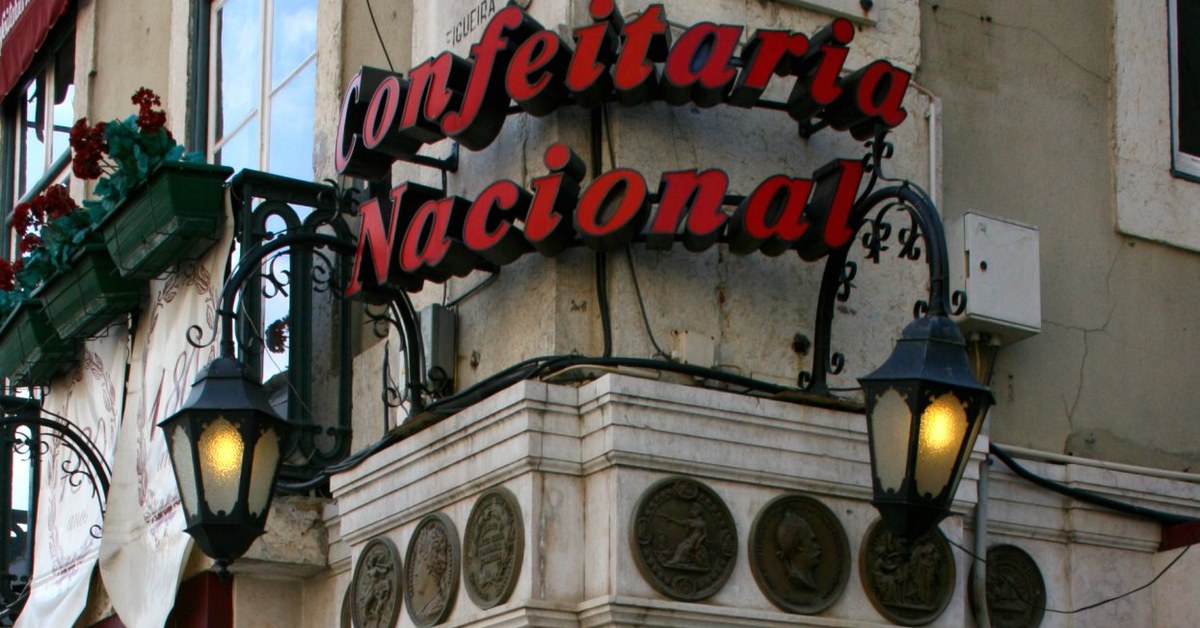
Confeitaria Nacional: the Lisbon pastry shop open since 1829
At dusk, on the corner of Praça da Figueira, the red sign lights up before the street lamps do. Below it, a row of…
Find our artisan pastries in our Brussels stores or order online.
Order now Our foodtruck for your events Our stores