
Jesuíta: the crackling triangle Santo Tirso guards so fiercely
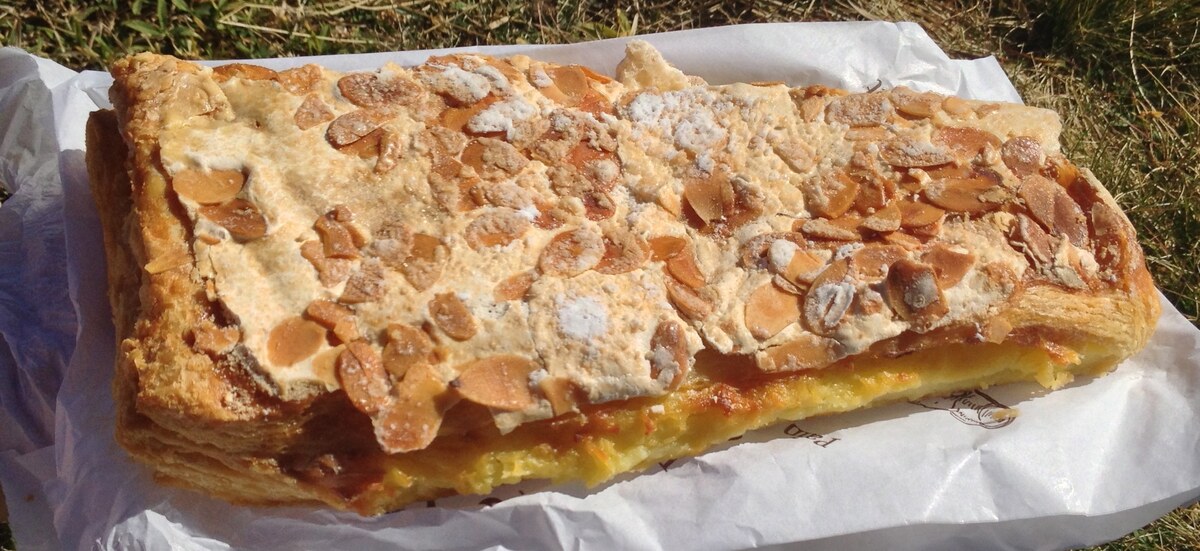
Some pastries announce themselves by sound. The jesuíta of Santo Tirso starts with a thin crust of sugar that gives way in one clean snap, before the puff pastry underneath has had a chance to say a word. You think you are biting into meringue, you land in layers of pastry, and right at the tip of the triangle an egg cream is waiting that nobody warned you about.
It looks like nothing else in Portuguese doçaria. Not round like a pastel, not rolled, not moulded: a blunt triangle, laid flat, glossy as though it had been varnished. And behind that slightly severe shape sits a small town in northern Portugal that eventually founded a brotherhood to protect it.
A triangle, a hat, and an argument about the name
Why “jesuíta”? The accounts disagree, and that is half the pleasure of the subject.
The most widespread explanation is about shape. The triangle is said to recall the Jesuits' headgear, or the cut of their cassock seen from behind, a garment that falls straight and tapers to a point. The cake would then be named after the habit it evoked, exactly as Portugal has done with so many of its sweets: toucinho do céu, papos de anjo, barrigas de freira. Naming a dessert after a member of the clergy, or a part of one, has never shocked anybody there.
The other version is more down to earth, and goes back to a Spanish pastry chef working in Santo Tirso, who is said to have worked previously in a community of Jesuit priests in Bilbao. He would have brought the recipe with him, and the name along with the recipe. Cousins of the jesuíta do exist in Spain and France, all made of puff pastry, all glazed, all more or less triangular.
Neither version has ever been settled. Santo Tirso lives with that quite comfortably: what matters is that the cake was born there.
Santo Tirso, one confeitaria, and a century of puff pastry
Santo Tirso is a small town in northern Portugal, between Porto and Guimarães, in that green country where the vines are trained high. Nothing spectacular at first glance: a Benedictine monastery, a river, granite houses. And a confeitaria that opened in 1892 and ended up giving the whole town its sweet identity.
That is where the jesuíta became what it is. Not in a convent, unlike most of the great Portuguese sweets, no nuns, no egg yolks left over from starching habits. A shop on a street, a pastry chef on a wage, a window. The jesuíta is town pastry, not cloister pastry, and it shows: it is crisp-edged, regular, built to be stacked and sold by the dozen.
The house stayed in the same family, handed down through the generations and led by women for much of that time. The jesuíta still accounts for the bulk of everything that leaves the workshop. An entire pastry shop built on a single cake is rare, and it rarely outlives one generation. Here it has lasted more than a century.
What is inside: massa folhada and doce de ovos
The construction is simple, which is exactly what makes it unforgiving: there is nothing to hide behind.
- The base: massa folhada, puff pastry, cut into triangles. No embellishment, but a dough that has to rise properly and stay dry.
- The filling: doce de ovos, the cream of egg yolks and sugar found in half of Portuguese baking, scented with lemon.
- The glaze: egg whites, icing sugar, a squeeze of lemon. Spread on top before baking, it colours in the oven and forms that thin crust that cracks.
All the work is in that glaze. Too thick and it becomes a lid of sugar. Too thin and it vanishes, and the pastry loses its sound. Overbaked and it browns and turns bitter. A successful jesuíta lives within a few seconds of oven time and a few tenths of a millimetre.
It is the same order of precision as the pastel de Tentúgal, whose dough is pulled so thin you can read through it: in Portuguese doçaria, the shortest recipes are almost always the hardest ones to hold.
A cake worth protecting
Santo Tirso eventually created a confraria, a brotherhood, devoted to the jesuíta. From a distance that can raise a smile, but it answers a real problem: the jesuíta is now sold across Portugal, and a great deal of what carries the name has little left in common with the original triangle. Industrial puff pastry, sprayed glaze, missing filling.
Portuguese food brotherhoods have been doing this work for a long time, for alheira, for pão de ló, for cheeses. They hold no regulatory power, but they write the reference recipe, run the competitions, and state publicly what the word ought to mean. In a country where every village has its own cake, that is a form of memory as serious as a land registry.
The triangle, the bica, and our Brussels counters
A jesuíta is not eaten on its own. It is eaten standing at the counter, with a bica, the short coffee the Portuguese order without thinking about it. The sugar of the glaze falls onto the bitter coffee, the pastry absorbs the rest, and the whole business is settled in three minutes. It is a pause, not a dessert.
At Wooly in Brussels we do not make jesuítas: it is a speciality of Santo Tirso, and it deserves to be named properly rather than imitated. But the whole family it comes from is there on our counters: the egg yolk cream, the pastry that cracks, the Portuguese sweets that each come from one particular town. On rue des Tongres in Etterbeek, as in Stockel, Uccle or Waterloo, the same conversation keeps coming back: “and that one, where is it from?” The jesuíta comes from a small green town between Porto and Guimarães, and from a shop window that opened in 1892.
Photo: a jésuite, the French cousin of the Portuguese jesuíta, the same puff pastry, the same glaze. Picture by Stijn Nieuwendijk (Amsterdam), via Wikimedia Commons, licensed CC BY-SA 2.0.
Sources: RTP, “Santo Tirso cria Confraria para defender o apreciado pastel jesuíta”; Jornal de Notícias, “Santo Tirso é cidade dos jesuítas há mais de 100 anos”.
Read next
Pastel de Chaves: the recipe bought from a stranger in 1862
A half-moon of puff pastry, a veal filling, and a recipe bought for one pound from a street seller whose name nobody…
Leite-creme: the red-hot iron that cracks Portuguese custard
You hear it before you taste it: the spoon presses, the sugar crust gives way with a dry crack, and underneath there is…
Pudim Abade de Priscos: the Portuguese pudding with no milk
A dark, dense Portuguese pudding born in a presbytery near Braga, whose original recipe contains not a drop of milk.…
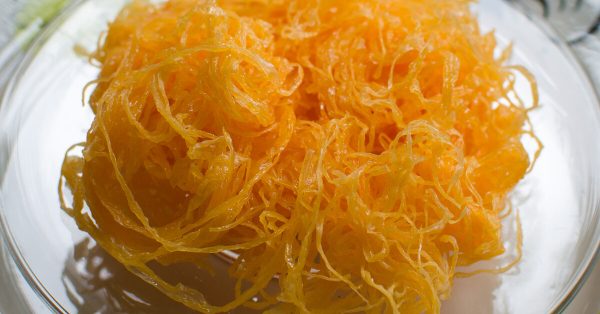
Fios de Ovos: The Portuguese Egg Thread That Conquered Siam
Egg yolk falling in a thin stream into boiling syrup, and coming out as golden thread. Fios de ovos may be the most…
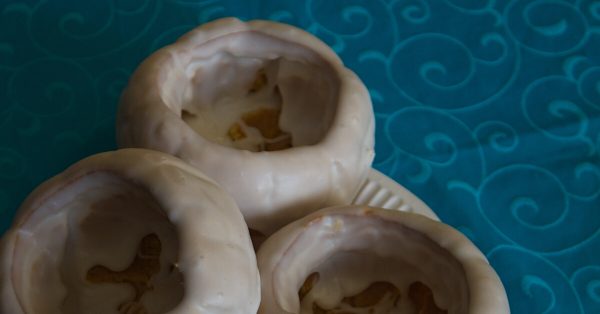
Cavacas: The Hollow Cake the Cavaqueiras Sold From Wicker Baskets
A matt white glaze that shatters under your teeth, and almost nothing underneath. The cavaca is a Portuguese cake built…
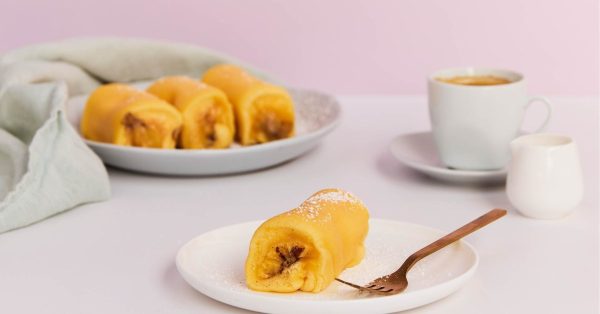
Torta de Azeitão: the golden roll that came from the Alentejo
The fork meets no resistance, the thin sheet of sponge gives way, and the egg cream appears. A torta de Azeitão hides…
Meias-luas of Viana: the pastry you bought without seeing a soul
A coin laid on a wooden tray, a half turn, and the pastry appears without you ever seeing the hand that made it. In…
Doce de gila: the squash you smash on the ground to make a dessert
You do not cut it open, you throw it on the ground. And what comes out of the broken squash looks nothing like a…
Find our artisan pastries in our Brussels stores or order online.
Order now Our foodtruck for your events Our stores