
Medronho: the rough little fruit of the Algarve that ripens as autumn begins
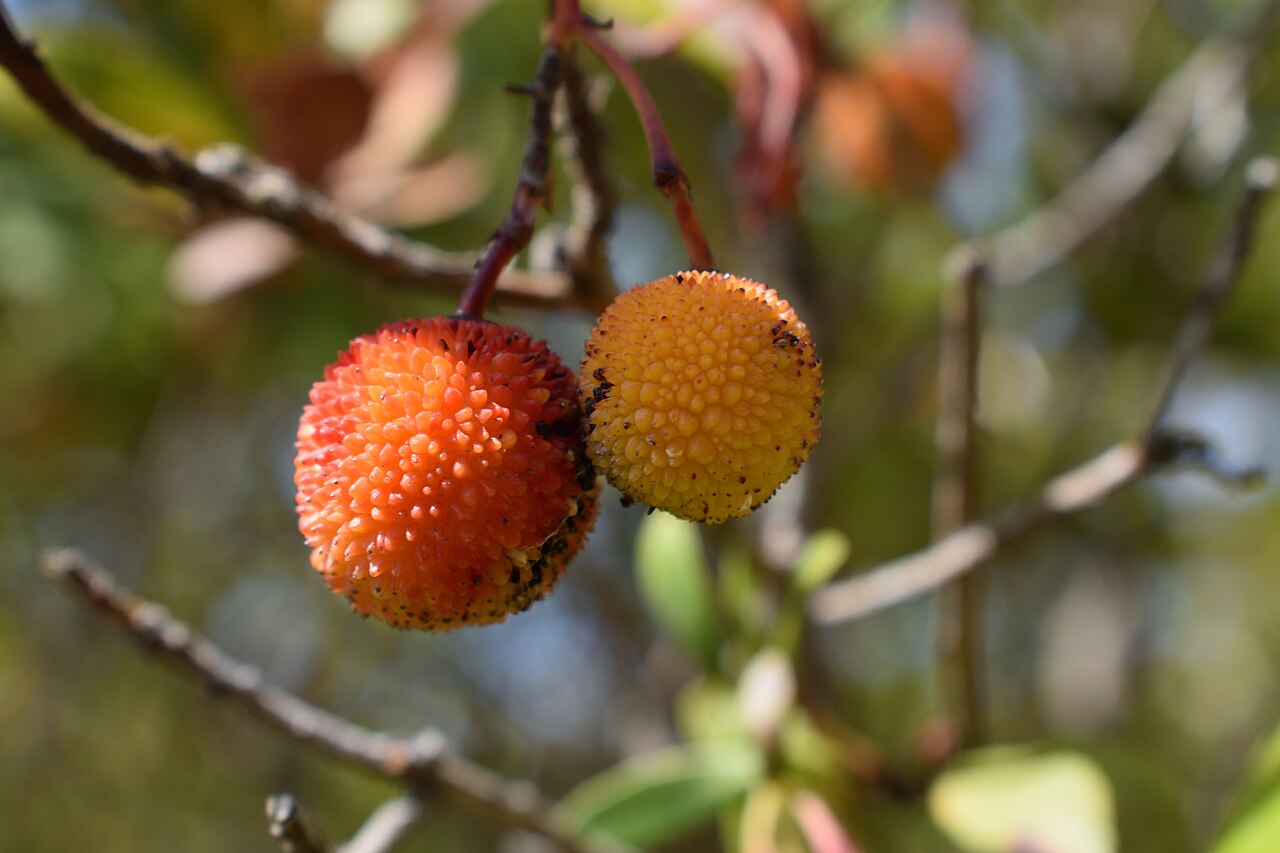
You could mistake it for a strawberry that took a wrong turn. A small, grainy ball, rough under the finger, yellow at first, then orange, then an ever deeper red. The medronho makes no effort to charm, and yet every autumn it fills the hills of the Algarve just as nearly every other fruit has finished its season.
A tree that grows where nothing else will
The fruit comes from the medronheiro, the strawberry tree (Arbutus unedo), a shrub that almost always grows wild. It gets by on poor, schist-rich soils that nobody wants for farming. In Portugal it is associated above all with the Monchique and Caldeirão ranges in the Algarve, but it also grows in the Alentejo and in the centre-north of the country.
A harvest from October to December
While other fruit trees settle into rest, the strawberry tree ripens. Medronhos are picked mostly in October and November, sometimes into December, one fruit at a time, without stalk or leaf, and with enough care not to damage the flowers on the branch. In Monchique, a programme called “Reviver Tradições” has, since 2017, brought residents together in the woods of Águas Alves to repeat these gestures side by side, and some participants are over ninety.
The taste? Juicy, slightly tart, with that grainy skin that gives the fruit its character. When fully ripe it already holds a little alcohol: the fruit ferments quickly, and that is what gave people the idea for the rest.
From fermentation to the copper still
In Monchique families, for years, nearly everyone made their own aguardente de medronho. The principle is short to tell and long to do. The fruit is crushed with a little water, roughly one part water to five parts fruit, then left to ferment for thirty to sixty days in large containers of wood or clay.
Then comes the distillation, slow, over direct heat, in a copper still. Connoisseurs agree that the best brandy comes from batch distillation over a gentle fire rather than from a machine running non-stop. The result ranges from 38 to 54% ABV depending on the version, and is traditionally served at room temperature, alongside coffee.
And in the sweet department?
The medronho does not sit in pastry windows the way the fig or the almond do. It is used mostly in jams and jellies, sometimes in confectionery, liqueur or wine. It is a fruit for foraging, home kitchens and stills, more than for the pastelaria. But it tells the same Algarve as the sweets we wrote about this summer: that of the morgado, where fig and almond are sculpted by hand, or that of the alfarroba, the black gold harvested with a pole. A dry land, stubborn trees, fruit gathered by hand, and know-how passed on at home.
A fruit worth more than its still
For many mountain families, the medronho was a source of income for generations: it was picked, sold, distilled. Today people look for other uses for it, in the food industry, in cosmetics and even in the medical sector. None of that has erased the original gesture, a hand choosing a red fruit among the leaves on an autumn afternoon, with mountains all around.
A thread that runs to Brussels
These are the stories hiding behind the typical Portuguese pastry our Portuguese pastry chefs prepare for the shops of Brussels. If you stop by Stockel, Etterbeek, Uccle or Waterloo, ask where each sweet comes from: in the Algarve it is often a story of dried fruit, sugar and patience.
Photo: “Medronhos”, Bextrel, Lagos (Algarve), licence CC BY-SA 4.0, via Wikimedia Commons.
Read next
Bolo do caco: the Madeiran bread named after its stone
Cooked on a slab of volcanic basalt, kneaded with sweet potato for want of wheat, spread with garlic butter: Madeira's…
Castanhas assadas: the white smoke that brings autumn to Lisbon
A column of white smoke on a street corner, a smell of embers and salt, a cry: "Quentes e boas!". In Lisbon, autumn…
Arrufada de Coimbra: the sweet bread carried to engagements
Sold from baskets under a white cloth at Coimbra station, left to rise for twenty-four hours under a blanket, the…
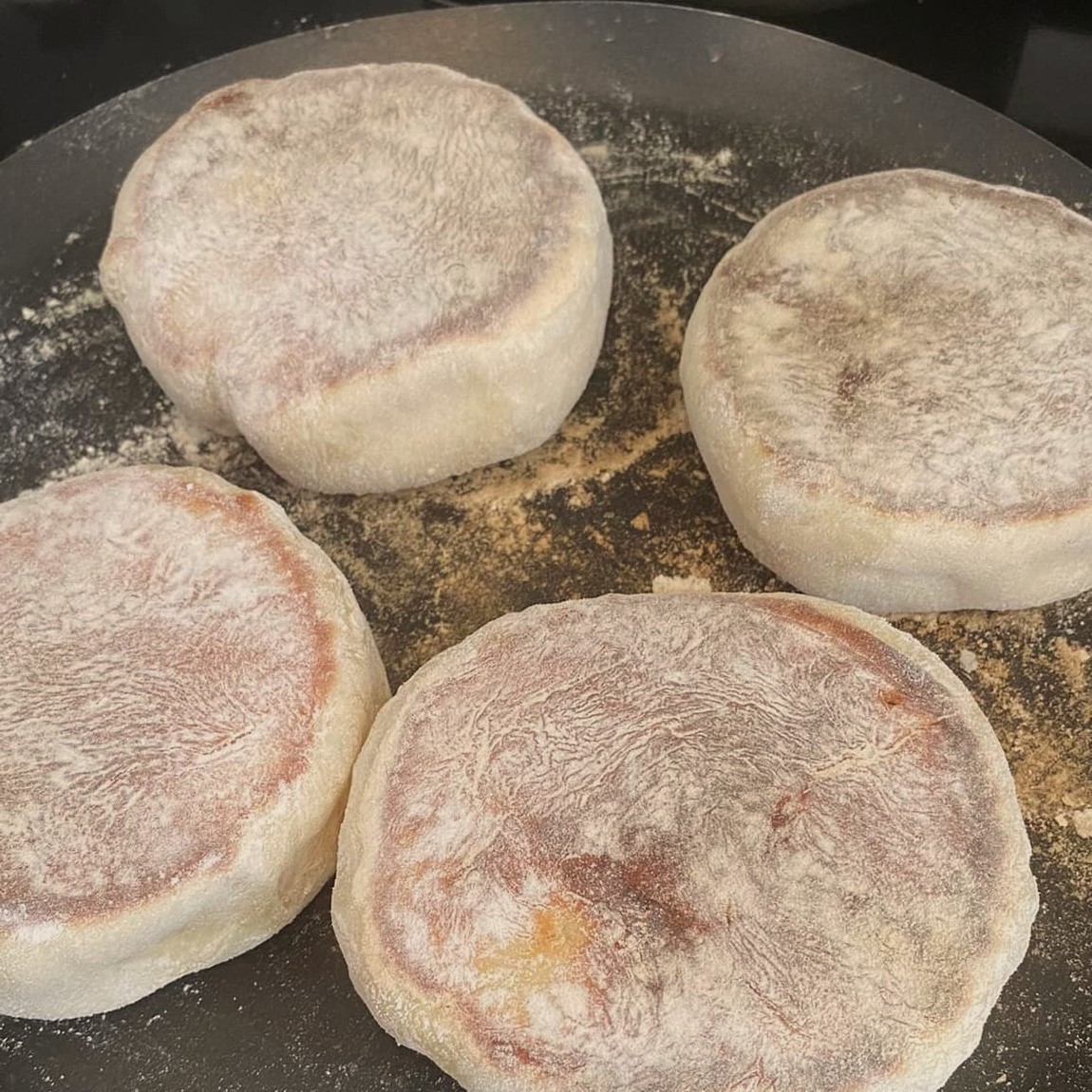
Bolo lêvedo: the Furnas bread whose age nobody knows
It cooks on a floured griddle, never in an oven, in a volcanic valley of the Azores. Lenten flatbread, 19th-century…
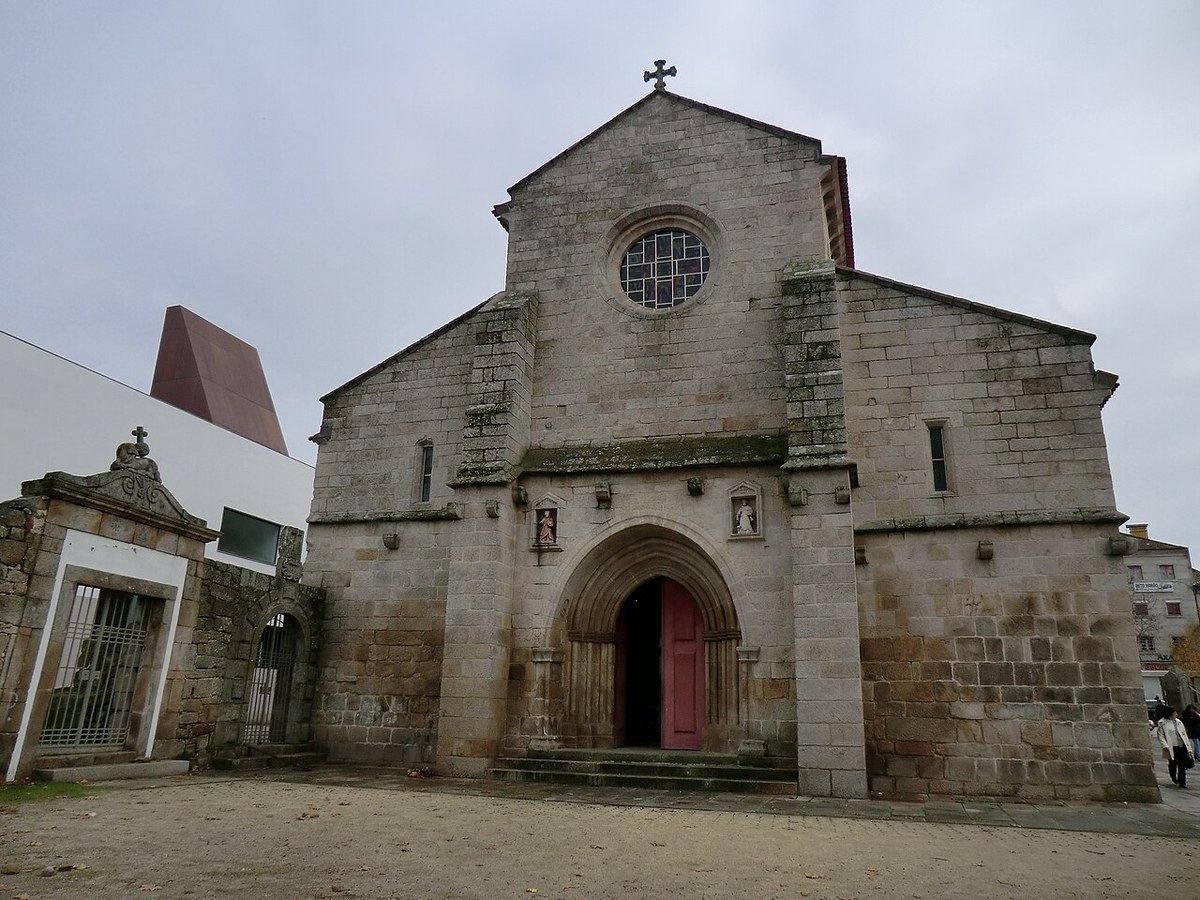
Cristas de galo: the Vila Real turnover that lost its convent
Little teeth cut into the edge of an almond turnover: that is all that remains of the convent of Santa Clara in Vila…
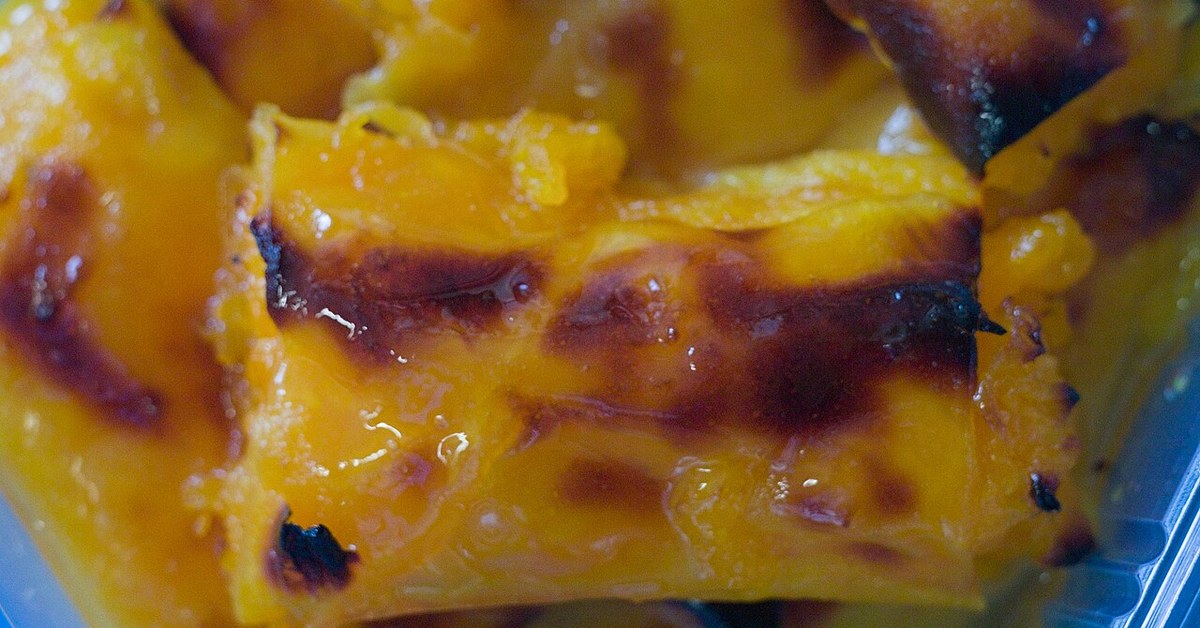
Trouxas de ovos: the little egg bundle you bring home from Caldas da Rainha
A thin sheet of egg poached in boiling syrup, rolled around its own trimmings, glossy as a jewel. Nobody ever leaves…
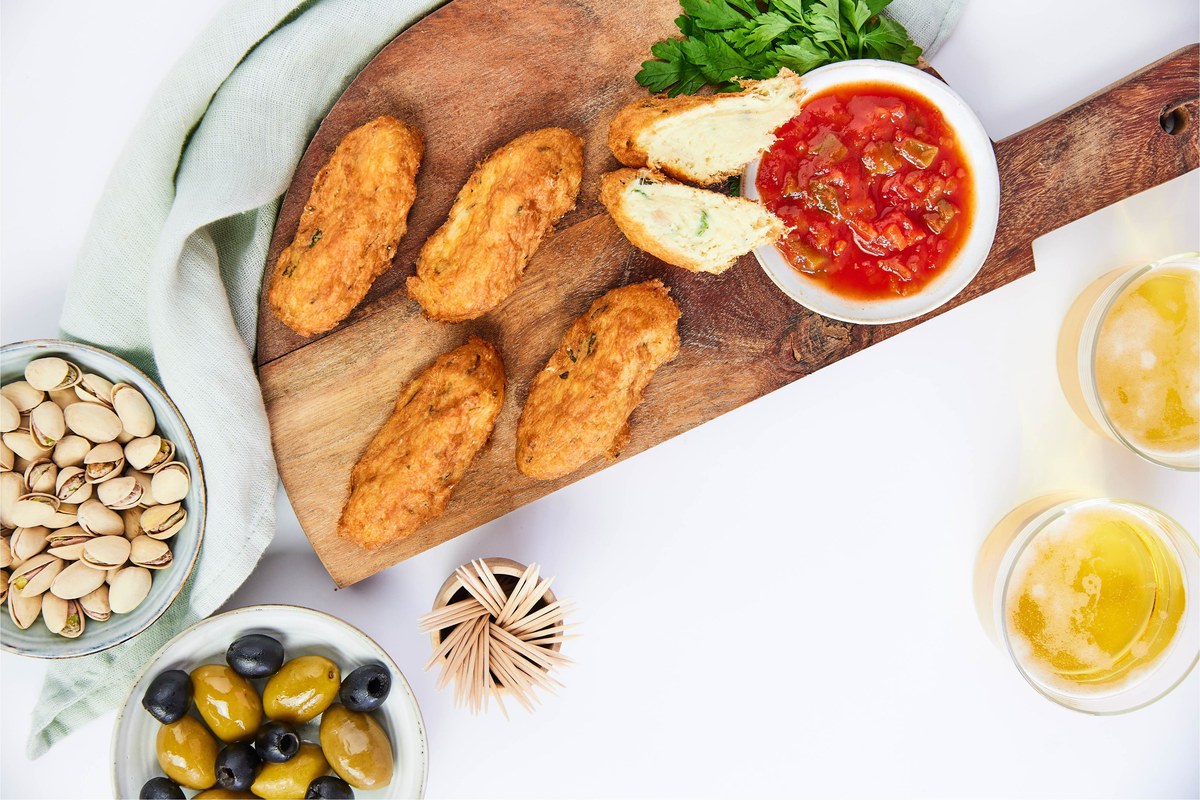
Pastel de bacalhau: the salt cod shaped between two spoons
It comes out of the oil golden, with three sharp ridges and a soft centre. Behind the pastel de bacalhau lies a fish…
Pastel de Vouzela: the recipe nobody ever wrote down
Very thin pastry, a cream of egg yolks, a veil of icing sugar. The pastel de Vouzela came out of a Porto convent, is…
Find our artisan pastries in our Brussels stores or order online.
Order now Our foodtruck for your events Our stores