
Rebuçados da Régua: the hand-folded sweet of the Douro pilgrimages
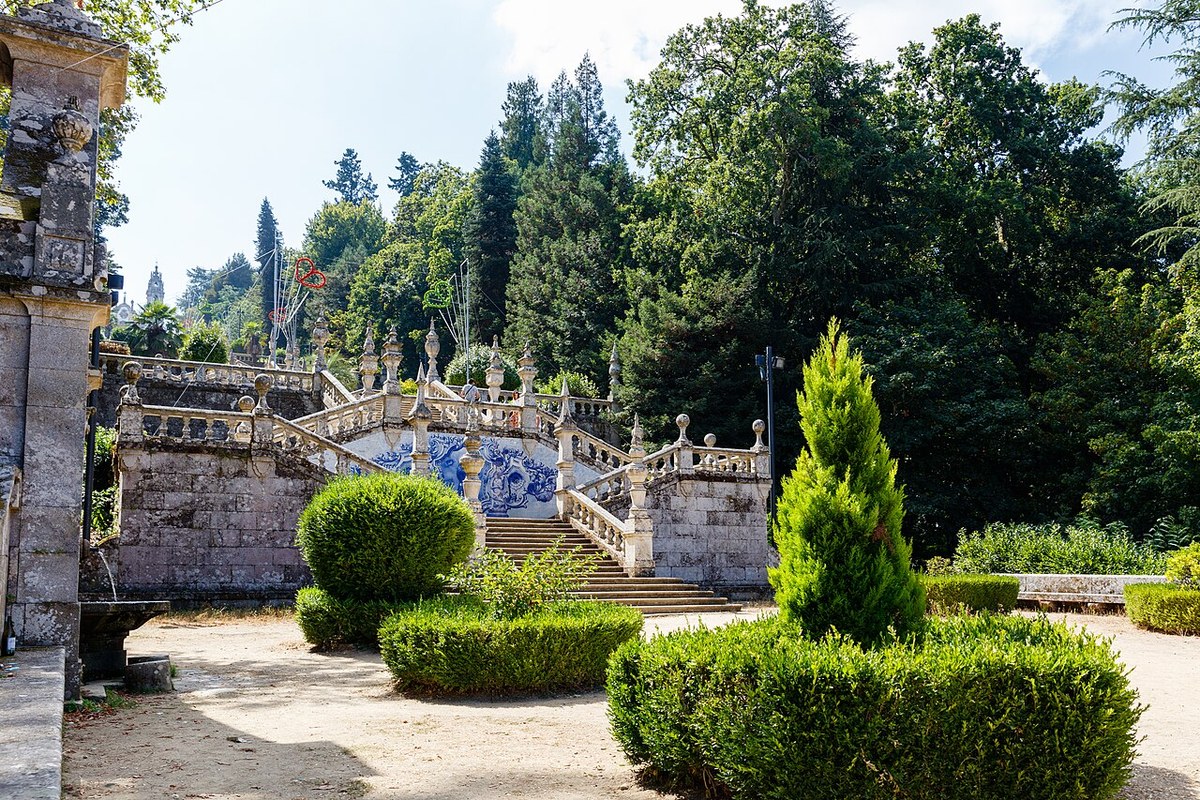
You smell them before you see them. Cooked sugar and lemon peel, carried on the wind between two stalls, at the foot of a stairway so tall that the church is invisible from the first step.
This is Lamego, in the Douro, in early September. The town is holding its romaria, the one for Nossa Senhora dos Remédios, and the rebuçadeiras have set down their baskets where they have set them for generations: at the bottom of the steps, in the shade.
A stairway nobody counts the same way
Lamego's escadório is one of those monuments you climb rather than visit. The baroque sanctuary was built between 1750 and 1761; work on the stairway only began in 1777, and it was finished in the twentieth century. Nearly a hundred and fifty years of building for a path that leads to a single door. Nine flights, chapels, fountains, obelisks, statues, and blue azulejos that climb alongside you.
People say 686 steps. The sanctuary's rector counts 925: 307 in the centre, and 309 on each side. Both figures are right; they simply are not counting the same thing, and nobody up there is in a hurry to settle it.
Before the baroque, a chapel dedicated to Santo Estêvão stood here, raised in 1361 and demolished in 1568. The place was already a place; stone only made it taller.
The chestnut tree, the baskets, the sweets
At the foot of the climb, a chestnut tree the sanctuary describes as 750 years old shades two things: the farnéis, the picnic hampers pilgrims haul up and open on the grass, and the sellers of rebuçados da Régua.
Peso da Régua sits some thirty kilometres away, down on the river: capital of Douro wine, town of quays and barrels. Its sweet travelled further than its wine ever did on a woman's hip. The rebuçados went from romaria to romaria, from feast to feast, sold by call from wicker baskets.
Sugar, a stone, ten fingers
The recipe fits in four lines and still refuses to leave the region. Sugar is boiled to the ponto de rebuçado — the stage where it snaps clean and no longer sticks, with two strips of lemon peel and an aromatic herb. Which herb? That is where the conversation politely stops: every rebuçadeira has her own, and it is her entire stock in trade.
The boiling syrup is then poured onto a slab of marble or slate, greased with butter, once with lard or olive oil. After that you must be quick. While the mass is hot you cut it sweet by sweet and twist each piece into its paper, into a little bow, a laçarote. Ten minutes later the slab has set hard and there is nothing left to do but start again.
Portuguese pastry cooks still read that famous stage with their fingers rather than a thermometer: we told the story of the gesture in o ponto de açúcar. The rebuçado is its hardest, most unforgiving version: ten seconds too long and it is gone.
The flavours change from basket to basket: honey, thyme, cinnamon, orange-blossom infusion. It is a doçaria with no oven, no egg yolks and no convent, a rarity in a country where almost every grain of sugar passed through a monastery parlour.
A women's trade, and a living
Nobody knows exactly when these sweets appeared. The sellers say it is «very old», which in Portugal can mean two centuries or four generations. What is documented is that they came to the fore in the 1930s, and that many women in Régua raised their children on what the baskets brought in.
Perhaps that is what makes this particular sweet moving. It is not a festive recipe: it is work. Boil, pour, cut, twist, call out, sell, and start again the next day in another town, at another romaria. Portuguese doçaria has its convent glories; it also has these pavement trades that kept families standing.
Why September
That Lamego's romaria falls in early September is no accident of the calendar. In the Douro, September is the month of the vindima: grapes are cut, cellars fill, work runs from dawn to night. The festival lands just before it or right in the middle of it, like a breath. Portugal has a whole family of sweets born of that moment, such as uvada, the harvest doce cooked without sugar.
So you climb the steps, you come back down, you sit under the chestnut tree, and you leave with a paper bag of twisted sweets. It is not the costliest souvenir a sanctuary can give you. It is usually the one that disappears in the car.
And in Brussels?
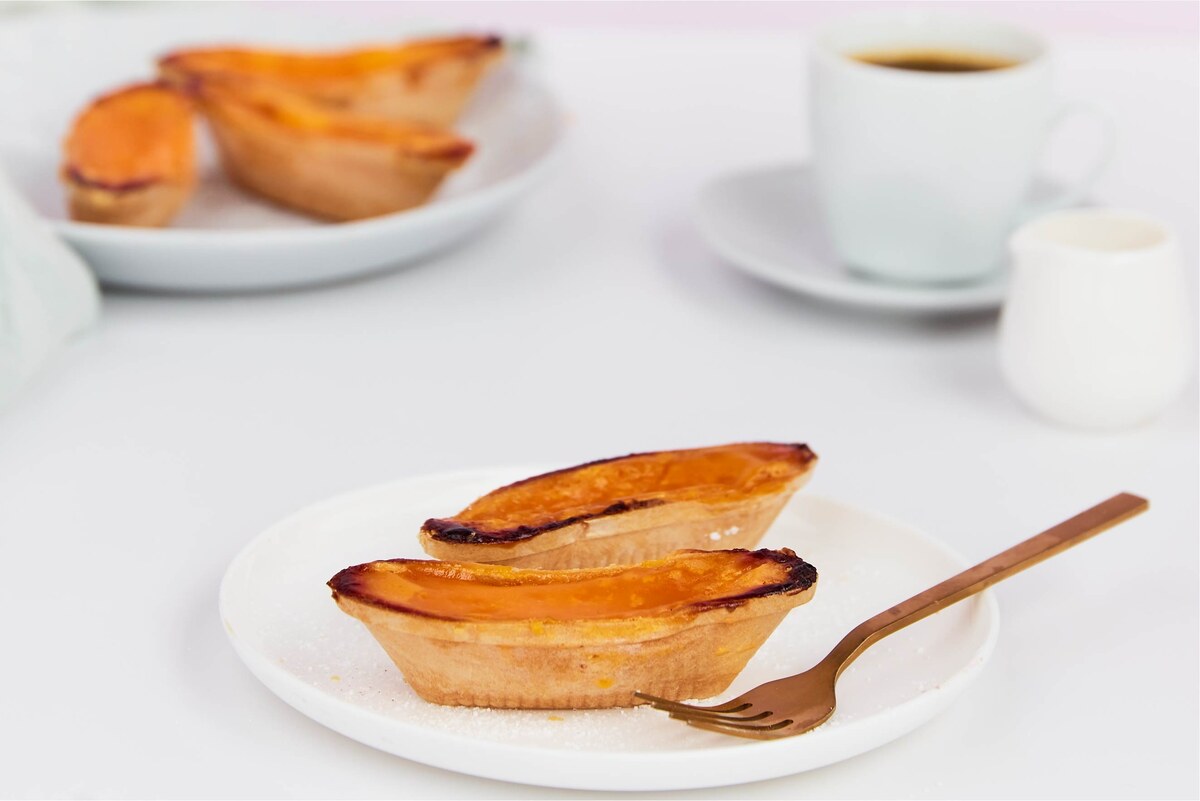
We do not pull sugar on a slate slab in our Brussels shops. That gesture belongs to the women of the Douro, and there is no reason to pretend otherwise. But September tastes the same here as it does there: the counters fill up again, the regulars come back from holiday, and out come the sweet things that go with a coffee rather than after a meal. At Wooly that still means the pastel de nata, out of the oven the same day, in Etterbeek as in Stockel, in Uccle as in Waterloo. The addresses and opening hours of our shops are here if you are passing.
And if you ever find yourself at the foot of a stairway of 686 steps, or 925 depending who counts, look for the chestnut tree. The baskets are never far.
Photo: Marmontel, Nossa Senhora dos Remédios sanctuary (Lamego), Wikimedia Commons, CC BY 2.0.
Read next
Pastéis de Santa Clara: the cake from a convent that drowned
In Coimbra the nuns spent three centuries raising their floors before leaving the convent to the river. The building…
Why Portuguese pastry is so yellow: the wine took the whites
Crack an egg and separate it. In Portugal, for centuries, the white and the yolk went their separate ways: one to the…
O lanche: the Portuguese afternoon snack that borrowed an English name
Late in the afternoon, Portugal puts down whatever it is holding and sits for ten minutes. The moment carries a…
Marmelada: the Portuguese quince that gave marmalade its name
Raw quince is inedible. Cooked with sugar it becomes a paste you cut with a knife — and a word that left Portugal and…
Desfolhada: the night when a red corn ear was worth a kiss
In late September, northern Portugal husked its corn after dark. Village work, sung and washed down with wine, and one…
The suitcase home: what Portuguese families bring back in August
In late August the same scene plays out in kitchens all over Brussels: a suitcase open on the tiles, a bathroom scale…
Doce fino: the Algarve's fruit, sculpted entirely from almonds
A banana, an ear of corn, two white rabbits and a carrot complete with its leafy top, all laid out on a paper doily.…
The ponto de açúcar: the fingertip test that decides everything
Thread, pearl, blown, sand: Portuguese has nine words for the moment a sugar syrup is ready, and not a single number.…
Find our artisan pastries in our Brussels stores or order online.
Order now Our foodtruck for your events Our stores