
Madeira sugar: the sweet route that linked Funchal to Bruges
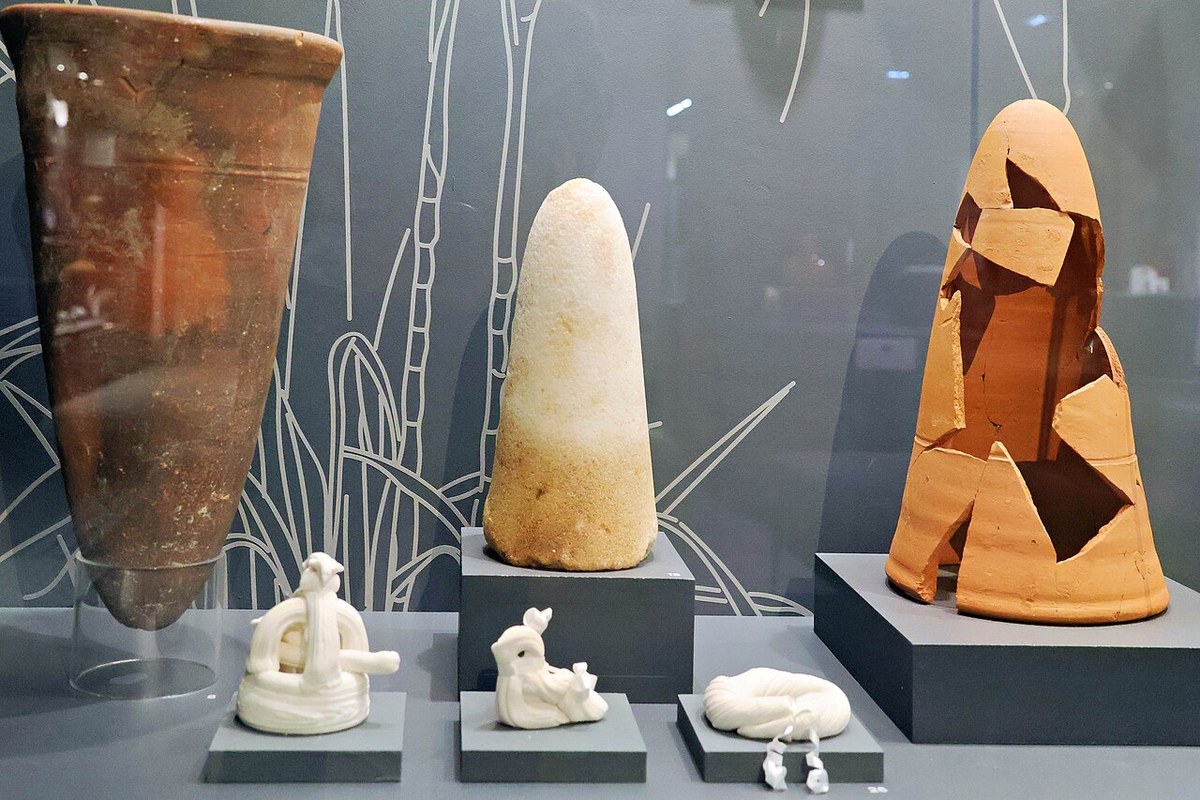
It looks like nothing at all: a cone of hardened sugar, greyish white and dull, sitting in a case at the A Cidade do Açúcar museum in Funchal. It is not an ornament. It is the shape sugar travelled in, long before bags and boxes: a pão de açúcar, a sugar loaf, broken with a hammer and grated when needed. For more than a century, those cones crossed the ocean from Madeira to the quays of Bruges and Antwerp.
An island with nobody on it
When Portuguese ships reach Madeira in the 1420s, the island is empty: no village, no field, no inhabitant. Everything has to be built from scratch. As early as the 1430s, Prince Henry has cana-de-açúcar planted there, sugar cane brought from the Mediterranean. The terrain is steep, damp and cut by ravines; terraces are carved into it and levadas are dug, the mountainside irrigation channels that still line the slopes today.
It belongs to the same story, so let us say it plainly: that sugar economy rested on the labour of women and men who were enslaved and brought from Africa. Madeira sugar was not sweet for everyone.
1472: the sugar sails straight for Flanders
In the 15th century sugar is not a staple but a luxury, sold by weight and kept at the apothecary's, next to the spices. Madeira becomes one of Europe's great suppliers, and from 1472 its sugar is shipped directly to Flanders, then the main centre of redistribution.
The loaves travel in wooden crates cut from island timber, vinhático and til. They leave Funchal, climb the Atlantic and are unloaded at Bruges, then at Antwerp once the Bruges channel silts up. From there they go out across northern Europe. Put differently: the Portuguese sugar route ran through our ports, and it was already doing so five hundred and fifty years ago.
A wedding in Bruges, and everything follows
That route is no commercial accident. It rests on an alliance. In 1430, Isabella of Portugal, daughter of King João I, marries Philip the Good, Duke of Burgundy — and it is at those wedding celebrations in Bruges that the Order of the Golden Fleece is founded. The kingdom of Portugal and the Burgundian lands become family; the merchants follow.
Bruges merchants who became Madeirans
They did not simply buy from afar: they settled. Maerten Lem, a merchant from Bruges, lands in Lisbon in 1450 carrying a letter of recommendation from Isabella of Portugal herself. He makes his fortune in cork and sugar and returns to Bruges in 1466; his son, Martim Leme, settles on Madeira in 1470.
Twenty years later comes another: Jean Esmenault, born in Béthune, in Burgundian Artois, employed by the Bruges trading house of the Despars family. He steps ashore in 1480, sets up on his own account in 1490, and appears in the Portuguese registers as João Esmeraldo. The Flemish name dissolved into the island's language, the way sugar dissolves in water.
Paid in paintings
The most striking part is what made the journey the other way. Madeira's merchants did not only bring back money: they traded their sugar for Flemish work. Painted panels, altarpieces, sculpture from Mechelen and Antwerp, silverware — all of it left Flanders for an island in the Atlantic because the cane grew well there.
That is why a small Portuguese island now holds one of the most surprising bodies of Flemish painting anywhere, gathered in Funchal's museum of sacred art. Those paintings are, quite literally, sugar turned into colour.
What that sugar made possible
While the cones sailed north, sugar stayed behind in Portugal. And it reached the convents, where another raw material was already abundant: egg yolks, left over because the whites were used to clarify wine and to starch clothes. Sugar and yolks: the whole of Portuguese convent pastry lives in that meeting.
Sugar even became an instrument of precision there. The nuns did not weigh it: they cooked it and judged it with their fingers, through successive sugar stages, from thread to hard crack. For that, the product had to have grown familiar enough to be read by hand, without a thermometer.
With us, in Brussels
We like that thought while making our pastéis de nata, whose custard is never more than yolks, sugar and cinnamon: the route that linked Funchal to the Flemish ports is also, from a distance, the one that eventually brought Portuguese pastry here. Sugar used to travel in cones; today it sits in a shop window, on rue des Tongres in Etterbeek, in Stockel, in Uccle and in Waterloo. Come and see it in one of our four Brussels shops.
Photo: Dr. Thomas Liptak, via Wikimedia Commons, licence CC BY-SA 4.0.
Read next
Fatias de Tomar: the sweet that demands a pan with a chimney
They look like slices of bright yellow bread left behind in syrup. They contain no flour, no leavening, and never see…
Ameixa d'Elvas: the green plum named after a French queen
It is green, and that is not a flaw. In Elvas, in the Upper Alentejo, this plum is picked deliberately hard, before it…
Rebuçados da Régua: the hand-folded sweet of the Douro pilgrimages
They smell of hot lemon and cooked sugar. At the foot of Lamego's baroque stairway, women still fold their sweets one…
Pastéis de Santa Clara: the cake from a convent that drowned
In Coimbra the nuns spent three centuries raising their floors before leaving the convent to the river. The building…
Why Portuguese pastry is so yellow: the wine took the whites
Crack an egg and separate it. In Portugal, for centuries, the white and the yolk went their separate ways: one to the…
O lanche: the Portuguese afternoon snack that borrowed an English name
Late in the afternoon, Portugal puts down whatever it is holding and sits for ten minutes. The moment carries a…
Marmelada: the Portuguese quince that gave marmalade its name
Raw quince is inedible. Cooked with sugar it becomes a paste you cut with a knife — and a word that left Portugal and…
Desfolhada: the night when a red corn ear was worth a kiss
In late September, northern Portugal husked its corn after dark. Village work, sung and washed down with wine, and one…
Find our artisan pastries in our Brussels stores or order online.
Order now Our foodtruck for your events Our stores