
Pão de rala: the fake loaf of Évora that the nuns offered a king
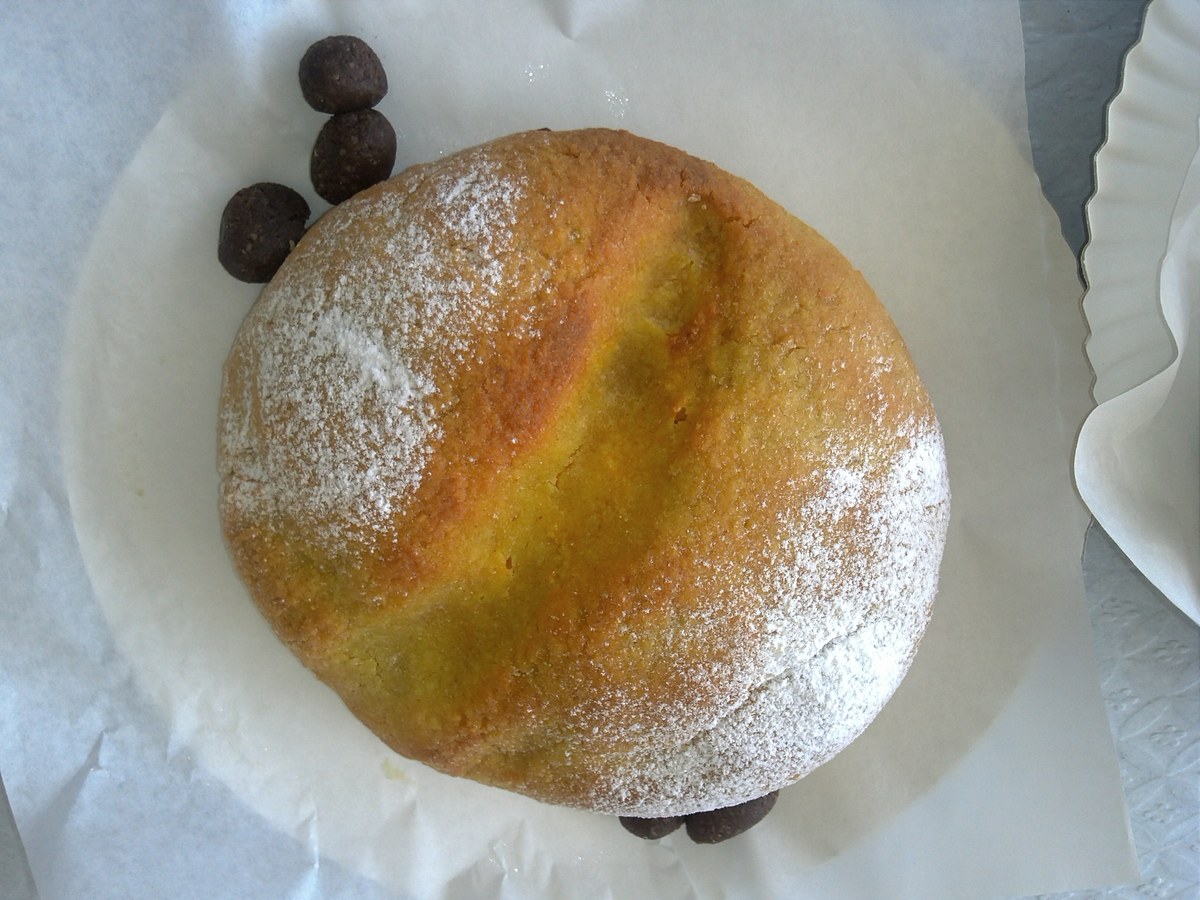
You set it on the table and, for a second, everyone is fooled. A golden dome, slightly sunken, split across the top and dusted white like a loaf just out of a wood-fired oven. You almost reach for the bread knife. Then you taste it, and there is not a crumb of bread inside: almond, sugar, egg yolks, and at its heart golden threads and a translucent preserve. Pão de rala from Évora is a practical joke played by nuns, and it has been running for centuries.
A poor name for a feast-day cake
The name itself is a wink. In Portuguese, rala is the coarsest part of ground wheat, what is left once the fine flour has been sifted out. The adjective ralo means thin, sparse, scarce. A pão de rala is, literally, a loaf of poor flour: the bread of people who have nothing better.
It is exactly the opposite. Pão de rala belongs to the great family of doces conventuais, the sweets born in Portuguese convents, where sugar, almonds and a remarkable quantity of egg yolks were at hand. Portugal's register of traditional products describes it as a dessert "of great magnificence", served on major feast days. The whole joke lies in the gap between what it pretends to be and what it is.
The convent that had almost nothing
To get the joke, you have to climb up to the convent of Santa Helena do Monte Calvário in Évora, in the heart of the Alentejo. It was founded in 1565 at the initiative of the Infanta D. Maria, daughter of King D. Manuel I. It was a poor house: the nuns who lived there sometimes struggled to feed themselves.
This is where tradition places the birth of pão de rala, and this is where a distinguished visitor comes in.
Bread, olives and water
Legend has it that the young King D. Sebastião — who came to the throne as a child and vanished in 1578 at the battle of Alcácer-Quibir — announced a visit to the convent. A courtier well versed in protocol reminded the abbess that it was customary to offer His Majesty some refreshment. The nun is said to have replied, with a smile, that the convent had nothing but "pão ralo", olives and water.
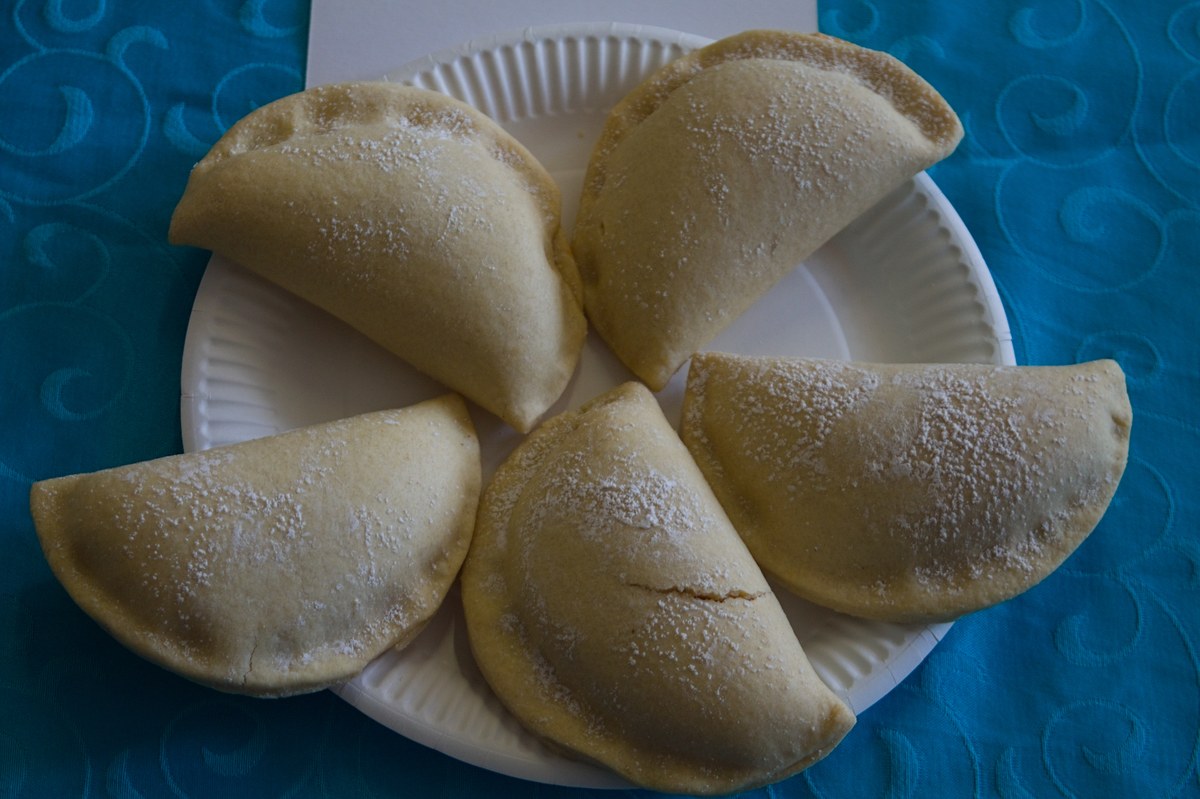
It was in memory of that visit, so the story goes, that the nuns created pão de rala: a cake that looks like that humble bread, and is the richest thing a convent could offer. To this day in Évora it is often sold with little "olives" of almond paste rolled in cocoa, as in the photo for this article. The abbess's menu is complete: bread and olives. Only the water is missing.
Like every pastry legend, this one cannot be proven. But it captures the humour of those convent kitchens, where people knew how to play with appearances.
What lies under the flour
A pão de rala is built like a loaf shaped inside out. You start with the casing, which the old recipes call the espécie: sugar, grated almond, egg yolks, a little water and lemon zest, cooked gently into a paste. Once cool, it is spread into a disc.
The filling goes in the centre, in layers: fios de ovos, threads of egg yolk cooked in syrup; ovos moles, the cream of yolks and sugar; and doce de gila, the stringy preserve made from a squash. The edges of the casing are then drawn up to close it all in and give it the round shape of a wheat or corn loaf. A veil of flour, a spell in the oven, and the likeness is perfect. Some versions add chocolate, which darkens the colour.
Cut into it and the contrast is striking: outside, the matt, floury crust of a farmhouse loaf; inside, the vivid yellow of everything Portuguese convent baking knows how to do with eggs.
A recipe passed from convent to convent
We know pão de rala as well as we do thanks to an 18th-century manuscript. It gathers the recipes for the cakes made by the nuns of the monastery of Santa Clara in Évora, a house founded in the 14th century. And the manuscript records a precious detail: the recipe had been given to the Poor Clares by the sisters of the convent of Santa Helena do Calvário.
That is often how doces conventuais survived: copied, swapped, handed from one convent to another, then carried out of the cloisters after religious orders were suppressed in Portugal in 1834. Pão de rala stayed attached to its city. It is listed today among the traditional products of the Évora region, and it is still sold in its pastelarias.
The same craft, in Brussels
You will rarely find pão de rala outside the Alentejo, but its family has travelled. Egg yolks, cooked sugar, cinnamon and lemon are the shared grammar of Portuguese pastry, and it is that same grammar that makes a good pastel de nata. In our shops in and around Brussels — Rue des Tongres in Etterbeek, Stockel, Uccle and Waterloo — it is this convent heritage that fills the display case every morning.
And if you ever find yourself in Évora, step into a pastelaria and ask for a pão de rala. You will be handed what looks like a loaf of bread. Do as the young king did: don't trust appearances.
Photo: Manuel Facas Vicente, CC BY-SA 3.0, via Wikimedia Commons.
Read next
Pêra Rocha: the pear that turned up by accident in a Sintra garden
It has a neck, a skin freckled with russet, and it reaches Portuguese market stalls in September. Every Rocha pear in…
From Flagey to Stockel: how Portuguese pastry reached Brussels
The hiss of the coffee machine, the cup set down with a click, two words of Portuguese across the counter: that counter…
Bolo Dona Amélia: the maize cake where the spices stopped
A veil of icing sugar, a dense crumb the colour of maize, a scent of cinnamon and clove. The bolo Dona Amélia comes…
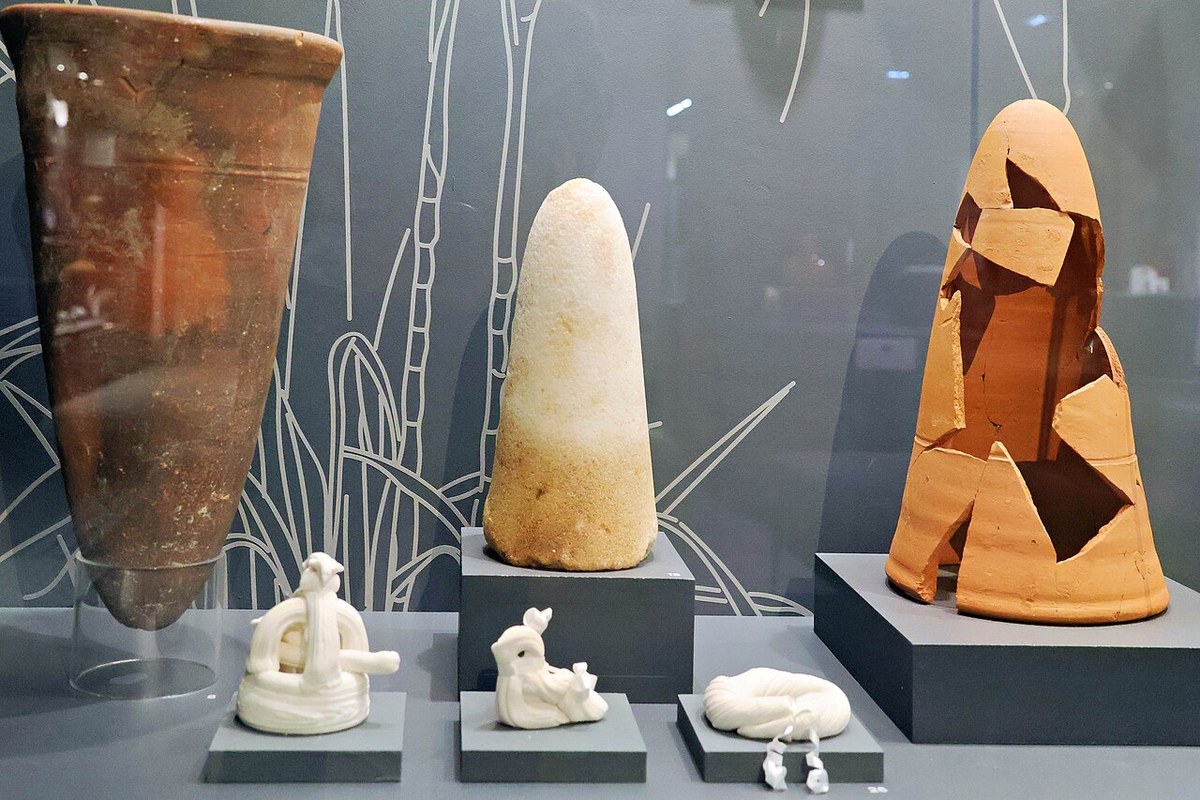
Madeira sugar: the sweet route that linked Funchal to Bruges
In a display case in Funchal stands a cone of hardened sugar, greyish white, as tall as a forearm. That was the shape…
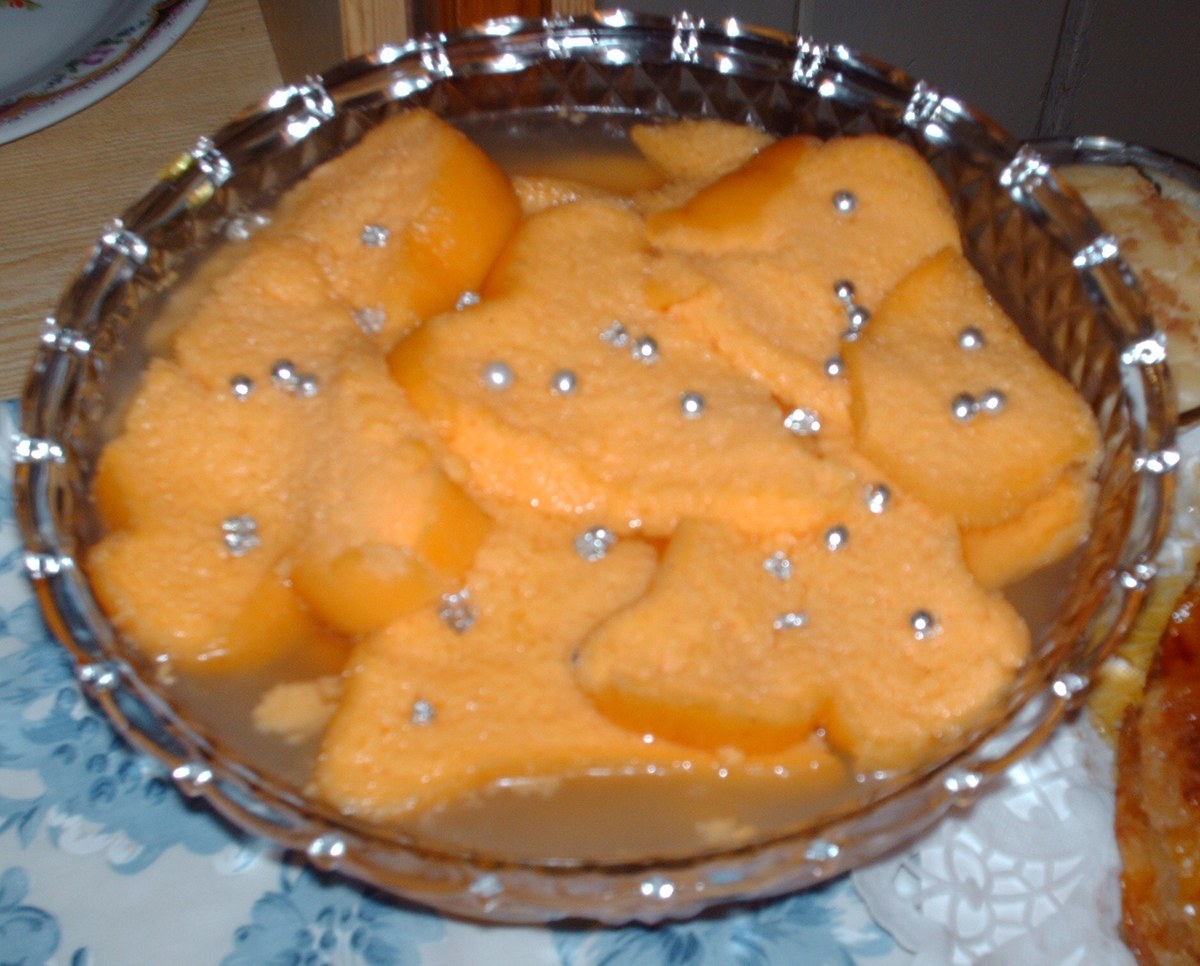
Fatias de Tomar: the sweet that demands a pan with a chimney
They look like slices of bright yellow bread left behind in syrup. They contain no flour, no leavening, and never see…
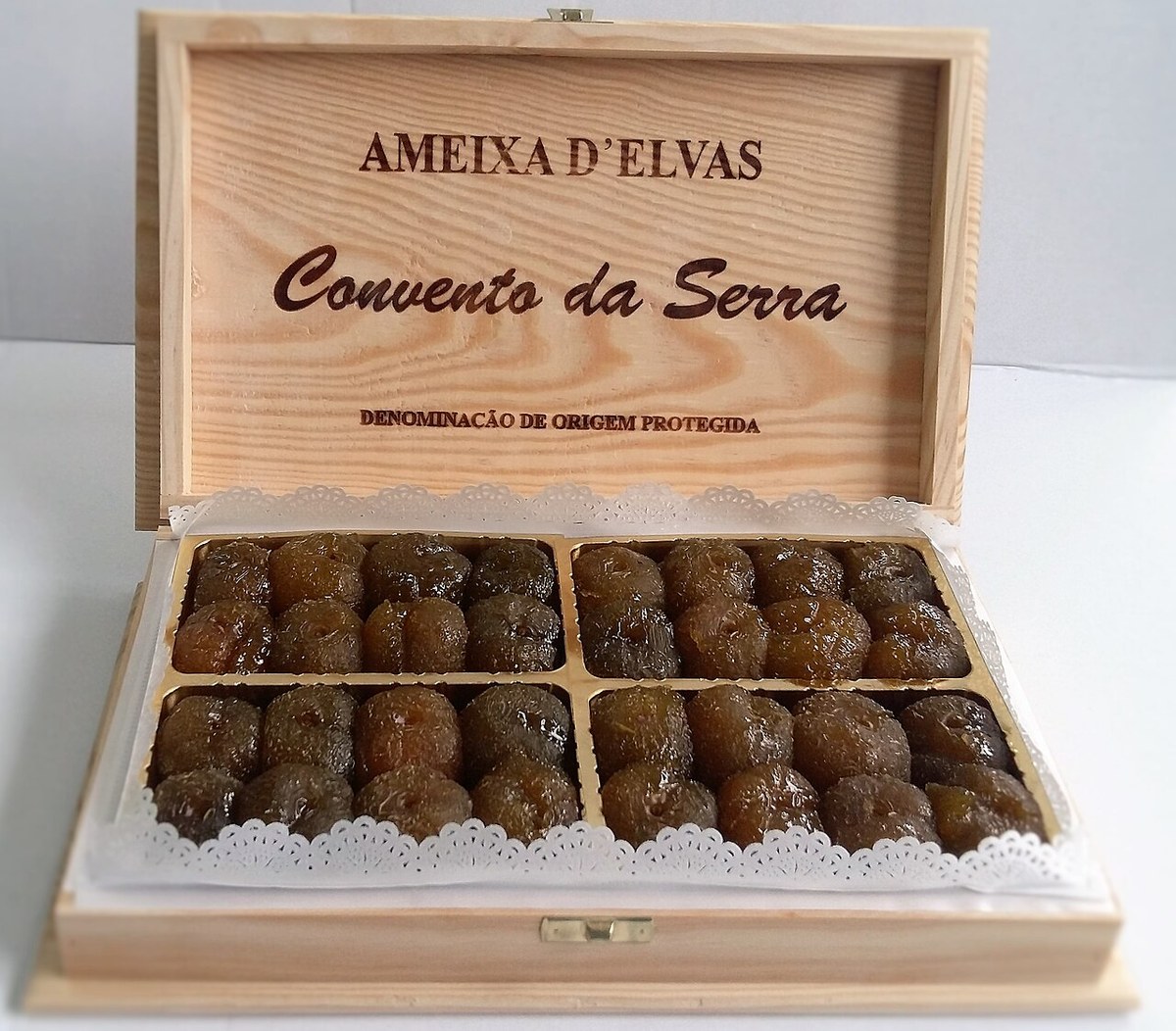
Ameixa d'Elvas: the green plum named after a French queen
It is green, and that is not a flaw. In Elvas, in the Upper Alentejo, this plum is picked deliberately hard, before it…
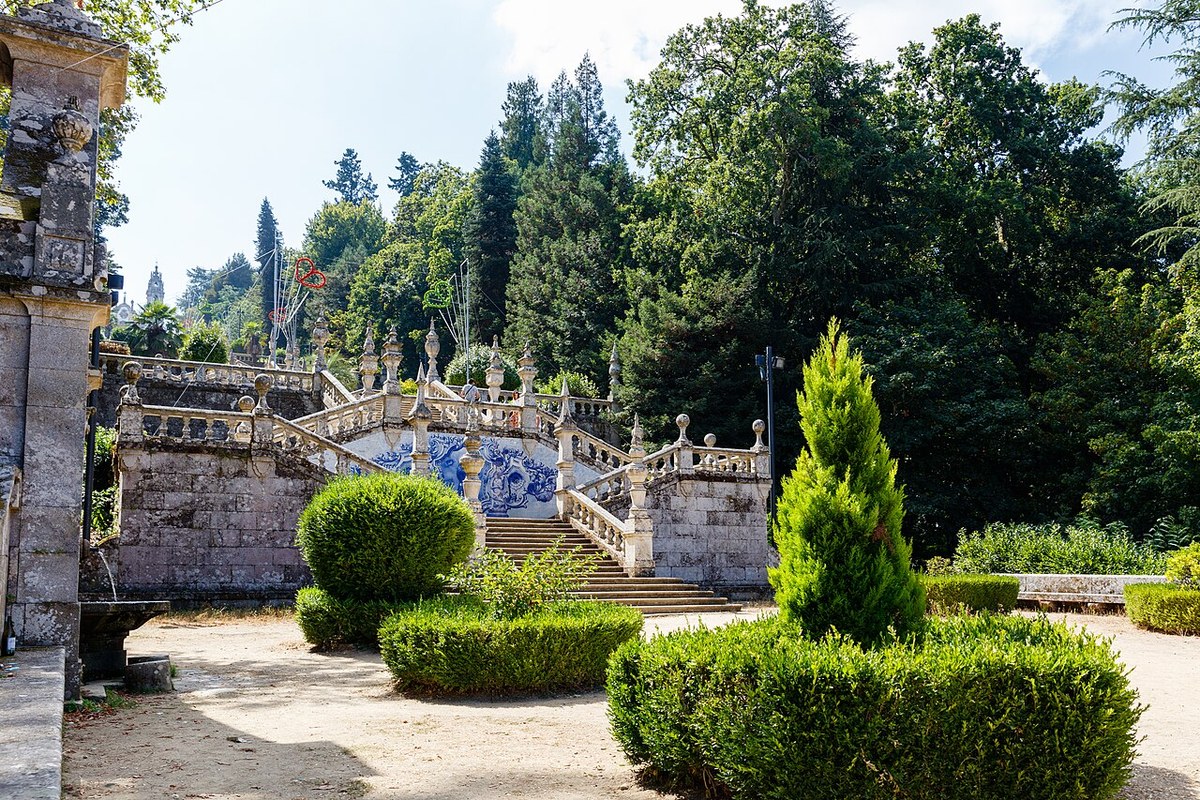
Rebuçados da Régua: the hand-folded sweet of the Douro pilgrimages
They smell of hot lemon and cooked sugar. At the foot of Lamego's baroque stairway, women still fold their sweets one…
Pastéis de Santa Clara: the cake from a convent that drowned
In Coimbra the nuns spent three centuries raising their floors before leaving the convent to the river. The building…
Find our artisan pastries in our Brussels stores or order online.
Order now Our foodtruck for your events Our stores