
Fatias de Tomar: the sweet that demands a pan with a chimney
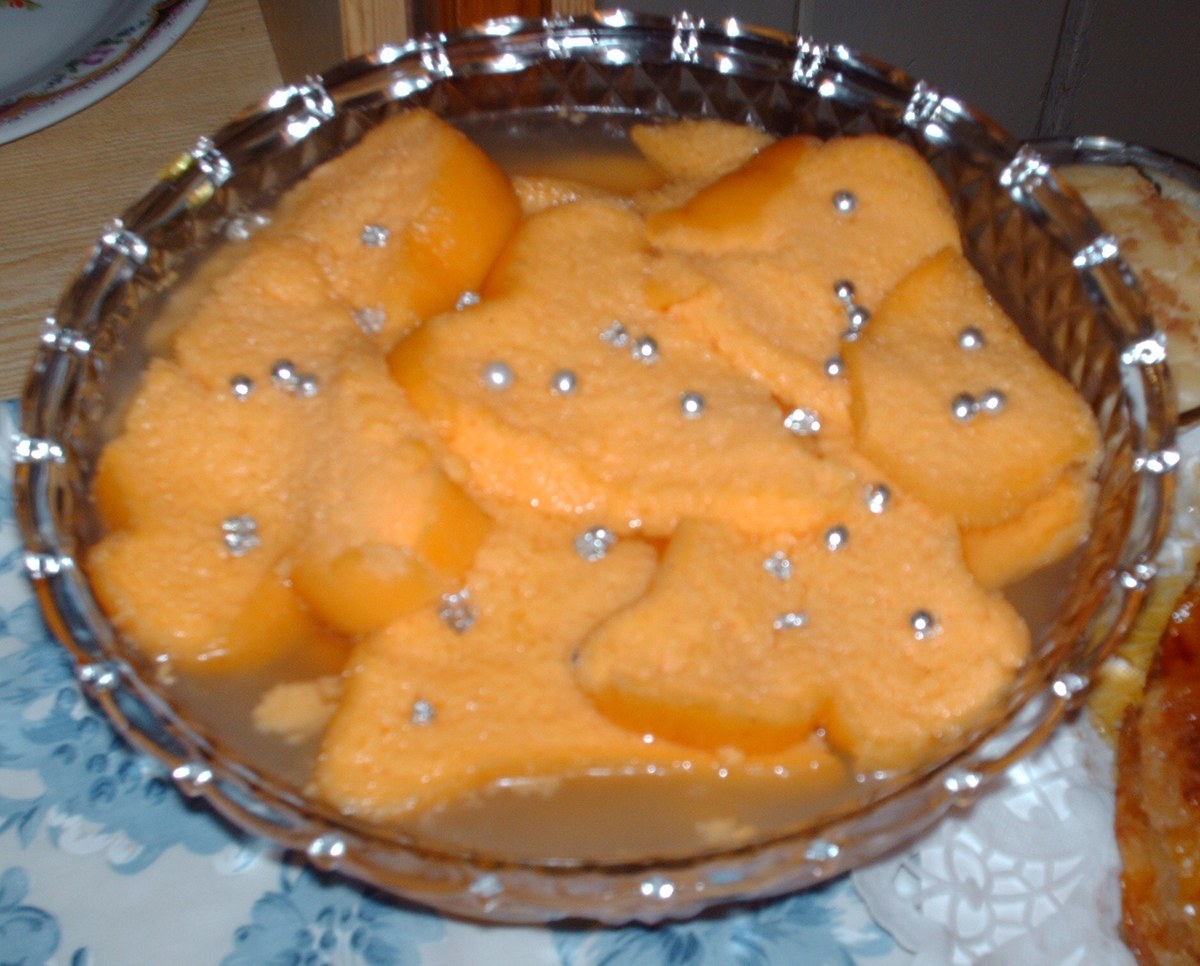
Sitting in their glass dish, bathed in syrup, they look like slices of bright yellow bread, soaked through with syrup, glistening to the middle. You look for the crust: there is none. You look for the flour: none of that either. Fatias de Tomar, literally "slices of Tomar", are made of egg yolks, and of almost nothing else.
A cake with no flour, no leavening, no oven
The ingredient list fits on one line: egg yolks and sugar. The yolks are separated from the whites, then beaten by hand for an hour, until the mixture pales and thickens. It goes into an oval mould with a lid and cooks for another hour in a boiling water bath. At no point does an oven come into it.
The cooked block is then sliced. Each slice goes into a calda, a sugar syrup at a full boil, and is turned several times so that it soaks through on both sides. That is where the texture comes from: soft and wet, compared by Portugal's official register of traditional products to a slice of soaked bread. That is where the name comes from too: these are not little cakes, they are slices.
The pan with a chimney
Here is the object that makes the recipe impossible to improvise. Fatias cook in a tin panela pierced with a chimney. Over that hour, the water in the bath evaporates; through the chimney, boiling water is topped up continuously so the mould stays submerged from start to finish. Nothing is allowed to drop: not the water level, not the temperature.
These pans are not sold in ordinary shops. They remain a regional object, made by hand, passed from one workshop to the next. Plenty of Portuguese sweets travel with their recipe; this one travels with its tool, or it does not travel at all.
1876: the first time the name is written down
Where and when fatias de Tomar were born is unknown: the official register says so itself, which is more honest than most pastry legends. Tradition ties them to the Templar convent of Tomar, up above the town, within that family of doces conventuais in which egg yolks are the raw material.
What we do have are the written traces. The first mention of the sweet under this name appears in 1876, in João da Mata's Arte de Cozinha. Half a century later, in 1928, Emanuel Ribeiro lists them in O Doce... nunca amargou as a speciality of the Templar region around Tomar. Between those two dates the recipe has not moved: yolks, sugar, an hour of arm and an hour of steam.
Why yolks only?
Because the whites went elsewhere. In the Portugal of the convents, egg white was used to clarify wine and to starch clothing; yolks were left over by the bucketful, and something had to be done with them. A whole family of sweets grew out of that imbalance, and we told the story in full in why Portuguese pastry is so yellow.
Fatias de Tomar are an extreme case of it: where the papo de anjo goes through the oven before the syrup, these make do with steam and sugar alone. No flour softens the point. They are often sold in hermetically sealed glass jars, sitting in their calda, like a convent preserve.
With us, in Brussels
Fatias de Tomar are not in our display: without the pan with a chimney we do not make them, and we would rather not pretend. But the same logic, yolks beaten a long time and a cooking held to the degree, is the logic of our pão de ló ouro, that all-yolk Portuguese cake we deliberately take out before it sets. The same Portugal, cooked another way. Come and see it in one of our four shops, on Rue des Tongres in Etterbeek, in Stockel, in Uccle or in Waterloo.
Photo: Fmramos89, via Wikimedia Commons, CC BY-SA 3.0 licence.
Read next
Ameixa d'Elvas: the green plum named after a French queen
It is green, and that is not a flaw. In Elvas, in the Upper Alentejo, this plum is picked deliberately hard, before it…
Rebuçados da Régua: the hand-folded sweet of the Douro pilgrimages
They smell of hot lemon and cooked sugar. At the foot of Lamego's baroque stairway, women still fold their sweets one…
Pastéis de Santa Clara: the cake from a convent that drowned
In Coimbra the nuns spent three centuries raising their floors before leaving the convent to the river. The building…
Why Portuguese pastry is so yellow: the wine took the whites
Crack an egg and separate it. In Portugal, for centuries, the white and the yolk went their separate ways: one to the…
O lanche: the Portuguese afternoon snack that borrowed an English name
Late in the afternoon, Portugal puts down whatever it is holding and sits for ten minutes. The moment carries a…
Marmelada: the Portuguese quince that gave marmalade its name
Raw quince is inedible. Cooked with sugar it becomes a paste you cut with a knife — and a word that left Portugal and…
Desfolhada: the night when a red corn ear was worth a kiss
In late September, northern Portugal husked its corn after dark. Village work, sung and washed down with wine, and one…
The suitcase home: what Portuguese families bring back in August
In late August the same scene plays out in kitchens all over Brussels: a suitcase open on the tiles, a bathroom scale…
Find our artisan pastries in our Brussels stores or order online.
Order now Our foodtruck for your events Our stores